


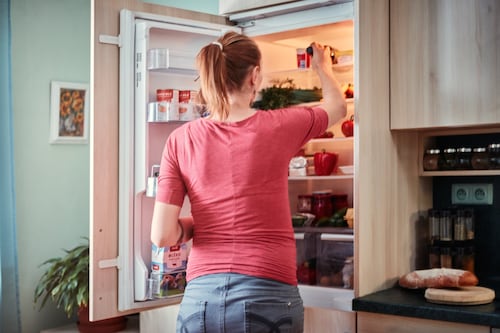
Organize Your Refrigerator Smartly: The Definitive Method to Prevent Food Spoilage
Translated from Spanish, summarized and contextualized by DistantNews.
At a glance
Explainer
Named sources
Context piece
- Strategic food placement in refrigerators is crucial for maintaining freshness and preventing bacterial proliferation, contrary to the belief that all areas cool uniformly.
- Different sections of the refrigerator have distinct temperature dynamics: the door is warmest, upper/middle shelves offer stable temperatures, and lower drawers regulate humidity.
- Proper organization, following guidelines from the USDA and FDA, ensures food safety and maximizes efficiency, with specific recommendations for storing dairy, meats, produce, and frozen items.
The common belief that all parts of a refrigerator cool uniformly is a misconception; strategic food placement significantly impacts freshness and consumer health by preventing pathogen growth. The circulation of cold air creates distinct microclimates within the appliance, making organized storage essential.
The door (the warmest zone): Due to constant opening and closing, this area experiences the greatest temperature changes.
The refrigerator door, being the warmest zone due to frequent opening, is best suited for beverages, condiments, ketchup, mustard, dressings, and butter. The U.S. Department of Agriculture (USDA) advises against storing milk or eggs here, as they risk spoiling quickly. Upper and middle shelves maintain a stable temperature between 2°C and 4°C, ideal for dairy products like yogurt and cheese, cold cuts, and leftovers in airtight containers. The lower shelves are the coldest, making them suitable for fresh meats and fish, or for safely thawing frozen items without risk of spills.
Upper and middle shelves (constant temperature): These compartments maintain a stable thermal range ideally between 2°C and 4°C.
Lower drawers are designed to control humidity and protect organic matter from direct light. One drawer should be designated for fruits and another for vegetables. It is crucial to store apples, bananas, and pears separately from other vegetables, as they release ethylene gas, which accelerates ripening and decomposition in surrounding foods. The freezer should consistently maintain a temperature of -18°C or below, as recommended by the U.S. Food and Drug Administration (FDA) for long-term food safety.
Lower drawers (humidity control): These containers are specifically designed to regulate humidity and protect organic matter from direct light exposure.
Adhering to these organizational guidelines not only enhances the shelf life of food but also contributes to family health by promoting hygienic food handling. Proper segmentation of products directly relates to the intensity of cold each section receives, making a well-organized refrigerator a key element in daily kitchen management.
The freezer: To ensure long-term food safety, the Food and Drug Administration (FDA) indicates that the freezing section must be kept constantly at a temperature of -18°C or lower.
DistantNews Editorial
Originally published by El Universal in Spanish. Translated, summarized, and contextualized by our editorial team with added local perspective. Read our editorial standards.
More Stories



From Our Blog

What Press Freedom Means for the News You Read

What Gets Lost (and Found) When News Is Translated

The Critical Role of Diaspora Media in Global News

What Travellers Should Know About Countries with Restricted Press

A Digital Nomad's Guide to Following Local News
