


Organized Crime Infiltrates Latin American Politics Through Campaign Financing
Translated from Spanish, summarized and contextualized by DistantNews.
At a glance
News
Named sources
Context piece
- Organized crime groups in Latin America are increasingly infiltrating politics by financing campaigns and imposing candidates, moving beyond traditional bribery.
- This regional trend, observed in countries like Mexico, Colombia, and Brazil, involves not only drug trafficking but also illegal mining, money laundering, and corruption.
- Despite reforms, efforts to shield elections from criminal influence have largely failed, with organized crime actively participating in electoral competition.
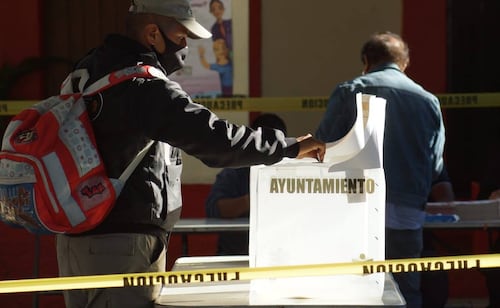
Organized crime in Latin America has discovered that politics can be a more profitable investment than drug routes or illegal mining. Instead of merely bribing elected officials, criminal economies are now intervening earlier in the political process by financing campaigns, imposing candidates, controlling territories, and capturing institutions from within.
This investigation by the Grupo de Diarios América (GDA) reveals a regional pattern. While methods vary by country, the core logic remains the same: illegal economies have transitioned from external actors to active participants in electoral competition. Drug trafficking continues to be the primary driver of this infiltration, but it no longer acts alone. Illegal mining, money laundering, and corruption in public contracting have expanded the risk map across Mexico, Colombia, Brazil, Peru, Venezuela, the Dominican Republic, Argentina, and El Salvador. Uruguay, Costa Rica, and Chile appear as partial exceptions, with less evidence of direct infiltration but still facing alerts that no system is completely immune.
Mexico exemplifies this shift. Previously, illegal economies primarily corrupted elected officials. Now, they initiate the corruption process by financing campaigns to ensure loyalty. Data compiled by El Universal indicates that two decades of reforms aimed at shielding elections from organized crime have failed. Political pacts, new oversight systems, and legal reforms have not prevented criminal organizations from infiltrating candidacies and campaigns. Security consultant David Saucedo critically summarizes the failure: "The public policies established in Mexico have only served to contain the problem mediatically, not to resolve it fundamentally."
In Colombia, El Tiempo reports increasing pressure from drug trafficking, illegal mining, and corruption on the electoral system. The Electoral Observation Mission identified 170 municipalities at risk of fraud and violence for the upcoming elections, with 81 classified as extremely high risk. This map aligns with territories where armed groups and illegal economies are vying for political and territorial control. In El Salvador, the issue stems from institutional weakness. La Prensa Gráfica highlights warnings from Acción Ciudadana regarding the fragility of the electoral oversight system, stating that "the lack of oversight and transparency allows the infiltration of illicit financing into politics." One electoral magistrate, speaking anonymously, cautioned that "there is always a probability that parties are permeated."
DistantNews Editorial
Originally published by El Universal in Spanish. Translated, summarized, and contextualized by our editorial team with added local perspective. Read our editorial standards.
More Stories

From Our Blog

What Press Freedom Means for the News You Read

What Gets Lost (and Found) When News Is Translated

The Critical Role of Diaspora Media in Global News

What Travellers Should Know About Countries with Restricted Press

A Digital Nomad's Guide to Following Local News
