


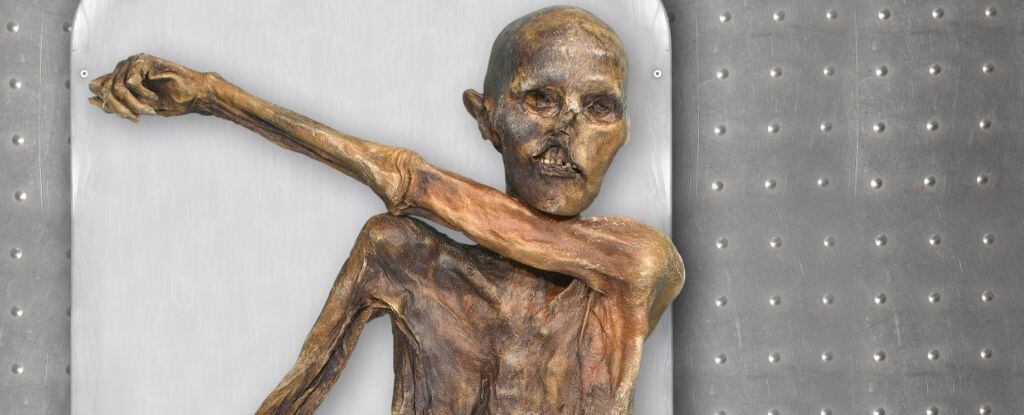
Ötzi the Iceman harbors living bacteria and microbes from 5,000 years ago
Translated from Spanish, summarized and contextualized by DistantNews.
At a glance
News
Sources not specified
Context piece
- Scientists analyzed the microbial landscape of the 5,300-year-old Ötzi the Iceman mummy.
- They identified three distinct microbial worlds: ancient gut bacteria, cold-adapted glacial microbes, and modern museum contaminants.
- The findings reveal Ötzi as a dynamic ecosystem, offering insights into ancient human microbiomes and long-term preservation challenges.
Ötzi, the 5,300-year-old "Iceman" discovered in the Alps, is far from a static relic. New research reveals his body is a dynamic ecosystem, teeming with ancient bacteria, fungi, and yeasts.
Our study shows that Ötzi is not a static relic nor biologically inert, but a dynamic ecosystem.
Scientists conducted an exhaustive analysis of the mummy's microbial landscape, identifying three distinct microbial communities. These include ancient gut bacteria that were part of his microbiome during life, cold-adapted microorganisms from the glacial environment where he was preserved, and modern microbes introduced during his decades of museum conservation.
"Our study shows that Ötzi is not a static relic nor biologically inert, but a dynamic ecosystem," said lead author Mohamed Sarhan, a microbiologist at Eurac Research's Institute for Mummy Studies. "His body harbors living, metabolically active organisms that respond to their environment. Cold-adapted yeasts are growing. Some bacteria have colonized and persisted in the tissues for decades."
His body harbors living, metabolically active organisms that respond to their environment. The yeasts adapted to the cold are growing. Some bacteria have colonized and persisted in the tissues for decades.
The ancient bacteria offer a unique window into the gut ecosystem of a Copper Age human, predating major changes from industrialization, antibiotics, and processed foods. The presence of active, cold-adapted yeasts also raises questions about long-term preservation methods. Ötzi, who died violently from an arrow wound and subsequent hemorrhage, remains a biological interface between the ancient world and the present.
The mummy is, in a sense, a living biological interface: a meeting point between the ancient world and the present, where microbes from 5,000 years ago coexist with organisms that arrived in recent decades.
DistantNews Editorial
Originally published by La Nación in Spanish. Translated, summarized, and contextualized by our editorial team with added local perspective. Read our editorial standards.
More Stories


From Our Blog

What Gets Lost (and Found) When News Is Translated

The Critical Role of Diaspora Media in Global News

What Travellers Should Know About Countries with Restricted Press

A Digital Nomad's Guide to Following Local News

How the Same Story Looks Different in Different Countries
