


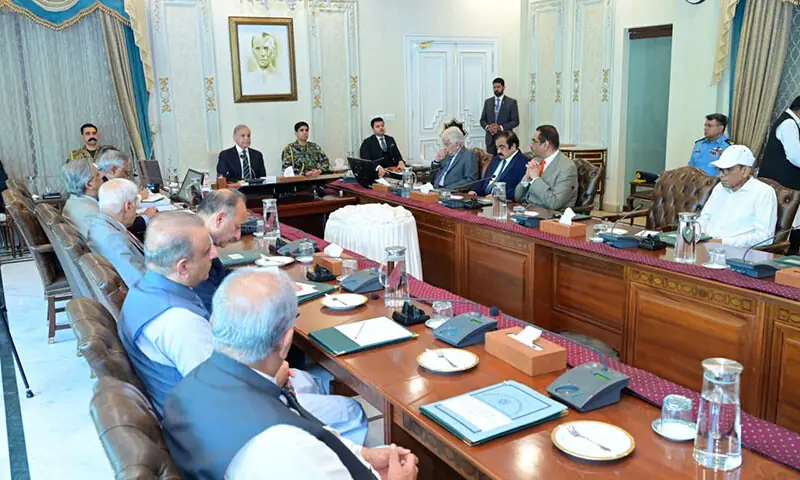
Pakistan approves new four-year Haj policy to improve pilgrim services
Translated from English, summarized and contextualized by DistantNews.
At a glance
News
Official statement
Approved/passed
- Pakistan's federal cabinet approved a new four-year Haj Policy for 2027-2030, aiming to enhance pilgrim services and operational efficiency.
- Key changes include uninterrupted pilgrim registration until 2030 and the introduction of a Shariah-compliant savings scheme.
- The policy also focuses on digitizing the Haj management system and allocating separate quotas for government and private schemes.
Pakistan's federal cabinet has approved a new comprehensive Haj Policy set to run from 2027 to 2030, marking a significant shift towards long-term planning and improved services for pilgrims. The policy aims to enhance operational efficiency and provide better facilities, moving away from previous one-year frameworks.
A key feature of the new policy is the elimination of annual registration requirements. Prospective pilgrims can now register at any time until 2030, allowing for uninterrupted registration based on their preferences and facilitating the creation of a priority waiting list. Additionally, a Shariah-compliant Haj savings scheme will be introduced, enabling individuals to save in advance for their pilgrimage.
The government is also prioritizing the digitization of the entire Haj management system. This includes implementing digital payment mechanisms, a digital complaints management system, and digital monitoring tools to streamline processes and improve transparency. The policy also delineates separate quotas for government and private Haj schemes, catering to both long- and short-duration packages.
Furthermore, the policy mandates training for pilgrims and includes provisions for Takaful (Islamic insurance) and emergency response services. The cabinet stressed the importance of appointing Haj assistants through a transparent, merit-based process and ensuring third-party validation for both government and private operators.
In related news, the cabinet also approved the outsourcing policy for the Isolation Hospital and Infectious Treatment Centre (IHITC) and the Regional Blood Centre (RBC) in Islamabad to ensure quality healthcare. Separately, a briefing on Pakistan Railways indicated a revenue increase from Rs95 billion in FY 2024–25 to over Rs115 billion in FY 2025–26, a 24.1% rise.
DistantNews Editorial
Originally published by Dawn in English. Translated, summarized, and contextualized by our editorial team with added local perspective. Read our editorial standards.
More Stories


From Our Blog

What Gets Lost (and Found) When News Is Translated

The Critical Role of Diaspora Media in Global News

What Travellers Should Know About Countries with Restricted Press

A Digital Nomad's Guide to Following Local News

How the Same Story Looks Different in Different Countries
