


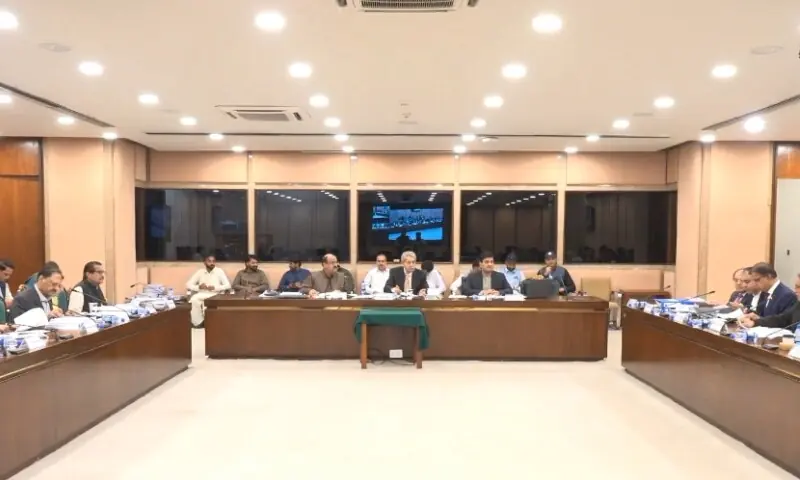
Pakistan budget panel rejects bank data access for tax authorities, questions salaried class relief
Translated from English, summarized and contextualized by DistantNews.
At a glance
News
Named sources
Approved/passed
- Pakistan's National Assembly Standing Committee on Finance and Revenue rejected a proposal to grant tax authorities access to taxpayers' bank account data.
- Lawmakers expressed concerns that such access could be misused and called for more relief for the salaried class.
- The committee approved increased surcharges for late tax filings and a special excise duty on imported luxury vehicles.
A parliamentary committee in Pakistan has rejected a proposal that would have allowed tax authorities access to taxpayers' bank account data, citing fears of potential misuse. The National Assembly Standing Committee on Finance and Revenue, chaired by MNA Naveed Qamar, also questioned the government's claims of providing relief to the middle-income salaried class.
This is the middle class, and the rate should be reduced.
The committee approved higher surcharges for late tax returns and a special excise duty on imported luxury vehicles. Cars with engine capacities between 2,000cc and 3,000cc will face a 40% excise duty, while those above 3,000cc will be subject to a 41% levy.
While the committee approved proposed tax rates for salaried individuals, lawmakers like Sharmila Faruqui argued that the 11% tax on monthly salaries between Rs100,000 and Rs200,000 is excessive. She noted that while Rs600 billion was collected from salaried taxpayers, the relief offered was only Rs50 billion, deeming it insufficient.
The middle class was directly affected by the current tax burden, noting that most complaints received were from salaried individuals.
Other committee members, including Shahida Akhtar Ali and Javed Hanif, echoed concerns about the burden on the middle class, with Hanif suggesting an increase in the super tax to offset concessions for salaried individuals. Finance Minister Aurangzeb stated that there was no room for further concessions this year but mentioned that the reduction in super tax would also benefit salaried taxpayers.
Public feedback had been positive.
The committee also rejected stricter penalties for filers and non-filers in certain cases and maintained the 4% tax rate for IT and related services. Professionals and independent software developers will face a 15% rate.
The middle class had been given very nominal relief.
DistantNews Editorial
Originally published by Dawn in English. Translated, summarized, and contextualized by our editorial team with added local perspective. Read our editorial standards.
More Stories

From Our Blog

What Gets Lost (and Found) When News Is Translated

The Critical Role of Diaspora Media in Global News

What Travellers Should Know About Countries with Restricted Press

A Digital Nomad's Guide to Following Local News

How the Same Story Looks Different in Different Countries
