


Pakistan faces climate crisis as heat records tumble
Translated from English, summarized and contextualized by DistantNews.
At a glance
News
Sources not specified
Context piece
- Global temperatures are setting new records, with the years 2026-2030 expected to be among the hottest ever observed.
- Pakistan faces extreme heat and pressure on its systems, despite contributing minimally to global emissions, highlighting a need for domestic climate action.
- The upcoming budget presents an opportunity for Pakistan to prioritize climate resilience through adequate resource allocation and integrated planning.
As World Environment Day arrives, Pakistan finds itself grappling with escalating climatic uncertainty. New global temperature records are being set with alarming frequency, and the World Meteorological Organization warns that the years 2026 to 2030 are likely to be the hottest on record. There's a strong possibility of another record-breaking year before the decade ends, with average global temperatures expected to hover near or above the 1.5°C threshold, a level scientists hoped would mitigate the worst climate change impacts.
The global warning has intensely local implications. In May, parts of Sindh and Balochistan experienced temperatures nearing 50°C, triggering heatwave alerts and intensifying concerns about the strain on already overstretched power, water, and health systems. Simultaneously, scientists are sounding the alarm about the glaciers and snow reserves feeding the crucial Indus basin. For Pakistan, where agriculture, food security, and energy production heavily rely on this basin, changes in its ice reserves carry consequences far beyond the mountains.
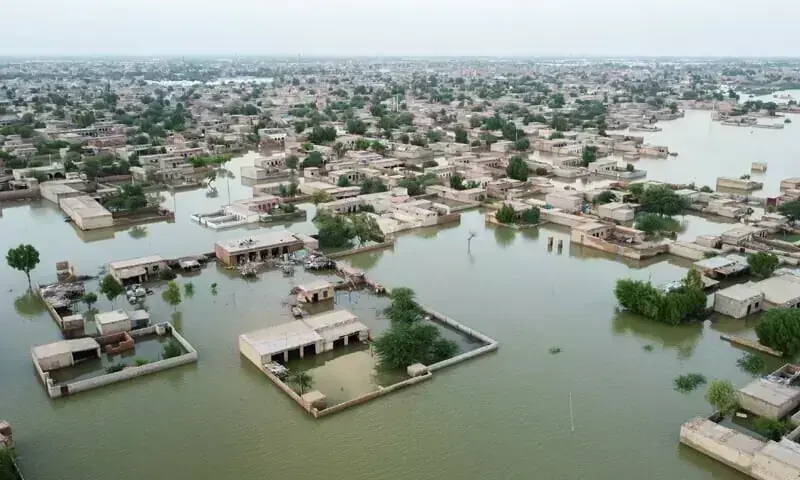
Pakistan is acutely aware of the repercussions of environmental neglect, as evidenced by the catastrophic floods of 2022 that submerged vast areas, displaced millions, and caused billions of dollars in losses. Despite repeated reminders of the nation's vulnerability, environmental protection remains a low priority in policymaking. Climate adaptation efforts lag, urban expansion often disregards sustainability, forests face continued pressure, and air pollution persistently impacts public health. Diminishing green spaces leave cities more susceptible to extreme heat, while lax enforcement of environmental regulations permits ongoing ecological degradation.
While Pakistan rightly points out its minimal contribution to global greenhouse gas emissions and calls for greater international support, this argument requires matching domestic seriousness. Fragmented planning, weak implementation, and chronic underinvestment have left the country ill-prepared. World Environment Day should prompt more than just pledges and ceremonies; it should be a catalyst for action. With the federal budget approaching, the government has a chance to signal that climate resilience is a national priority. This means allocating sufficient resources for adaptation, disaster preparedness, water conservation, ecosystem restoration, and creating more livable, heat-resilient cities. Crucially, climate considerations must be integrated into all development planning, not confined to isolated environmental programs. Pakistan has received ample warning; the upcoming budget must demonstrate an understanding of the challenge and a commitment to addressing it.
DistantNews Editorial
Originally published by Dawn in English. Translated, summarized, and contextualized by our editorial team with added local perspective. Read our editorial standards.
More Stories



From Our Blog

What Gets Lost (and Found) When News Is Translated

The Critical Role of Diaspora Media in Global News

What Travellers Should Know About Countries with Restricted Press

A Digital Nomad's Guide to Following Local News

How the Same Story Looks Different in Different Countries
