

Pakistan, Russia map path to deeper ties beyond symbolism
Translated from English, summarized and contextualized by DistantNews.
At a glance
News
Named sources
New plan
- Pakistan and Russia are exploring ways to deepen ties amid global geopolitical shifts, focusing on trade, education, and energy cooperation.
- A recent webinar highlighted the need for institutional mechanisms beyond symbolic engagement to facilitate commercially viable projects.
- Key recommendations include establishing an Intergovernmental Commission and developing a long-term economic roadmap to convert existing agreements into practical cooperation.
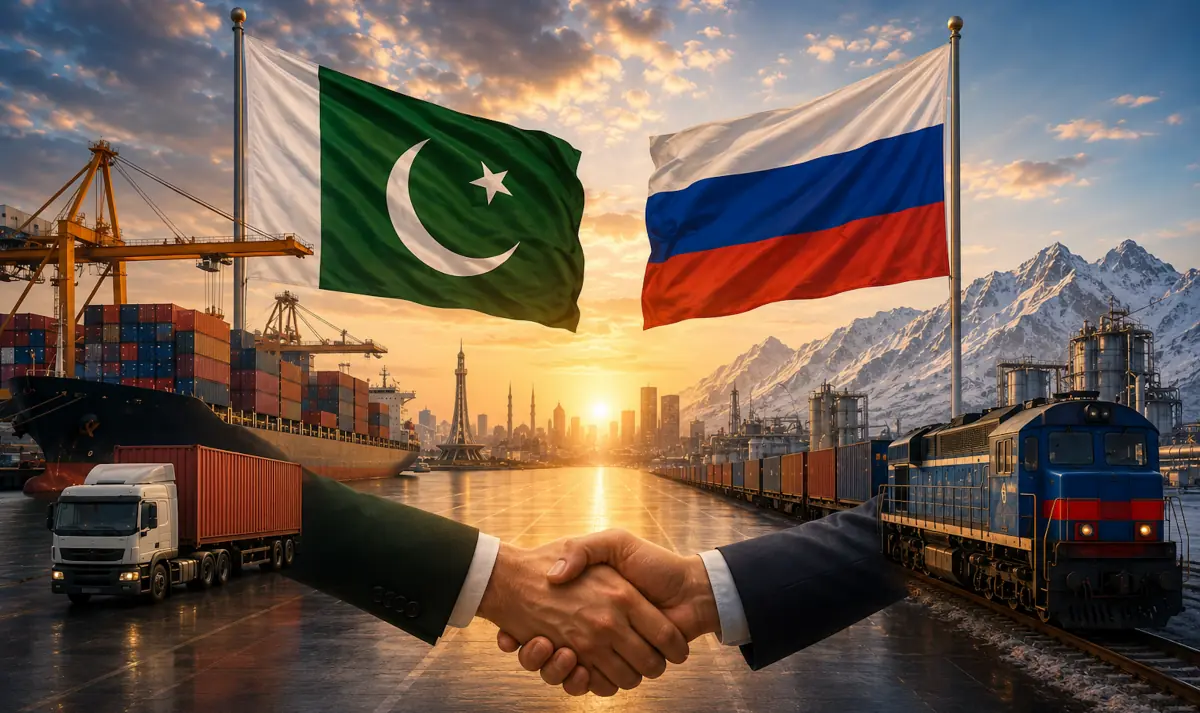
In a rapidly realigning global geopolitical landscape, Pakistan and Russia are seeking to strengthen their bilateral relationship, moving beyond symbolic gestures to foster practical cooperation. Both nations share a common interest in economic and technological sovereignty and are looking to build new channels of collaboration amidst a world order increasingly defined by US-China rivalry.
Sanctions, supply-chain disruption, and the growing importance of Eurasian connectivity have created a window of opportunity for Pakistan and Russia to deepen ties, but only if institutional mechanisms move beyond symbolic engagement and start delivering commercially viable projects.
A high-level webinar, 'Pakistan-Russia: Strengthening Trade, Energy & Education Collaboration,' held on July 9, 2026, brought together political leaders, diplomats, academics, and business experts from both countries. Organized by the Institute of Regional Studies in Islamabad and the University of World Civilizations in Moscow, the event aimed to convert the improving political relationship into tangible cooperation across various sectors, including trade, energy, education, logistics, technology, and regional connectivity.
Institutionalize implementation through an Intergovernmental Commission, Create sector-wise working groups for energy, trade, transport, education, agriculture, digital economy and finance, each with annual targets and quarterly reviews.
The webinar underscored that sanctions, supply-chain disruptions, and the growing importance of Eurasian connectivity have created a unique window of opportunity for Pakistan and Russia. However, participants stressed that this opportunity can only be seized if institutional mechanisms evolve from symbolic engagement to delivering commercially viable projects. This sentiment was a consistent message throughout the discussions.
Develop a Pakistan-Russia Comprehensive Economic Roadmap, Replace one-off initiatives with a five or 10-year plan covering trade, industrial cooperation, investment, connectivity and technology transfer.
Key recommendations emerged from the webinar, grouped by theme. To institutionalize implementation, the creation of sector-wise working groups under an Intergovernmental Commission was proposed, with annual targets and quarterly reviews for areas like energy, trade, transport, education, agriculture, and the digital economy. Furthermore, the development of a Pakistan-Russia Comprehensive Economic Roadmap, spanning five to ten years, was suggested to replace one-off initiatives with a strategic plan covering trade, industrial cooperation, investment, connectivity, and technology transfer. Building business-ready institutional architecture by converting existing memoranda of understanding into project pipelines with clear focal persons, timelines, and investment proposals was also deemed crucial.
Build business-ready institutional architecture, Convert existing memoranda of understanding into actual project pipelines, complete with focal persons, timelines, sectoral company lists and investment proposals.
DistantNews Editorial
Originally published by Dawn in English. Translated, summarized, and contextualized by our editorial team with added local perspective. Read our editorial standards.
More Stories

From Our Blog

What Gets Lost (and Found) When News Is Translated

The Critical Role of Diaspora Media in Global News

What Travellers Should Know About Countries with Restricted Press

A Digital Nomad's Guide to Following Local News

How the Same Story Looks Different in Different Countries
