

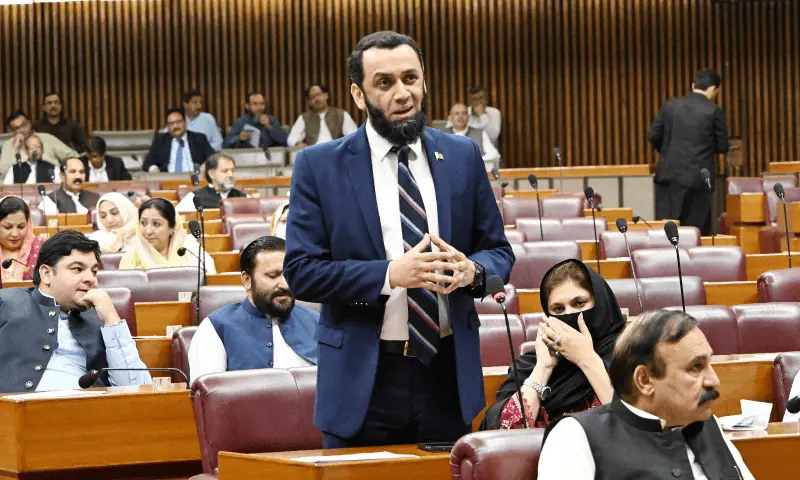

Pakistan's 2026-27 Budget Faces Multiple Risks, Finance Ministry Warns
Translated from English, summarized and contextualized by DistantNews.
At a glance
News
Official statement
New plan
- Pakistan's Finance Ministry has warned of significant risks to the 2026-27 budget, including oil price hikes, sluggish growth, and revenue shortfalls.
- A $40 per barrel oil price increase could add 0.8% to the fiscal deficit, while natural disasters pose a 1.5% fiscal threat.
- The ministry outlined mitigation measures to support fiscal discipline and enhance financial resilience.
Pakistan's Finance Ministry has issued a stark warning regarding multiple risks threatening the upcoming 2026-27 budget. The government highlighted potential impacts from global oil price volatility, sluggish economic growth, revenue shortfalls, increased debt servicing costs, underperformance of state-owned entities, and unforeseen natural disasters.
In a formal statement of fiscal risks presented to parliament, the ministry quantified the potential damage. A significant $40 per barrel increase in oil prices is projected to widen the fiscal deficit by 0.8% of GDP. Additionally, natural disasters and climate impacts could inflict a 15% fiscal hit. Revenue collection faces threats from lower tax elasticity, economic slowdowns, and shortfalls in non-tax receipts, with a 10% tax collection shortfall estimated to cost 0.7% of GDP. Loss-making state entities are also expected to drain an additional 0.4% of national finances.
A likely decision to waive full price pass-through to domestic consumers would result in a decline in petroleum levy receipts.
The ministry's risk statement, mandated by the Public Finance Management Act 2019, also proposes mitigation strategies. These measures aim to bolster fiscal discipline, improve risk management, and increase the resilience of public finances against potential shocks. The report specifically notes that waiving full price pass-through for oil to domestic consumers would reduce petroleum levy receipts and necessitate increased subsidies, particularly for low-income households.
Macroeconomic risks, including a slowdown in economic activity, could lead to weaker GDP growth and reduced government revenues. The ministry estimates that a 1 percentage point decline in real GDP growth could widen the fiscal deficit by approximately 0.2% of GDP in FY2026-27, potentially increasing inflation and straining public finances through exchange rate depreciation.
The combined impact is estimated to widen the fiscal deficit by around 0.2pc of GDP in FY2026-27.
DistantNews Editorial
Originally published by Dawn in English. Translated, summarized, and contextualized by our editorial team with added local perspective. Read our editorial standards.
More Stories

From Our Blog

What Gets Lost (and Found) When News Is Translated

The Critical Role of Diaspora Media in Global News

What Travellers Should Know About Countries with Restricted Press

A Digital Nomad's Guide to Following Local News

How the Same Story Looks Different in Different Countries
