


Pakistan's Plastic Reform Hinges on Informal Recyclers
Translated from English, summarized and contextualized by DistantNews.
TLDR
- Pakistan generates approximately 2 million tonnes of plastic waste annually, with only 15-18% currently recycled, a figure projected to rise significantly by 2040.
- A proposed national framework, known as Extended Producer Responsibility (EPR), aims to shift the cost of packaging waste management from consumers to companies.
- Experts emphasize that any successful EPR framework must integrate Pakistan's informal recycling sector, which comprises an estimated 200,000 to 333,000 workers who handle a substantial portion of the nation's waste.
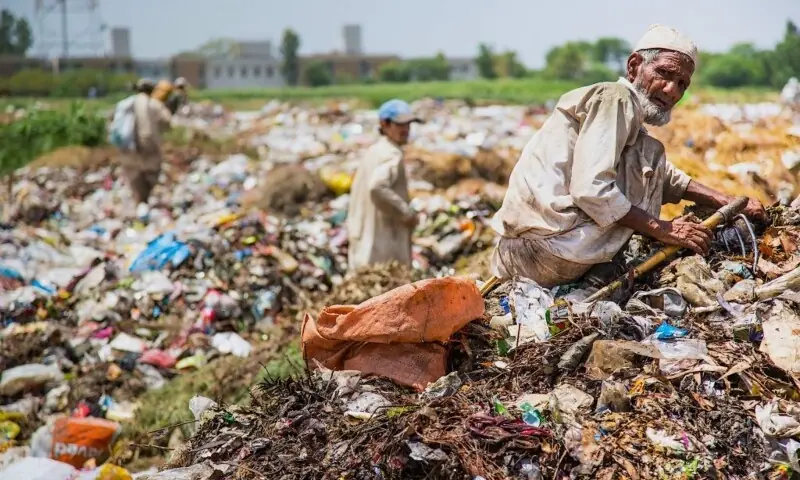
Pakistan faces a mounting plastic waste crisis, generating around 2 million tonnes each year with a recycling rate hovering between a mere 15-18 percent. Projections indicate this figure could balloon to 12 million tonnes by 2040 if significant interventions are not made. The consequences are dire, ranging from worsening urban flooding due to clogged drains to microplastic contamination of soil, water, and even the human body. The routine burning of mixed waste further exacerbates the problem by polluting the air. This escalating situation is creating pressure to implement more robust waste management strategies.
I don’t collect these
In response, a coalition of companies, NGOs, and government representatives, known as the CoRE Alliance, is advocating for a national framework based on Extended Producer Responsibility (EPR). Introduced in 2025, this EPR model seeks to place the financial burden of managing packaging waste onto the producers themselves. Companies would be required to pay designated producer responsibility organizations to handle the collection, recycling, and disposal of waste, ensuring compliance with government standards for transparency and safety. Unilever Pakistan, represented by Hussain Ali Talib, Head of Communications, views this as a crucial step towards "better plastic management today, lasting circularity for the future."
However, a critical element often overlooked in such policy discussions is the vast informal recycling sector in Pakistan. Experts like Dr. Ayesha Khan, CEO of the Akhtar Hameed Khan Foundation, argue that any EPR framework's success is contingent on recognizing and integrating the estimated 200,000 to over 333,000 individuals working in this unorganized sector. These waste pickers and recyclers are described as "frontline partners" who manage approximately 40% of Pakistan's waste. Ignoring this "invisible force" would render EPR initiatives incomplete and potentially ineffective.
The goal is simple: better plastic management today, lasting circularity for the future.
From Pakistan's perspective, the challenge lies in balancing the need for formal, corporate-driven solutions with the reality of its existing, albeit informal, waste management infrastructure. The young waste pickers, Irfanullah Wahid (11) and Faisal Asadullah (10), featured in the article, represent the human face of this informal sector. Their daily work, sifting through waste for recyclable materials, is essential but often precarious. The proposed EPR system must find a way to formalize and support these individuals, ensuring they benefit from the new framework rather than being displaced by it. The success of Pakistan's plastic reform hinges not just on policy changes but on acknowledging and empowering the crucial role played by its informal recyclers.
Without acknowledging this invisible force, EPR cannot succeed.
DistantNews Editorial
Originally published by Dawn in English. Translated, summarized, and contextualized by our editorial team with added local perspective. Read our editorial standards.
More Stories


From Our Blog

What Gets Lost (and Found) When News Is Translated

The Critical Role of Diaspora Media in Global News

What Travellers Should Know About Countries with Restricted Press

A Digital Nomad's Guide to Following Local News

How the Same Story Looks Different in Different Countries
