

Pakistan's PPP to oppose telecom bill in Senate without thorough debate
Translated from English, summarized and contextualized by DistantNews.
At a glance
News
Named sources
Under investigation
- Pakistan's PPP party will not support a fiberization bill in the Senate without thorough debate and inclusion of their proposed amendments.
- Senator Sherry Rehman stated the party's opposition to clauses allowing telecom companies to use public land without fees and concerns over penalties and executive power in redressal mechanisms.
- The bill, approved by the National Assembly, faces scrutiny over its timing and content, with calls for public hearings and further standing committee discussion.
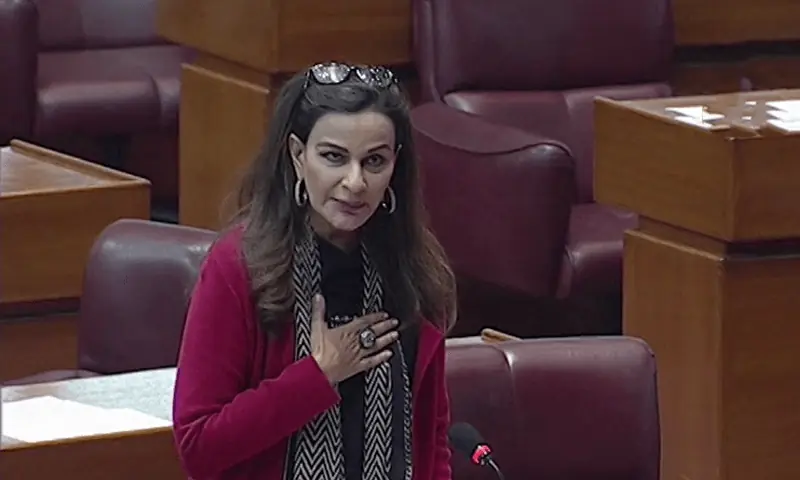
Pakistan's People's Party (PPP) will not back a bill aimed at advancing nationwide fiberization unless it undergoes extensive debate in the Senate's standing committee and incorporates the party's requested deletions. Senator Sherry Rehman, the PPP's Vice President, voiced strong criticism of the Pakistan Telecommunication (Amendment) Bill 2026, particularly its provisions regarding telecom companies using public land without charge.
For the record, the PPP in the Senate will not be passing any IT/PTA/RWA legislation which is not thoroughly discussed threadbare in the Standing Committee of the Senate with our deletions assured in the final bill.
Concerns have mounted over the bill's swift progression through Parliament. It passed the National Assembly on June 11, just before the federal budget presentation, and was introduced in the Senate on June 15. The bill was then referred to the Senate Standing Committee on IT and Telecommunication but was subsequently deferred. Prime Minister Shehbaz Sharif has also formed a committee to review the legislation.
Rehman emphasized on social media that the PPP in the Senate would not approve any IT or telecommunication legislation without rigorous standing committee discussion and assurance that their amendments would be included. She stated that the bill transmitted from the National Assembly contained "draconian clauses," specifically mentioning 27-A, which deals with telecom operators acquiring private land. Despite assurances that these would be removed, she claimed they remained when the bill reached the Senate, necessitating referral to the standing committee.
We are certainly not against fiberisation in Pakistan, but have been refusing to pass the current bill with existing encroachments on right of way, egregious penalties and even redressal mechanisms, which should not be in the hands of the executive.
"We are certainly not against fiberisation in Pakistan, but have been refusing to pass the current bill with existing encroachments on right of way, egregious penalties and even redressal mechanisms, which should not be in the hands of the executive," Rehman asserted. She suggested that while a government committee's review is appreciated, its findings should be presented to the standing committee. Rehman also proposed a public hearing to ensure public confidence and transparency, stressing that the PPP's stance on right of way and private property, a fundamental right, remains unchanged.
I would even suggest a public hearing to give people confidence that they are being heard.
DistantNews Editorial
Originally published by Dawn in English. Translated, summarized, and contextualized by our editorial team with added local perspective. Read our editorial standards.
More Stories


From Our Blog

What Gets Lost (and Found) When News Is Translated

The Critical Role of Diaspora Media in Global News

What Travellers Should Know About Countries with Restricted Press

A Digital Nomad's Guide to Following Local News

How the Same Story Looks Different in Different Countries
