


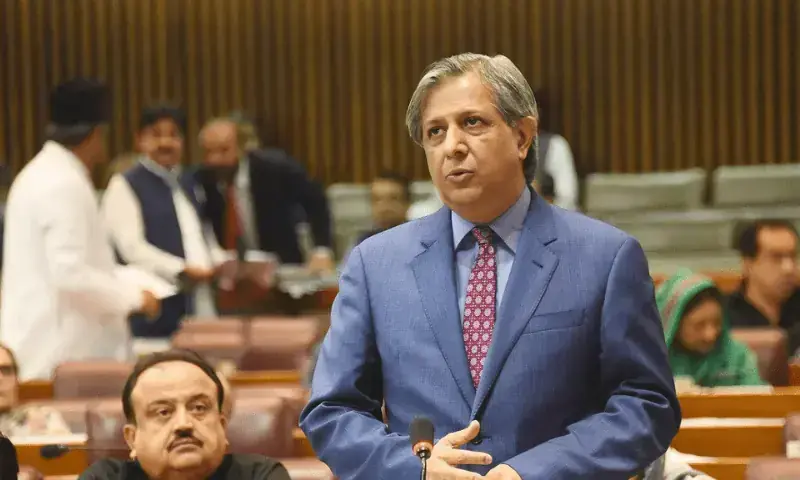
Pakistan telecom bill won’t infringe on private rights, minister assures
Translated from English, summarized and contextualized by DistantNews.
At a glance
News
Named sources
Under investigation
- Pakistan's Law Minister Azam Nazeer Tarar stated the telecom bill will not infringe on private rights.
- He assured that telecom activity on private property requires owner consent.
- A sub-committee will review objections to the bill, which faced Senate objections.
Pakistan's Law Minister Azam Nazeer Tarar has asserted that the controversial Pakistan Telecommunication Reorganisation (Amendment) Bill will not violate private property rights. Addressing concerns over proposed right-of-way reforms, Tarar stated on Tuesday that the government has no intention of occupying private property or installing telecom towers without the explicit consent of owners. These remarks followed an in-camera meeting of a parliamentary committee tasked with reviewing the legislation. The bill had previously passed the National Assembly but stalled in the Senate due to objections from the Senate Standing Committee on IT and Telecom. The committee had raised concerns about a clause allowing free installation of telecom towers in public spaces. Minister Tarar emphasized that no telecom activity would occur on private premises without permission. He also announced the formation of a sub-committee to address the objections raised and incorporate further clarifications into the bill to safeguard property rights while promoting digital development. Tarar suggested the media had exaggerated the controversy surrounding the bill, which he described as not inherently controversial. Meanwhile, telecom stakeholders, represented by the Telecom Operators Association Chairman Aamir Ibrahim, acknowledged the concerns. They believe the parliamentary review process offers a chance to refine the legislation and stressed that operators do not lack options for private landowners. The stakeholders insist that reforms are essential for connectivity and hope parliament will 'refine' the proposed legislation.
We understand the concerns that have been raised and believe parliament’s review process provides an opportunity to further refine the legislation where needed.
DistantNews Editorial
Originally published by Dawn in English. Translated, summarized, and contextualized by our editorial team with added local perspective. Read our editorial standards.
More Stories



From Our Blog

What Gets Lost (and Found) When News Is Translated

The Critical Role of Diaspora Media in Global News

What Travellers Should Know About Countries with Restricted Press

A Digital Nomad's Guide to Following Local News

How the Same Story Looks Different in Different Countries
