


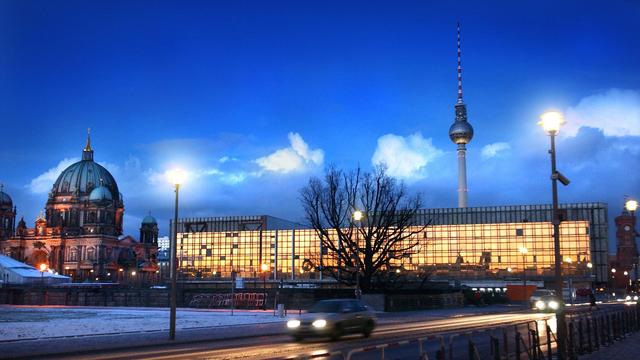
Palace of the Republic: 50 Years Since East Berlin's Marble Marvel Opened
Translated from German, summarized and contextualized by DistantNews.
TLDR
- The Palast der Republik in East Berlin, a symbol of the GDR's prestige, opened 50 years ago on April 19, 2026.
- It was a multi-purpose venue featuring restaurants, entertainment, and political functions, famously nicknamed 'Erichs Lampenladen' due to its lighting.
- The building, constructed rapidly on the site of a former palace, aimed to showcase socialist prosperity but later became a site of historical significance during the fall of the GDR.
Fifty years ago, on April 19, 2026, East Berlin unveiled the Palast der Republik, a monumental structure that quickly became an icon of the German Democratic Republic (GDR). This 'Palace of the Republic,' built in a mere 32 months on the grounds of the former Hohenzollern City Palace, was more than just a building; it was a statement. Its striking facade, clad in Belgian thermoglass, dominated the cityscape, while its interior, adorned with marble, plush seating, and an astonishing 10,000 light bulbs, earned it the popular moniker 'Erichs Lampenladen' (Erich's Lamp Shop), a nod to then-leader Erich Honecker. For the citizens of the GDR, the Palast represented a rare glimpse into a world of perceived socialist prosperity. It offered a diverse range of attractions, from bowling alleys and theaters to thirteen dining establishments, including chic milk bars and a foyer bar where a 'Manhattan' cocktail cost a princely 3.55 Marks. It hosted concerts by top GDR artists and even international stars like Carlos Santana, though access was often curated, as seen with Udo Lindenberg's 1983 performance. Beyond entertainment, it served as the seat of the GDR's Volkskammer (parliament) and the stage for the SED party congresses. Historians note that the Palast was designed to 'stage a kind of socialist society of abundance,' allowing citizens to momentarily escape the realities of daily life. The fact that even the public telephones worked reliably within the Palast was, in itself, a testament to its quality construction and a symbol of the SED's aim to project an image of efficiency and unity between the party and the people. While it symbolized a particular era, the Palast also became a focal point during the Wende (the period of change) in 1989/90, marking the end of an era before its eventual demolition.
Marble floor, comfortable seating areas, plant arrangements, large paintings on the walls and a five-meter high glass flower in the middle - curiously, almost incredulously, they wander through the brand-new Palace of the Republic in East Berlin in the April days of 1976.
DistantNews Editorial
Originally published by Die Zeit in German. Translated, summarized, and contextualized by our editorial team with added local perspective. Read our editorial standards.
More Stories



From Our Blog

What Gets Lost (and Found) When News Is Translated

How the Same Story Looks Different in Different Countries

The Critical Role of Diaspora Media in Global News

What Travellers Should Know About Countries with Restricted Press

A Digital Nomad's Guide to Following Local News
