


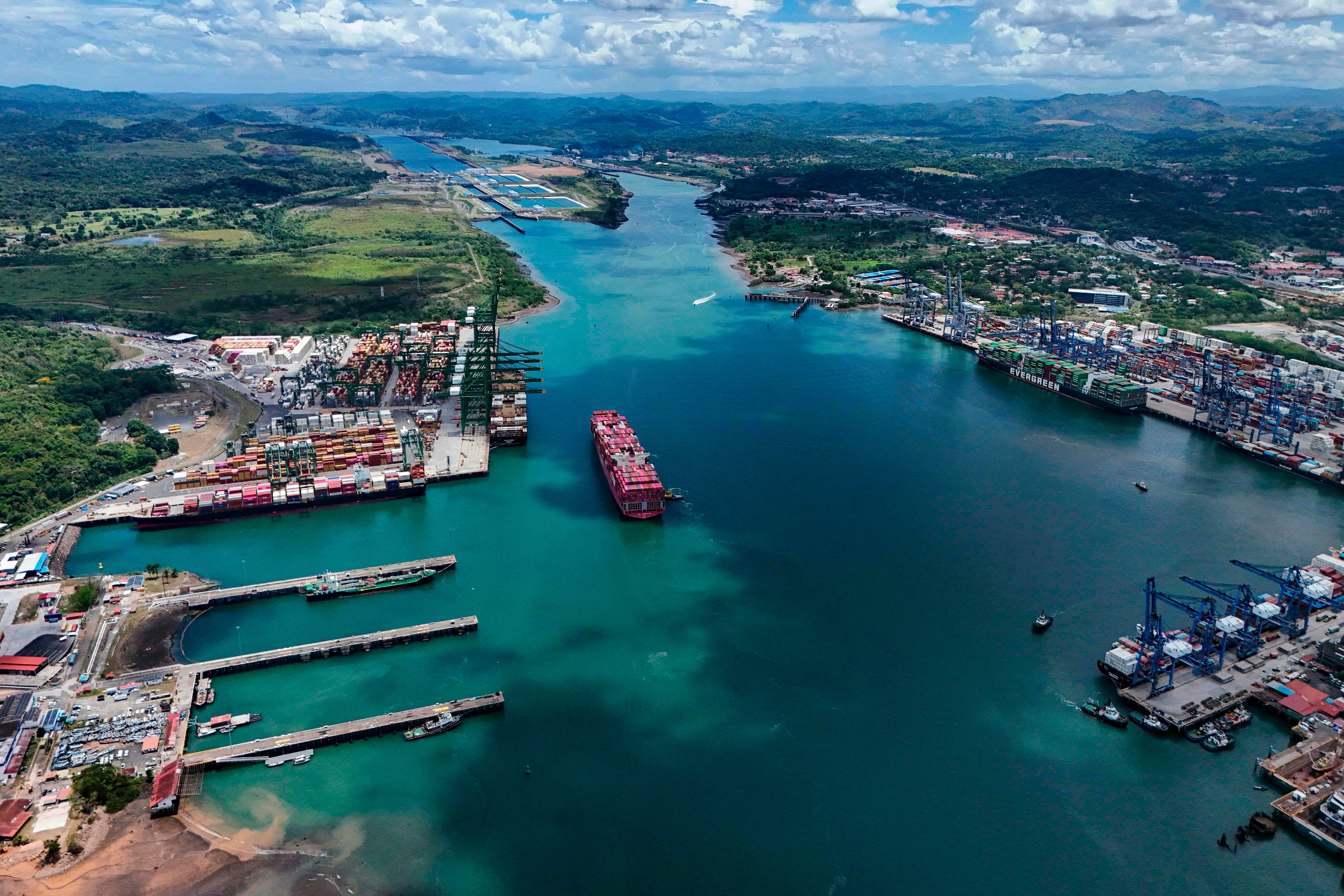
Panama Canal cuts ship traffic again as drought depletes water levels
Translated from Danish, summarized and contextualized by DistantNews.
At a glance
News
Sources not specified
Ongoing story
- The Panama Canal is reducing the number of daily ship transits due to a prolonged drought and low water levels.
- Starting September 3, daily transits will drop from 36 to 34, and further to 32 by September 15.
- These restrictions could lead to higher shipping costs and impact global trade, with potential price increases for goods.
The Panama Canal, a vital global trade artery, is implementing further restrictions on ship traffic as critically low water levels persist due to a severe drought. Starting September 3, the number of daily transits will decrease from 36 to 34, with a further reduction to 32 ships per day planned for September 15. This measure, confirmed by canal authorities and reported by major news outlets, aims to conserve the limited water resources necessary for the canal's operation.
The ongoing drought has significantly impacted the canal's functionality, forcing these operational adjustments. The implications extend beyond shipping logistics, potentially triggering increased costs for businesses and consumers worldwide. As ships face longer waits and potentially rerouted journeys, the expense of transporting goods is expected to rise, contributing to higher prices for a variety of products.
This situation highlights the vulnerability of critical infrastructure to climate change and environmental conditions. The Panama Canal's reduced capacity could disrupt supply chains and affect global commerce, underscoring the need for adaptive strategies in the face of environmental challenges.
DistantNews Editorial
Originally published by Berlingske in Danish. Translated, summarized, and contextualized by our editorial team with added local perspective. Read our editorial standards.
More Stories

From Our Blog

What Gets Lost (and Found) When News Is Translated

The Critical Role of Diaspora Media in Global News

What Travellers Should Know About Countries with Restricted Press

A Digital Nomad's Guide to Following Local News

How the Same Story Looks Different in Different Countries
