


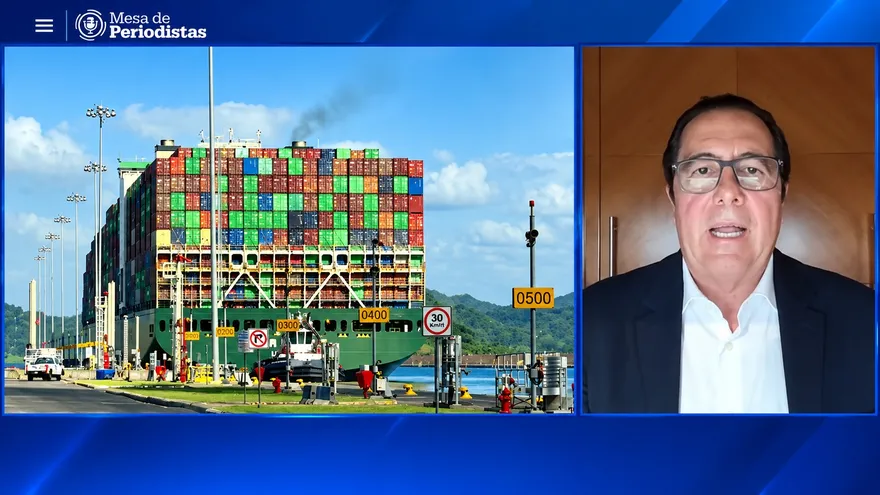

Panama’s Chamber of Commerce backs Canasta Básica pa’ Ti and rejects a return to price controls
Translated from Spanish and summarized by DistantNews. Read the original for the full story.
At a glance
News
Named sources
New plan
- Panama’s Chamber of Commerce, Industries and Agriculture backed the government’s Canasta Básica pa’ Ti proposal as an alternative to lower food costs without imposing price controls.
- The business group said participation should remain voluntary and that the government should act as a facilitator while competition and supply determine prices.
- Cciap warned that earlier price controls created distortions, cross-subsidies and supply problems, and said the new initiative must deliver measurable savings and availability.
Panama’s business community supports the government’s Canasta Básica pa’ Ti proposal, but it is drawing a firm line against a return to price controls.
Aurelio Barría Pino, president of the Chamber of Commerce, Industries and Agriculture of Panama, said the initiative offers a different route through dialogue between the government and private companies. The proposal seeks better prices without direct government intervention in price-setting.
That approach is moving in the right direction.
Barría said private businesses are willing to participate, but only voluntarily. He called on the government to act as a facilitator and respect the conditions facing each distribution chain. “That approach is moving in the right direction,” he said.
There is willingness from the private sector to contribute. The government must assume a facilitating role, and companies’ participation must be voluntary, respecting competition and the reality of each distribution chain.
The chamber wants the program to offer consumers more products and alternatives. Barría said its formula should be straightforward: greater competition, more supply and better choices. But he also insisted that the proposal must produce results that shoppers can verify.
The key questions, he said, are which products will be included, how much consumers will actually save, whether supplies will be sufficient and whether the arrangement can last. “Availability and price. Those are the indicators that matter,” Barría said.
Availability and price. Those are the indicators that matter.
Cciap rejected price controls, arguing that they failed to solve the basic food basket’s costs and harmed the productive chain. Barría said artificial market intervention created distortions, shifted costs to other products and eventually affected consumers. He recalled that a measure introduced as temporary remained in place for more than a decade, warning, “There is nothing more permanent than something temporary.”
There is nothing more permanent than something temporary.
About this summary
Originally published by TVN Panamá in Spanish. Translated, summarized, and contextualized automatically by DistantNews, with a note on how the source frames the story. Not individually reviewed before publishing. How this works.
More Stories

From Our Blog

News in Translation: What Gets Lost, and How We Keep the Framing

Diaspora Media: How Communities Follow News From Home

Traveling Where the Press Is Not Free: How to Read the News There

The Digital Nomad's Guide to Local News

The Same Story, Different Countries: How Coverage Changes at the Border
