


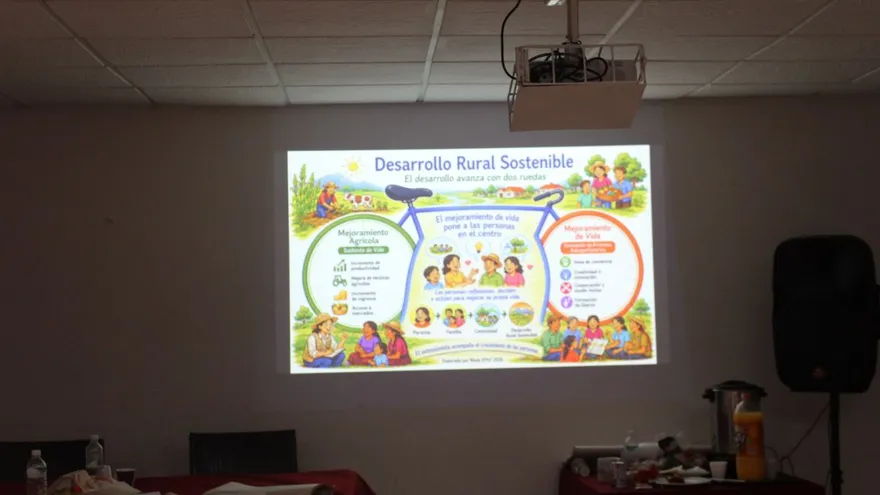
Panama to share rural development experiences with representatives from 10 countries
Translated from Spanish, summarized and contextualized by DistantNews.
At a glance
News
Named sources
New plan
- Panama is preparing to host the III International Course on Capacity Development for the Application of the Life Improvement Approach (EMV).
- The course aims to strengthen technical and methodological skills of rural development instructors, with international experts providing training.
- Panama will share its experiences in rural development, particularly EMV's impact on communities, with representatives from 10 Latin American and Caribbean countries.
Panama is enhancing the technical and methodological capabilities of its rural development instructors as it gears up to host the III International Course on Capacity Development for the Application of the Life Improvement Approach (EMV) in October. The Ministry of Agricultural Development (MIDA) is leading these preparatory efforts.
The training sessions were led by Sakayo Wada, an international expert from Japan with extensive experience in applying the EMV approach. She shared insights based on the successes achieved by former Japanese International Cooperation Agency (JICA) scholarship recipients in Panamanian rural communities. The training covered four key themes adapted to Panama's context: self-managing individuals, facilitation, intangible and visible changes, and objectives and goals.
The EMV approach is designed to foster citizens who can think, decide, and act independently, promoting participatory processes that extend beyond traditional education. Strategies were also developed to identify and highlight both tangible changes and shifts in people's capabilities and attitudes. A crucial aspect of the training involved emphasizing the importance of establishing long-term transformation goals rather than solely focusing on immediate needs.
The approach seeks to foster citizens capable of thinking, deciding, and acting for themselves, while also promoting participatory processes that go beyond traditional teaching.
Panama will share these principles during the international course, which will bring together participants from 10 Latin American and Caribbean countries. These international fellows will undertake field trips to observe firsthand the experiences developed in Panamanian rural communities and witness the results of the EMV application. Magaly Sandoval, the coordinator of the III International Course, noted that meticulous logistical planning is underway for each community visit.
Sandoval highlighted that participating families have successfully integrated the methodology, generating positive changes that contribute to social well-being and foster economically viable initiatives. Examples include home garden projects, which enhance family food security and, in some cases, provide supplementary income. Panama aims to showcase how the life improvement approach can drive sustainable transformation processes in rural communities through these shared experiences.
The families participating have managed to incorporate the methodology and generate positive changes that, in addition to contributing to social well-being, have allowed for the development of initiatives with economic potential.
DistantNews Editorial
Originally published by TVN Panamá in Spanish. Translated, summarized, and contextualized by our editorial team with added local perspective. Read our editorial standards.
More Stories
From Our Blog

What Gets Lost (and Found) When News Is Translated

The Critical Role of Diaspora Media in Global News

What Travellers Should Know About Countries with Restricted Press

A Digital Nomad's Guide to Following Local News

How the Same Story Looks Different in Different Countries
