


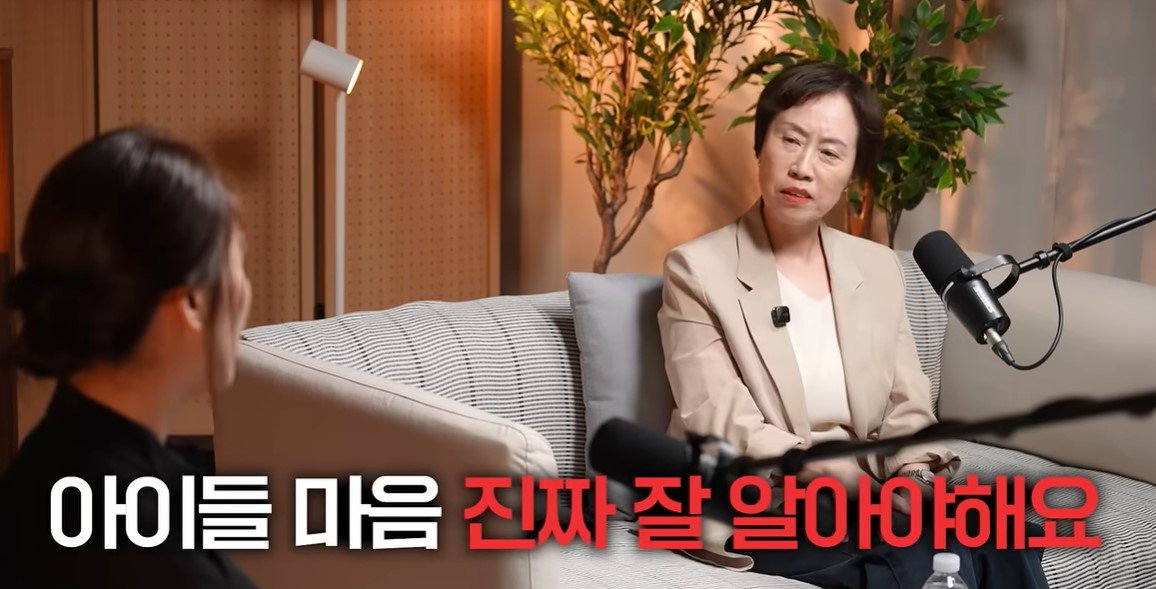
Parents should not be friends with children, says psychiatrist
Translated from Korean, summarized and contextualized by DistantNews.
At a glance
News
Named sources
Context piece
- A psychiatrist advises parents against being overly controlling or acting as friends to their children, emphasizing the importance of maintaining appropriate distance.
- Experts suggest that authoritative parenting, which sets clear boundaries, is more beneficial for a child's autonomy and emotional development than permissive or overly involved approaches.
- Parents should avoid language that undermines a child's existence or places undue burden on them, and instead model healthy personal lives.
Parents should avoid trying to be friends with their children and instead act as guides, according to a psychiatrist who warns that excessive control can harm a child's autonomy and emotional development. Dr. Jo Sun-mi, a professor of psychiatry at Ajou University, stated on the YouTube channel 'Knowledge Inside' that parents need to maintain an appropriate distance.
Parents should not try to be friends with their children and instead act as guides, emphasizing the importance of maintaining appropriate distance.
Dr. Jo differentiated between authoritative and authoritarian parenting. "Authoritative parents are those who help children naturally accept the roles and boundaries of parents," she explained. "For example, the number of candies a child can eat per day is an area parents can decide, and the child accepting that standard is authority. Conversely, saying you give the child choices but then getting angry or forcing them if the outcome is not to your liking is an authoritarian attitude."
The psychiatrist stressed that parents should not try to be friends. "Children often have difficulty making judgments independently, so parents should act as leaders, guiding them along a familiar path," she said. "Allowing them to make all choices like a friend can confuse children."
Authoritative parents are those who help children naturally accept the roles and boundaries of parents.
Dr. Jo also pointed out that excessive parental intervention can hinder a child's social development. She noted that many parents today excessively chase educational trends or try to manage their child's relationships. "However, friendships are an area children must learn through direct interaction, even if they are clumsy," she said. "If parents constantly intervene on the playground or at school, children struggle to learn how to approach others, how to handle rejection, and how to rebuild relationships."
Conversely, saying you give the child choices but then getting angry or forcing them if the outcome is not to your liking is an authoritarian attitude.
She also highlighted the importance of parental communication, advising against phrases that diminish a child's existence, such as "What are you good at?" or those that place a burden on them, like "It's all for you" or "Mom has only you." Dr. Jo warned that repeated use of such phrases can lead children to feel burdened by parental expectations and emotions. She also advised parents to show they have their own lives, interests, and happiness, rather than constantly sacrificing themselves. This, she believes, prevents children from feeling an excessive emotional responsibility for their parents.
Children often have difficulty making judgments independently, so parents should act as leaders, guiding them along a familiar path.
DistantNews Editorial
Originally published by Dong-A Ilbo in Korean. Translated, summarized, and contextualized by our editorial team with added local perspective. Read our editorial standards.
More Stories



From Our Blog

What Gets Lost (and Found) When News Is Translated

The Critical Role of Diaspora Media in Global News

What Travellers Should Know About Countries with Restricted Press

A Digital Nomad's Guide to Following Local News

How the Same Story Looks Different in Different Countries
