

Partial Lunar Eclipse: Clear Skies and Early Alarms Needed
Translated from German, summarized and contextualized by DistantNews.
At a glance
News
Named sources
Context piece
- A partial lunar eclipse will be visible across Germany on August 28, occurring in the early morning hours.
- The eclipse will begin around 4:30 a.m., with its peak at 6:13 a.m., though dawn may obscure visibility.
- Viewers should seek elevated positions facing west with a clear view of the horizon, and no special glasses are required.
Stargazers in Germany can anticipate a partial lunar eclipse on August 28, offering another celestial spectacle shortly after the recent solar eclipse. However, this event requires early risers as it will occur in the early morning hours, not the evening. According to Carolin Liefke, deputy head of the House of Astronomy in Heidelberg, the eclipse will commence around 4:30 a.m. as the moon enters Earth's shadow, though it will not be fully obscured.
You should get up early and, just like with the solar eclipse, find an elevated spot.
The peak of the lunar eclipse is scheduled for 6:13 a.m. Liefke advised that by this time, dawn will likely have made the sky too bright to observe the phenomenon clearly. "You should get up early and, just like with the solar eclipse, find an elevated spot," she recommended. The visibility is expected to be better for those living further west, making Baden-Württemberg a favorable location. A clear view towards the west and the horizon is essential, along with clear skies free of clouds and rain.
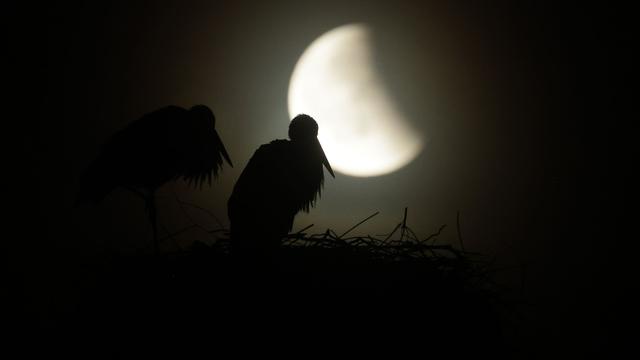
Unlike solar eclipses, no special protective eyewear is necessary for viewing a lunar eclipse. The event occurs when the sun, moon, and Earth align closely, placing the moon within Earth's umbra, or darkest shadow. In a partial lunar eclipse, only a portion of the moon passes through this shadow, leaving part of it illuminated.
The further west you live, the better the spectacle will be seen.
For observers in Germany, the moon will set between approximately 6:15 a.m. and 6:50 a.m., depending on their location, marking the end of the eclipse. The success of viewing hinges significantly on the weather conditions, which remain uncertain.
A part of the moon remains bright.
DistantNews Editorial
Originally published by Die Zeit in German. Translated, summarized, and contextualized by our editorial team with added local perspective. Read our editorial standards.
More Stories



From Our Blog

What Gets Lost (and Found) When News Is Translated

How the Same Story Looks Different in Different Countries

The Critical Role of Diaspora Media in Global News

What Travellers Should Know About Countries with Restricted Press

A Digital Nomad's Guide to Following Local News
