

Parties: Klingbeil and Schweitzer advocate for government course within SPD
Translated from German, summarized and contextualized by DistantNews.
At a glance
News
Named sources
Context piece
- SPD leader Lars Klingbeil urged party members to support the current government course despite weak poll numbers and internal criticism.
- Klingbeil emphasized the need to compromise and address economic stagnation, warning against letting right-wing extremists gain power.
- He highlighted the SPD's achievements, such as stabilizing pensions and infrastructure investments, while acknowledging internal frustrations.
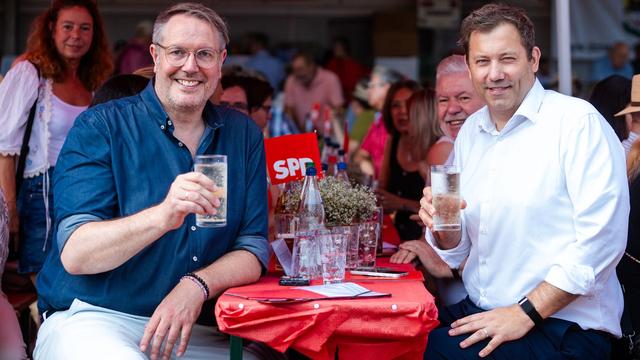
Lars Klingbeil, the leader of Germany's Social Democratic Party (SPD), has called on party members to rally behind the current government's course, acknowledging weak poll numbers and internal dissent. Speaking at an SPD event in Rhineland-Palatinate, Klingbeil stressed the importance of compromise and collective action in challenging times.
We all have concerns about how we can become stronger.
Klingbeil framed the current political moment as a critical juncture, urging SPD members to consider their legacy when right-wing extremists sought to seize power. "We must make compromises, dear friends," he stated, emphasizing the need for difficult negotiations on issues like healthcare, pensions, and taxes. He warned against complacency, noting that with four and a half years of stagnant economic growth and job losses in key industries, the SPD could not afford to remain inactive.
The party leader also cautioned against internal divisions, stating that the democratic center must demonstrate its ability to govern effectively without succumbing to infighting. He argued that populists and divisive figures thrive when established parties are paralyzed by discord. Klingbeil pointed to the SPD's accomplishments, including stabilizing pension levels, mandating fair wages for public contracts, and securing billions for infrastructure, as reasons for the party to be proud.
We must make compromises, dear friends.
Internal party discussions have included calls for a special party congress and questions about whether leaders like Klingbeil and Labor Minister Bärbel Bas should prioritize their party roles or ministerial duties. Klingbeil sought support for his approach, emphasizing that progress requires unity. "This only works, dear comrades, if we do it together. Not two at the front, but all together," he said. He reiterated the SPD's commitment to ensuring Germany remains a strong country.
If you haven't had economic growth for four and a half years, if the representatives of the trade unions from industry stand before you and say, thousands of jobs are being cut with us, then you as a Social Democrat cannot sit back and say, we are doing nothing.
SPD Vice Chairman Alexander Schweitzer acknowledged the frustration within the party, particularly concerning upcoming state elections. He urged constructive debate about the party's direction, emphasizing that the primary opposition comes from outside the democratic spectrum. Schweitzer encouraged members to focus their criticism outward rather than inward, stating, "It doesn't get better if we start accusing each other of the worst."
It doesn't get better if we start accusing each other of the worst.
DistantNews Editorial
Originally published by Die Zeit in German. Translated, summarized, and contextualized by our editorial team with added local perspective. Read our editorial standards.
More Stories

From Our Blog

What Gets Lost (and Found) When News Is Translated

How the Same Story Looks Different in Different Countries

The Critical Role of Diaspora Media in Global News

What Travellers Should Know About Countries with Restricted Press

A Digital Nomad's Guide to Following Local News
