


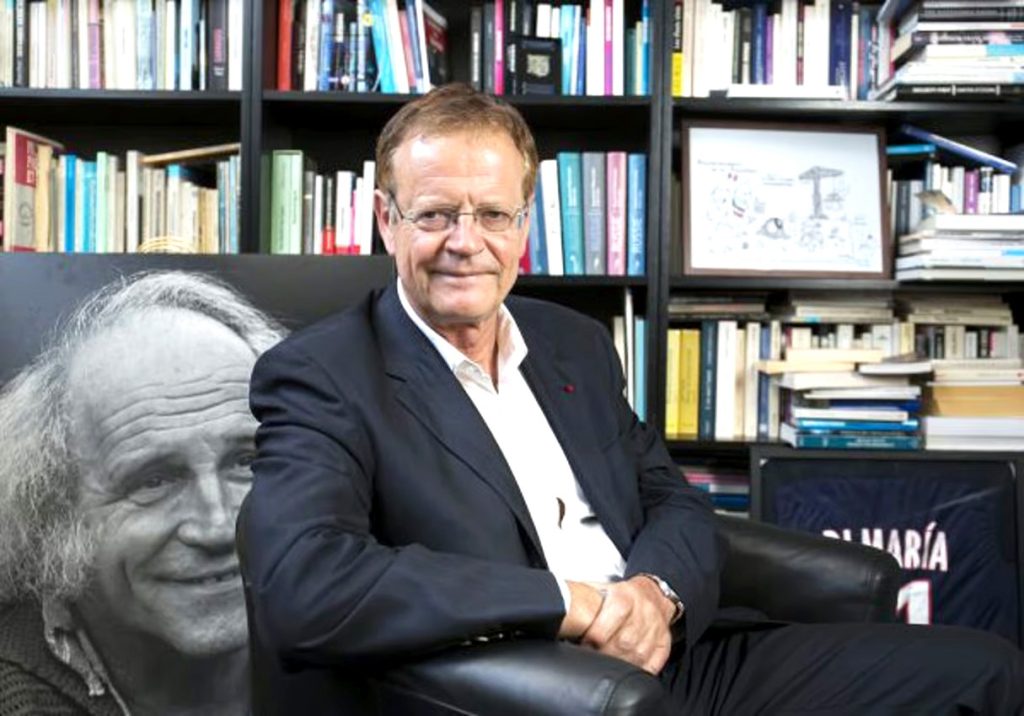
Pascal Boniface: 'It's the first time a country in conflict is organizing the competition...'
Translated from French, summarized and contextualized by DistantNews.
At a glance
Interview
Named sources
Context piece
- Pascal Boniface, director of IRIS and a geopolitics expert, discusses the 2026 World Cup, noting it's the first organized by a country in conflict (implied: USA's political climate).
- Boniface explains that Donald Trump's intervention and threats of sanctions were crucial in securing the bid for the US-Canada-Mexico trio over Morocco.
- He suggests Trump will leverage the event for publicity, but this may not significantly boost his popularity and could even spark debate.
Pascal Boniface, director of the Institute of International and Strategic Relations (IRIS) and a renowned expert in sports geopolitics, offers a critical perspective on the 2026 FIFA World Cup, highlighting its deeply political underpinnings. He points out the unique circumstance of a tournament being hosted amidst significant international power struggles, particularly noting the role of Donald Trump in securing the bid for the North American trio.
Yes, it's Trump's World Cup because it was his intervention that allowed the Canada-Mexico-United States trio to get it in 2019, since Trump had outright threatened countries that did not vote for this bid with sanctions from the United States.
Boniface reveals that Trump's direct intervention, including explicit threats of sanctions against nations that did not support the US-Canada-Mexico bid, was decisive. This occurred during a vote where each federation held an equal vote, contrasting with previous processes. The bid ultimately triumphed over Morocco's, a situation Boniface frames as a clear example of geopolitical pressure influencing major sporting events.
And for the first time, each federation had one vote and voted for its candidate. There was Morocco on one side, United States-Canada-Mexico on the other. And quite simply, as the vote was public, Trump said: 'Those who do not vote for me will be sanctioned.'
Regarding the hosting format, Boniface clarifies that the "trio" is heavily skewed towards the United States, which will host the vast majority of matches, including all quarter-finals and beyond. Canada's role is limited to 13 games. He anticipates that Trump will attempt to maximize his visibility during the event, seeking to be at the center of media attention, as seen in past events like the Club World Cup.
Canada has 13 matches, and all matches from the quarter-finals onwards will take place in the United States. It's really more the United States, and over a vast territory, it's a whole continent indeed on which the competition takes place.
However, Boniface cautions that this strategy might backfire. While Trump may seek to project an image of popularity through the World Cup, Boniface believes such attempts often generate more irritation than genuine appeal. Instead of enhancing his standing, Trump's prominent presence could potentially reignite debates and scrutiny surrounding his political actions and influence.
Obviously, he is there for that. We have already seen at the Club World Cup that he put himself at the center of everything, that he wanted to be in all the photos. But in fact, it annoys and irritates as much as it seduces. We can even say that it annoys more than it seduces.
DistantNews Editorial
Originally published by El Watan in French. Translated, summarized, and contextualized by our editorial team with added local perspective. Read our editorial standards.
More Stories


From Our Blog

What Gets Lost (and Found) When News Is Translated

The Critical Role of Diaspora Media in Global News

What Travellers Should Know About Countries with Restricted Press

A Digital Nomad's Guide to Following Local News

How the Same Story Looks Different in Different Countries
