


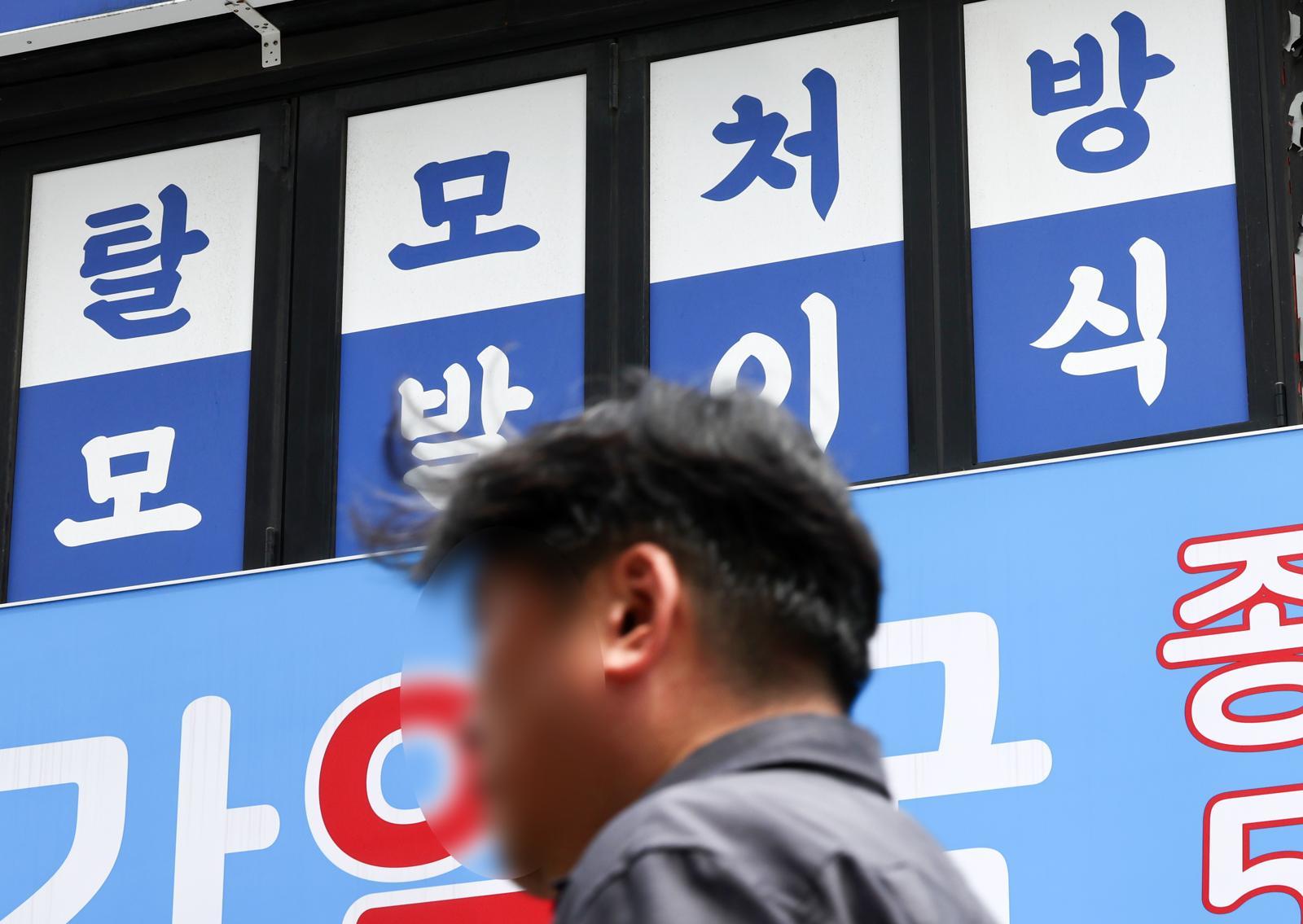
Patient Groups Protest Hair Loss Drug Insurance: Prioritize Rare Diseases, They Urge
Translated from Korean, summarized and contextualized by DistantNews.
At a glance
News
Sources not specified
Context piece
- Patient advocacy groups are protesting the government's consideration of expanding health insurance coverage to include hair loss treatments.
- They argue that limited insurance funds should prioritize treatments for severe and rare diseases that are life-threatening.
- Concerns are raised that prioritizing hair loss could divert resources from patients with critical illnesses, whose treatment costs are already rising and coverage is declining.
Patient advocacy groups in South Korea are strongly opposing the government's plan to consider health insurance coverage for hair loss treatments, arguing that the nation's limited healthcare funds should be prioritized for life-threatening and rare diseases.
The Korean Alliance of Patient Organizations held a press conference on June 29, stating that while deliberation on hair loss treatment coverage is necessary, the order of priority is incorrect. They assert that treatments for severe and rare diseases, which are directly linked to survival, should take precedence.
Does the president know that I am bearing the entire cost of my child's treatment? Before talking about the social impact of hair loss among young people, our society must first look at the reality of patients with rare diseases.
Seo Yi-seul, the mother of a child with Klippel-Trenaunay syndrome (KT syndrome), a rare vascular malformation, shared her struggles. "Patients with KT syndrome experience discomfort from their appearance, social discrimination, and a reduced quality of life," she said. "Does the president know that I am bearing the entire cost of my child's treatment?" she questioned, urging the nation to first consider the reality faced by patients with rare diseases before discussing the social impact of hair loss among young people.
My father's life expectancy is less than four months if he stops chemotherapy. Treatment opportunities for patients with severe and rare diseases must be guaranteed with the utmost priority and speed.
Another speaker, Huh Ji-hyung, whose father has advanced small cell lung cancer, shared that they have spent approximately 160 million won (about $115,000 USD) on his treatment since April. She tearfully stated that her father's life expectancy is less than four months if he stops chemotherapy, emphasizing that treatment opportunities for patients with severe and rare diseases must be guaranteed with the utmost priority and speed.
The alliance's survey revealed that 86.8% of its 74 members feel an economic burden due to the limitations of health insurance coverage, and one in three respondents has given up or postponed necessary treatment due to cost. The group also highlighted a declining insurance coverage rate for severe and cancer-related diseases, citing a drop from 84% in 2021 to 81% in 2024 for four major severe diseases, and from 80.2% to 75% for cancer diseases during the same period. They urged the government to announce concrete policies to address this issue.
Hair loss treatment coverage is also important, but there are no policies to cover severe diseases and cancer patients whose coverage rates are plummeting. We hope the government will announce specific policies regarding this.
DistantNews Editorial
Originally published by Dong-A Ilbo in Korean. Translated, summarized, and contextualized by our editorial team with added local perspective. Read our editorial standards.
More Stories



From Our Blog

What Gets Lost (and Found) When News Is Translated

The Critical Role of Diaspora Media in Global News

What Travellers Should Know About Countries with Restricted Press

A Digital Nomad's Guide to Following Local News

How the Same Story Looks Different in Different Countries
