


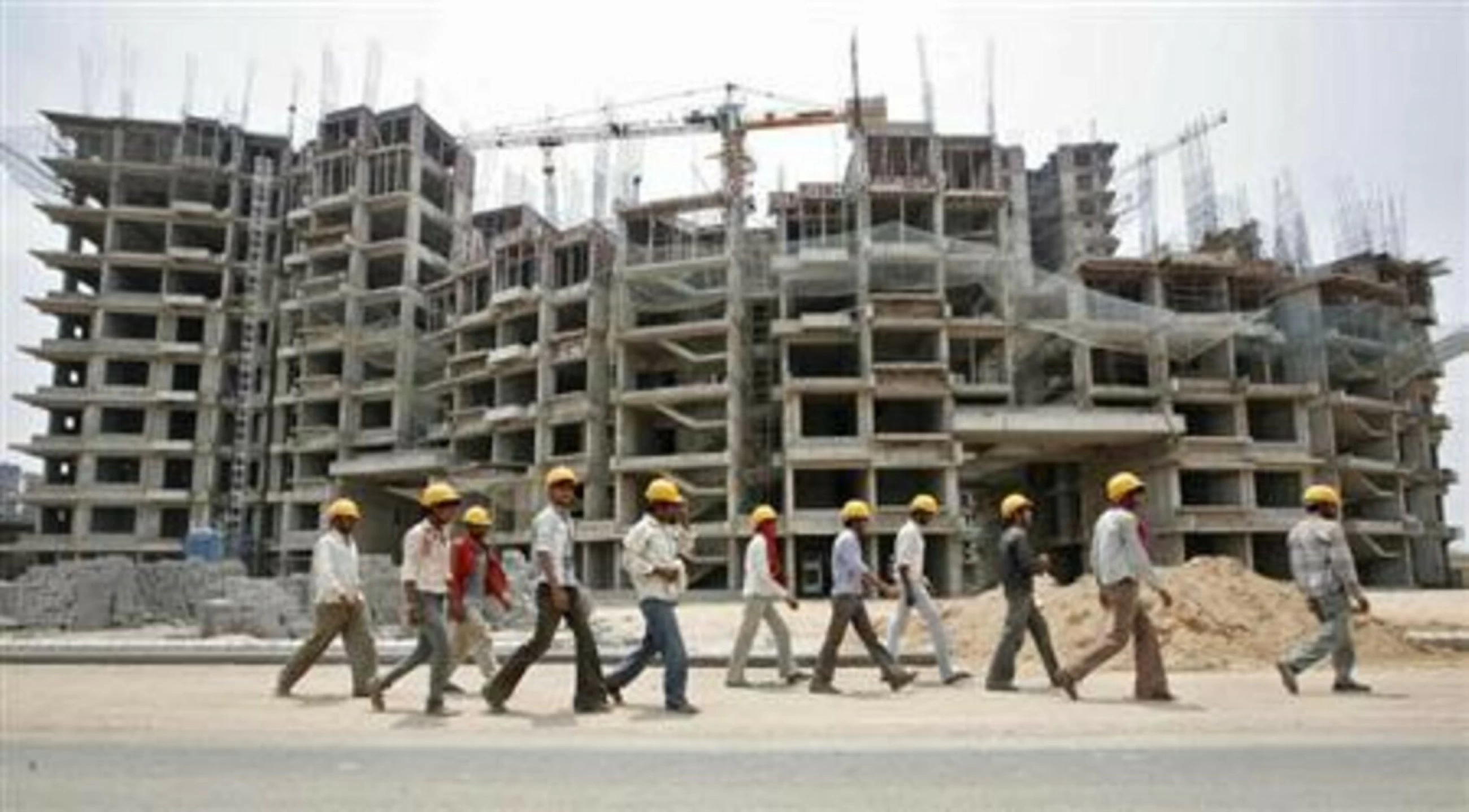
PE inflows into Indian real estate drop 23% YoY to $1.12b in H1 2026
Summarized and contextualized by DistantNews.
At a glance
News
Named sources
Outcome reported
- Private equity investment in Indian real estate fell 23% year-on-year in the first half of 2026.
- Factors like taxation, currency, financing costs, and relative yields are influencing investment decisions.
- Office assets remained attractive, while residential, warehousing, and retail segments saw a slowdown.
Private equity investment in India's real estate sector experienced a significant 23% year-on-year decline in the first half of 2026, dropping from $1,471 million to $1,126 million. This slowdown reflects a more cautious approach to capital allocation amid tighter financial conditions, according to a Knight Frank India survey. Investors are increasingly scrutinizing factors such as taxation, currency fluctuations, financing costs, and the comparative returns offered by different investment destinations.
While the overall investment moderated, performance varied across sectors. Office properties continued to draw institutional capital, buoyed by strong occupier demand and stable income streams. In contrast, residential investments softened as investors became more selective about development-led opportunities. The warehousing and retail segments also faced headwinds, partly due to a lack of large platform transactions.
The National Capital Region (NCR) emerged as the top destination for PE investments in the first half of 2026, driven by a mix of office and residential deals. This region benefits from robust occupier demand, ongoing infrastructure development, and the availability of institutional-grade assets. Investor focus remained on established markets with proven demand, prioritizing assets that offer clear cash flow visibility and execution certainty.
Despite the dip in PE investments, underlying market fundamentals in India's real estate sector remain largely resilient. The office market, in particular, showed strength with a 33% year-on-year rise in PE investment, driven by sustained leasing activity, especially from Global Capability Centers (GCCs). Ready assets accounted for a significant 75% of office investments, highlighting a preference for lower execution risk. The residential sector also saw increased organization, with larger developers consolidating their positions and attracting institutional funding through development financing and structured capital transactions.
In this environment, a market’s ability to attract and retain capital depends not only on its long-term fundamentals but also on how it performs in comparison to alternate investment destinations.
DistantNews Editorial
Originally published by Gulf Today. Summarized and contextualized by our editorial team with added local perspective. Read our editorial standards.
More Stories


From Our Blog

What Gets Lost (and Found) When News Is Translated

The Critical Role of Diaspora Media in Global News

What Travellers Should Know About Countries with Restricted Press

A Digital Nomad's Guide to Following Local News

How the Same Story Looks Different in Different Countries
