


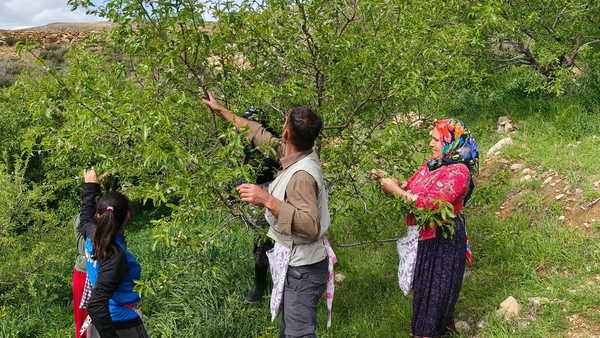

Peanut harvest begins in Adana, where cultivation covers 252,000 decares
Translated from Turkish and summarized by DistantNews. Read the original for the full story.
At a glance
News
Named sources
Ongoing story
- Harvesting has begun in coastal Karataş, Adana, which supplies 60 percent of Turkey’s peanut needs.
- Peanut cultivation expanded from 211,000 decares last year to 252,000 decares this year, with yields of 500 to 600 kilograms per decare.
- Farmers and the local agriculture chamber president said they were satisfied with yields and prices ranging from 90 to 100 lira per kilogram.
The first peanut harvest of the season has begun in Adana, the Turkish province that alone meets 60 percent of the country’s peanut needs. Harvesting started in the coastal district of Karataş and will move toward the plain in the coming weeks.
Peanut production in Turkey is 60 percent produced in Adana.
Tractors enter the fields early in the morning to separate the peanuts, followed by another tractor that carries out the harvest. The peanuts are then spread out and sent to processing plants in Osmaniye.
Rainfall increased this year’s yield after heat and drought reduced production last year. Farmers are obtaining an average of 500 to 600 kilograms per decare. Prices vary according to quality and size, ranging from 90 to 100 lira per kilogram. The province is targeting total production of 135,000 tons.
This year, farmers are very satisfied with the price and yield.
Mehmet Akın Doğan, president of the Yüreğir Chamber of Agriculture, said cultivation had expanded from 211,000 decares last year to 252,000 decares this year. He said the cooler, wetter weather delayed the harvest, but farmers were satisfied with both yields and prices. Savaş Ağırbaş, who grows peanuts on 300 decares, also reported average yields of 500 to 600 kilograms per decare and said current conditions were good.
Everything is good at the moment.
About this summary
Originally published by Cumhuriyet in Turkish. Translated, summarized, and contextualized automatically by DistantNews, with a note on how the source frames the story. Not individually reviewed before publishing. How this works.
More Stories

From Our Blog

News in Translation: What Gets Lost, and How We Keep the Framing

Diaspora Media: How Communities Follow News From Home

Traveling Where the Press Is Not Free: How to Read the News There

The Digital Nomad's Guide to Local News

The Same Story, Different Countries: How Coverage Changes at the Border
