


Pentagon Overhauls Strategy, Focusing on Cheaper Missiles and Defense Startups
Translated from Romanian, summarized and contextualized by DistantNews.
At a glance
News
Named sources
Context piece
- The Pentagon is shifting its defense strategy to focus on cheaper missiles and emerging defense startups.
- This change is driven by lessons learned from the war in Ukraine and the high costs of recent conflicts.
- The U.S. aims to accelerate the production of munitions and missile systems at lower costs by investing in new companies and adapting its manufacturing approach.
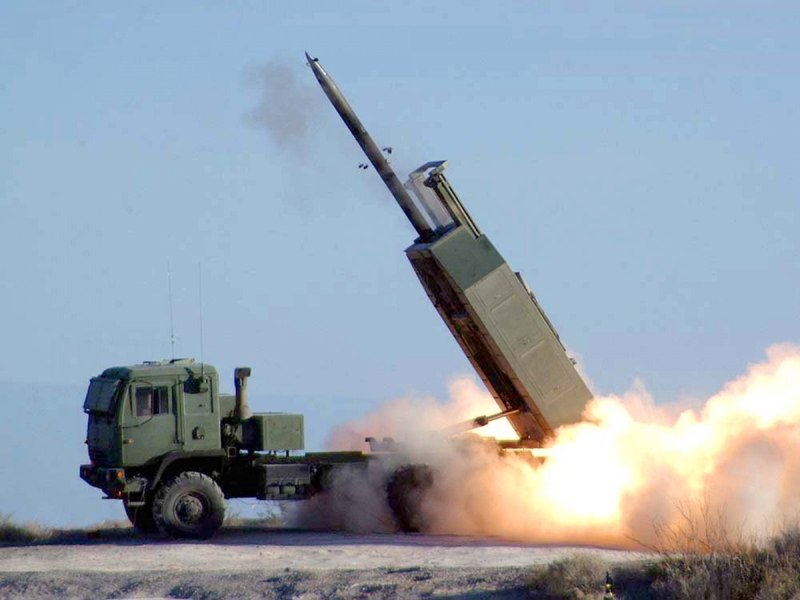
The Pentagon is fundamentally revising its approach to arms production, increasingly prioritizing cheaper missiles and emerging defense companies, according to the Financial Times. This strategic shift is informed by the experiences of the war in Ukraine and the substantial costs associated with recent conflicts, which have strained U.S. military reserves.
Washington is placing greater emphasis on defense industry startups to expedite the large-scale, cost-effective production of munitions and missile systems. "The American arsenal currently relies on expensive, sophisticated, and difficult-to-produce weapon systems. We have entered a new era of warfare, and the United States must adapt," stated Michael Horowitz, a former Pentagon official focused on defense innovation.
The United States currently produces about 600 Tomahawk missiles annually, with each costing an estimated $2.6 million. Other critical systems like the PrSM and JASSM range from $1.6 million to $1.9 million per unit. These high costs and limited production rates have raised concerns about the U.S.'s ability to sustain a prolonged conflict.
The American arsenal currently relies on expensive, sophisticated, and difficult-to-produce weapon systems. We have entered a new era of warfare, and the United States must adapt
In parallel, several experimental programs are underway in the U.S. for the acquisition and production of missiles and drones. Some projects aim for rapid, large-scale manufacturing, including expanding production lines across multiple states in anticipation of a major conflict. Doug Denneny, a U.S. Army veteran and representative for defense company Co-Aspire, compares his company's production model to fast-food chains, designing missiles for simple assembly by technicians with basic training.
Co-Aspire is developing two missile types for the Pentagon, with one perfected in four months and the second expected in five. Another startup, Castelion, founded three years ago, secured a contract for over 12,000 hypersonic missiles within five years. The company anticipates producing approximately 6,000 missiles annually at a cost of about $400,000 each once its New Mexico facility operates at full capacity, and is exploring expansion into other states. "Mass matters, cost matters, availability matters. You have to design from the start something that is easy to produce and cheap," Denneny added.
Mass matters, cost matters, availability matters. You have to design from the start something that is easy to produce and cheap
DistantNews Editorial
Originally published by Adevărul in Romanian. Translated, summarized, and contextualized by our editorial team with added local perspective. Read our editorial standards.
More Stories



From Our Blog

What Gets Lost (and Found) When News Is Translated

The Critical Role of Diaspora Media in Global News

What Travellers Should Know About Countries with Restricted Press

A Digital Nomad's Guide to Following Local News

How the Same Story Looks Different in Different Countries
