


People Power Party slams 'hasty' prosecution reform bill, warns of 'crime wave'
Translated from Korean, summarized and contextualized by DistantNews.
At a glance
News
Named sources
New plan
- The People Power Party criticizes the Democratic Party's proposed abolition of the prosecution's supplementary investigation rights.
- The opposition party argues the move is a hasty legislative experiment on the public.
- They also question the effectiveness of proposed alternatives and the timing of the Justice Minister's resignation.
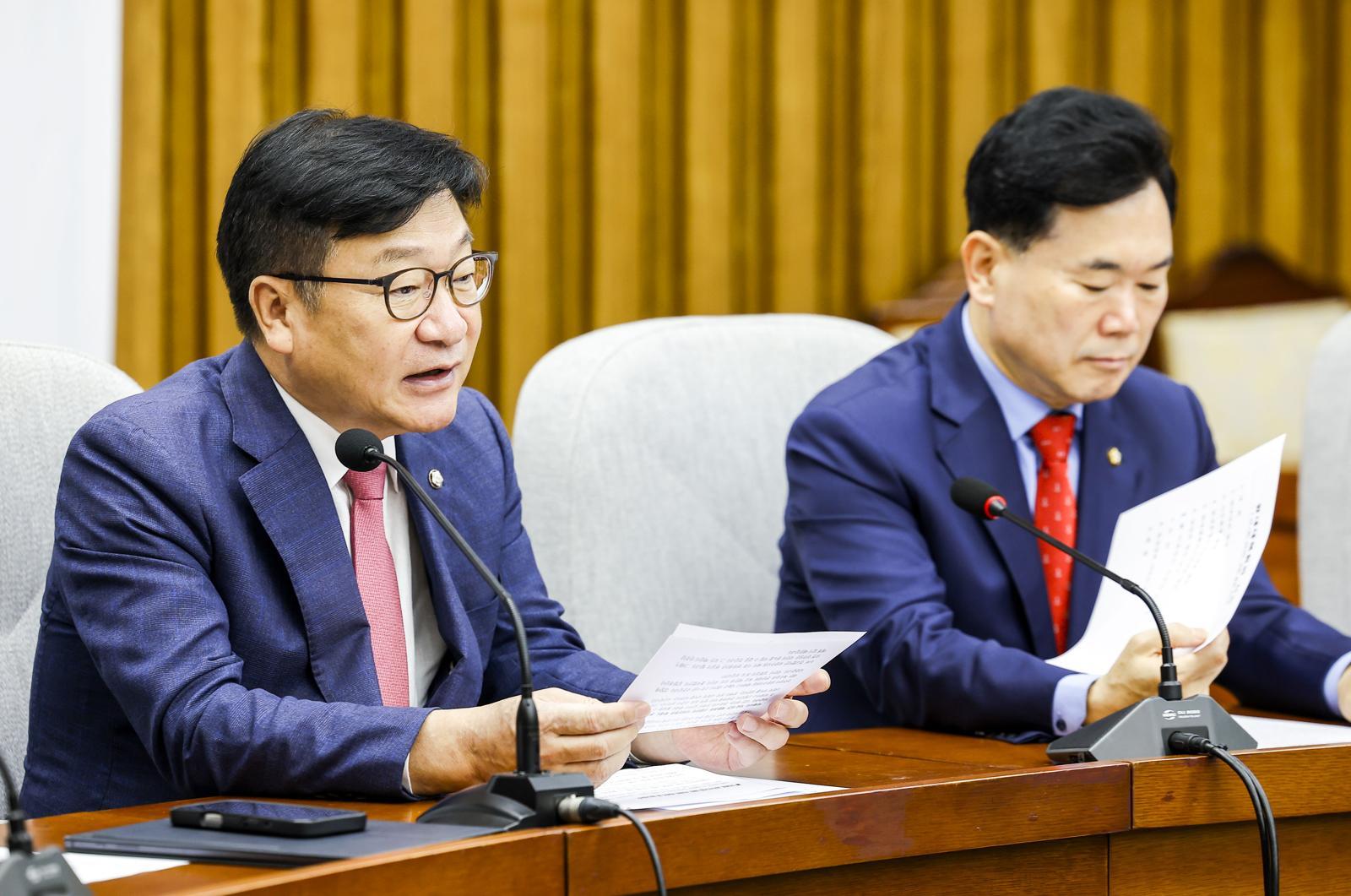
South Korea's opposition People Power Party has strongly criticized the Democratic Party's push to abolish the prosecution's supplementary investigation rights, labeling it a "hasty legislative experiment on the public." The party's floor leader, Jeong Jin-seok, voiced concerns during a party meeting, stating that the Democratic Party plans to pass the bill on July 30.
Our citizens have become the subjects of a hasty legislative experiment.
Jeong questioned the Democratic Party's self-assessment that the abolition would enhance victim protection and strengthen checks and balances. He pointed to the Justice Minister's potential resignation as an indication of fear regarding future crime waves following the abolition. The opposition party also criticized the proposal to establish a supplementary investigation unit within a new investigative agency, arguing that a single department cannot adequately address the potential chaos.
If it's such a good amendment, why would Justice Minister Jeong Sung-yoon resign from his position after pursuing such good prosecutorial reform? Isn't it because he fears taking responsibility for the crime wave that will occur after the abolition of supplementary investigation rights?
Furthermore, the People Power Party raised issues with limiting the scope of cases requiring full referral to the new investigative body to only seven major crimes. They argued that real-world criminal cases often involve a mix of offenses, such as assault, fraud, and sexual crimes, within a single incident. The party also contended that enhancing victims' rights to submit materials and opinions, and complainants' right to appeal, would primarily benefit those with legal assistance, potentially creating disparities based on economic status.
Is creating just one department to handle the subsequent chaos the answer? They are trying to shift all future confusion to the dedicated department and evade responsibility.
The party accused the Democratic Party of pursuing this legislation out of "revenge against the prosecution and desire for the party convention," urging them to reconsider. They also brought up past court rulings concerning election law violations, drawing parallels and criticizing potential legislative maneuvers. The People Power Party called for the President to exercise his veto power if the bill passes, emphasizing the importance of preventing the collapse of the criminal justice system.
The expansion of victims' rights to submit materials and opinions, and the complainants' right to appeal, are not fundamental solutions. These rights can only be properly utilized with the help of a lawyer. In other words, the level of legal protection will vary depending on the victim's or complainant's economic status. This policy, intended to help the socially vulnerable, paradoxically neglects them.
DistantNews Editorial
Originally published by Dong-A Ilbo in Korean. Translated, summarized, and contextualized by our editorial team with added local perspective. Read our editorial standards.
More Stories



From Our Blog

What Gets Lost (and Found) When News Is Translated

The Critical Role of Diaspora Media in Global News

What Travellers Should Know About Countries with Restricted Press

A Digital Nomad's Guide to Following Local News

How the Same Story Looks Different in Different Countries
