

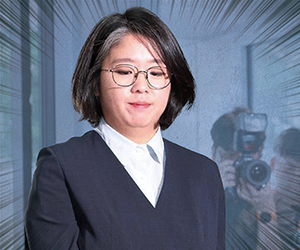

People's Power Party Leader Acknowledges Distance with Labor, Vows Collaboration
Translated from Korean and summarized by DistantNews. Read the original for the full story.
At a glance
News
Named sources
Context piece
- People's Power Party leader Jang Dong-hyuk acknowledged a past distance between his party and the labor sector.
- He pledged to work towards improving relations and collaborating with the Korean Confederation of Trade Unions (KCTU).
- Key issues discussed included extending the retirement age and strengthening the employment safety net amidst industrial transformation.
Jang Dong-hyuk, the leader of the People's Power Party (PPP), made a significant visit to the Seoul Regional Headquarters of the Korean Confederation of Trade Unions (KCTU) on April 21st. In a move signaling a potential shift in the party's approach to labor relations, Jang openly acknowledged a historical disconnect between the PPP and the labor movement, stating, "We acknowledge that there has been a distance between the labor community and us."
We acknowledge that there has been a distance between the labor community and us.
This visit, reportedly the first by an opposition party leader to the KCTU's Seoul headquarters in 63 years, underscores the PPP's intention to bridge this gap. Jang expressed a strong desire to "re-establish a path where the People's Power Party can walk together with the KCTU," inviting policy proposals from the union to be incorporated into the party's platform. He emphasized the party's commitment to actively seeking ways to collaborate and move forward together.
Although the distance has been long, the People's Power Party will continue to seek a path where we can walk together with the KCTU.
A central topic of discussion was the contentious issue of extending the retirement age. Jang acknowledged that while there is broad agreement on the general direction between the ruling and opposition parties, specific details remain a point of contention. He pledged to "take the lead in efforts to resolve this issue quickly in the National Assembly." Furthermore, he addressed the growing concerns surrounding artificial intelligence and its impact on workers' rights, promising to prioritize the strengthening of the employment safety net during this period of industrial transition.
There is no difference in the general direction between the ruling and opposition parties regarding the retirement age extension, but there are differences in opinions on how to resolve it.
From the perspective of the KCTU, represented by Chairman Kim Ki-chul, the visit is viewed with cautious optimism. Kim directly questioned whether the PPP had previously "disregarded labor," expressing a hope that the party would now "change its party policy by listening to the voices from the field" to create a framework for labor-government cooperation. He urged for a swift resolution on the retirement age extension, noting that despite the presence of many labor-affiliated lawmakers in the National Assembly, progress has been slow. This interaction highlights the complex dynamics of labor politics in South Korea, where historical grievances meet contemporary challenges, and political parties seek to court the labor vote by demonstrating a genuine commitment to workers' rights and welfare.
We will prioritize considering how to build a strong employment safety net in line with the transition of industries.
About this summary
Originally published by Dong-A Ilbo in Korean. Translated, summarized, and contextualized automatically by DistantNews, with a note on how the source frames the story. Not individually reviewed before publishing. How this works.
More Stories


From Our Blog

News in Translation: What Gets Lost, and How We Keep the Framing

Diaspora Media: How Communities Abroad Follow Home

Traveling Where the Press Is Not Free: How to Read the News There

The Digital Nomad's Guide to Local News

The Same Story, Different Countries: How Coverage Changes at the Border
