

Peru Closes 72 Ports Due to Anomalous Waves on North and Central Coast
Translated from Spanish, summarized and contextualized by DistantNews.
At a glance
News
Sources not specified
Ongoing story
- Peru has closed 72 ports along its northern and central coast due to anomalous waves.
- The closures affect fishing, commercial, and recreational maritime facilities.
- The maritime event is expected to continue until June 11, with the southern coast facing the most severe conditions.
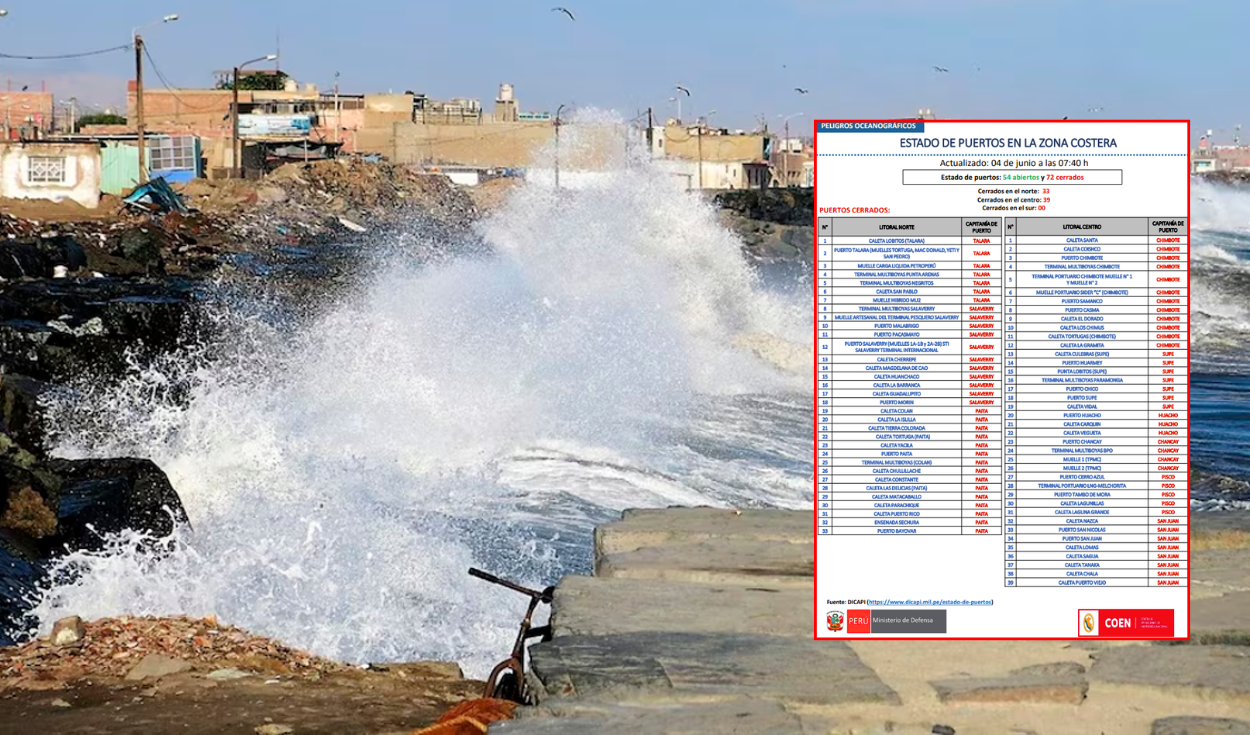
Peru has shut down 72 ports on its northern and central coast because of anomalous wave activity. The Directorate General of Captaincies and Coast Guard (Dicapi), part of the Peruvian Navy, announced the closures as a preventive measure against adverse maritime conditions. The restrictions impact port terminals, coves, and other maritime installations used for fishing, commerce, and recreation.
Authorities are monitoring the situation, and the number of closed ports may change as the phenomenon evolves. The Navy stated that the maritime event is expected to persist until June 11, according to reports from the Directorate of Hydrography and Navigation. The southern coast is anticipated to experience the most intense conditions, with the waves progressively worsening in the coming days.
This phenomenon is linked to changes in the South Pacific's atmospheric and oceanographic conditions. Dicapi is maintaining constant surveillance of sea conditions using observation systems along the Peruvian coast to provide continuous updates. The Navy urged the public to avoid recreational, sports, and fishing activities at sea while the anomalous wave alerts remain active. Ports in the northern regions of Talara, Salaverry, and Paita, including fishing and commercial facilities like Cabo Blanco and Bayóvar, are affected. Similarly, central coast ports managed by captaincies in Chimbote, Supe, Huacho, Chancay, Pisco, and San Juan are also under restrictions, impacting areas such as Casma, Chancay, and San Juan de Marcona.
DistantNews Editorial
Originally published by La República in Spanish. Translated, summarized, and contextualized by our editorial team with added local perspective. Read our editorial standards.
More Stories


From Our Blog

What Gets Lost (and Found) When News Is Translated

The Critical Role of Diaspora Media in Global News

What Travellers Should Know About Countries with Restricted Press

A Digital Nomad's Guide to Following Local News

How the Same Story Looks Different in Different Countries
