

Peru votes in polarized runoff election amid political crisis
Translated from Spanish, summarized and contextualized by DistantNews.
At a glance
News
Sources not specified
Ongoing story
- Peru is holding a highly polarized presidential runoff election on Sunday, June 7.
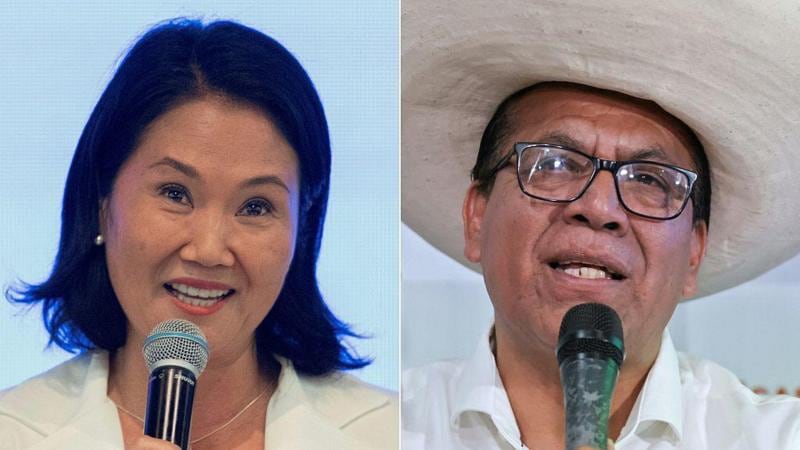
- The vote is between left-wing candidate Roberto Sánchez and right-wing candidate Keiko Fujimori.
- The election is seen as crucial for stabilizing a country that has seen eight presidents since 2016.
Peruvians are heading to the polls on Sunday, June 7, for a presidential runoff election defined by deep polarization and the persistent specter of political instability. The contest pits left-wing candidate Roberto Sánchez against the right-wing's Keiko Fujimori in a race where polls suggest a narrow margin, potentially leading to a vote-by-vote recount.
Roberto Burneo, president of the National Elections Jury, officially opened the voting process, assuring that the electoral system is ready and all materials have been distributed and verified. Over 27 million Peruvians are eligible to vote in an election considered pivotal for stabilizing a nation that has experienced a tumultuous political landscape, with eight different presidents since 2016.
The electoral system is already ready for this electoral festival. All the deployment of electoral material has been supervised and we can guarantee that 100% of the electoral material has already reached the polling stations.
The election presents starkly contrasting visions for the country. Keiko Fujimori, daughter of former president Alberto Fujimori and leader of the Popular Force party, is campaigning on a platform of citizen security, promising stricter crime policies and enhanced border controls. She has emphasized the nation's "critical moment" and the need to "rebuild" institutional stability, seeking the presidency for the fourth time.
The country has filled with extortionists and death, that's why we need Keiko to end terrorism, as her father did.
Sánchez, a congressman for the Juntos por el Perú party and former minister, focuses his campaign on combating corruption and reforming the political system. He positions himself as a representative of rural and vulnerable populations and accuses Fujimorismo of contributing to recent instability. Voters like Javier Rivero expressed a desire for Fujimori's strong stance on crime, stating, "The country has filled with extortionists and death, that's why we need Keiko to end terrorism, as her father did."
The election unfolds against a backdrop of significant challenges, including widespread crime and a fragile political environment. The winner, set to take office on July 28, faces the daunting task of navigating these issues and attempting to restore order after the tumultuous presidency of Pedro Castillo, who was impeached and arrested in December 2022.
The country is going through a critical moment and it is necessary to rebuild institutional stability.
DistantNews Editorial
Originally published by La Nación in Spanish. Translated, summarized, and contextualized by our editorial team with added local perspective. Read our editorial standards.
More Stories


From Our Blog

What Gets Lost (and Found) When News Is Translated

The Critical Role of Diaspora Media in Global News

What Travellers Should Know About Countries with Restricted Press

A Digital Nomad's Guide to Following Local News

How the Same Story Looks Different in Different Countries
