

Peruvian Amazon Faces Heightened Forest Fire Risk Amid El Niño Warnings
Translated from Spanish, summarized and contextualized by DistantNews.
At a glance
News
Named sources
Context piece
- A new study warns that the Peruvian Amazon faces a heightened risk of large-scale forest fires due to the potential return of El Niño conditions.
- Researchers highlight that extreme fire seasons occur when El Niño coincides with other factors like high Atlantic temperatures, intense droughts, and human activities such as deforestation.
- While El Niño is predicted for 2026-2027, the study emphasizes that Peru has time to strengthen prevention measures to mitigate potential impacts.
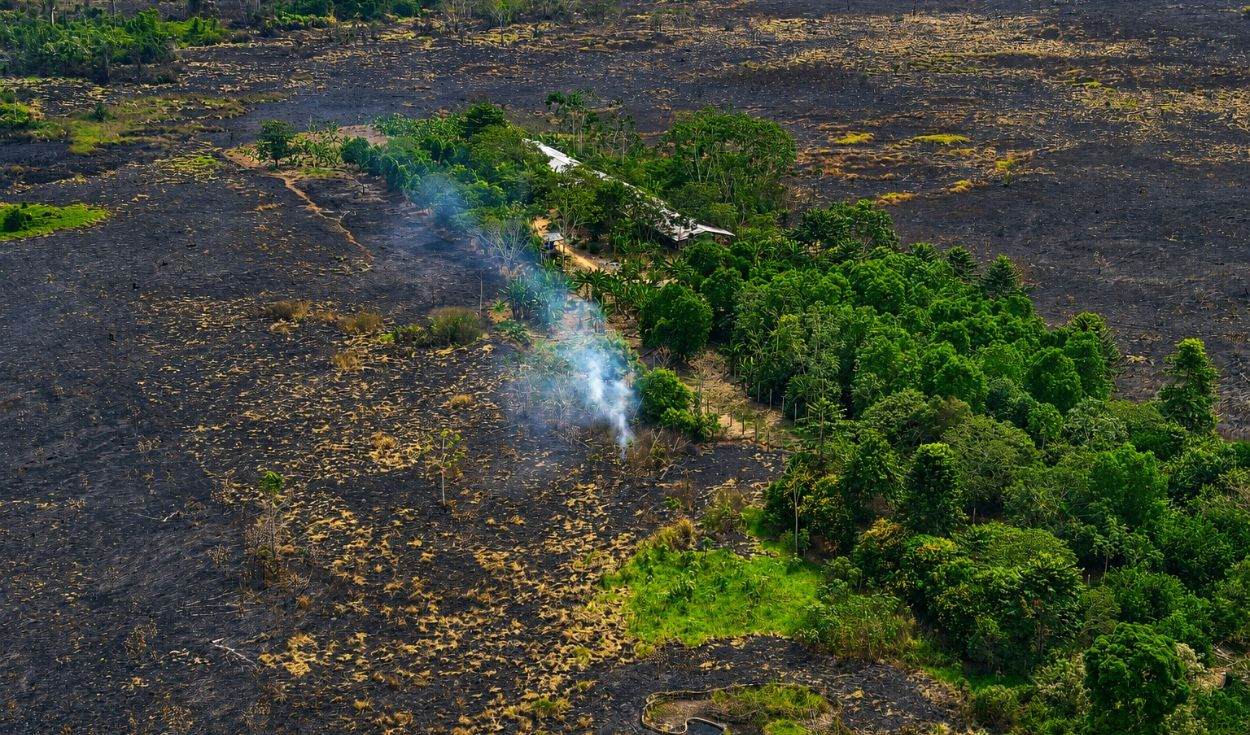
The Peruvian Amazon is on high alert as a new study from Conservación Amazónica (ACCA) warns of a significant risk of major forest fires if climatic conditions similar to those that caused the 2024 crisis reoccur. The research indicates a high probability of a strong El Niño event between 2026 and 2027, providing a crucial window for Peru to bolster prevention efforts.
The study, titled 'El Niño and forest fires in the Peruvian Amazon: What can we expect for the 2026-2027 season?', debunks the idea that El Niño alone causes extreme fire seasons. It reveals that the most severe events in recent decades happened when a global El Niño coincided with exceptionally high temperatures in the North Tropical Atlantic, intense droughts, and human-driven factors like deforestation, agricultural expansion, and the use of fire for land clearing.
Last year's severe fire season in the Peruvian Amazon was attributed to a combination of a global El Niño, followed by La Niña, elevated temperatures in the North Tropical Atlantic, and intensified drought. This was exacerbated by human pressures on forests, leading to the most severe fire season on record. The consequences included the destruction of approximately 240,000 hectares of forests and ecosystems, impacting biodiversity, tree resilience, water availability, river transport, economic activities, and public health.
Despite the projections, the study's authors stress that not all factors contributing to the 2024 crisis have yet aligned. Sidney Novoa, ACCA's Director of Technologies for Conservation, stated, "Our message is not that we will necessarily repeat a scenario like 2024. What the scientific evidence shows is which conditions significantly increase that risk and why we must monitor them permanently. We still have time to prepare before these variables coincide again."
Furthermore, the research assessed the response capacity of 10 Amazonian districts most affected by fires between 2013 and 2024. It found that several of these areas lack updated prevention plans, and the presence of fire departments remains limited, indicating ongoing gaps in preparedness.
Our message is not that we will necessarily repeat a scenario like 2024. What the scientific evidence shows is which conditions significantly increase that risk and why we must monitor them permanently. We still have time to prepare before these variables coincide again.
DistantNews Editorial
Originally published by La República in Spanish. Translated, summarized, and contextualized by our editorial team with added local perspective. Read our editorial standards.
More Stories
From Our Blog

What Gets Lost (and Found) When News Is Translated

The Critical Role of Diaspora Media in Global News

What Travellers Should Know About Countries with Restricted Press

A Digital Nomad's Guide to Following Local News

How the Same Story Looks Different in Different Countries
