


Philippines Earthquake: Rescuers Battle Aftershocks and Damaged Infrastructure in Search for Survivors
Translated from English, summarized and contextualized by DistantNews.
At a glance
News
Sources not specified
Ongoing story
- Rescue efforts continue in the southern Philippines after a powerful 7.8 magnitude earthquake, but are hampered by over 2,000 aftershocks and damaged infrastructure.
- At least 47 people have died and over 480 are injured, with 45,000 displaced and 3,100 homes damaged.
- Aid agencies face challenges reaching remote communities due to destroyed roads and bridges, prioritizing essential supplies like clean water, food, and medical care.
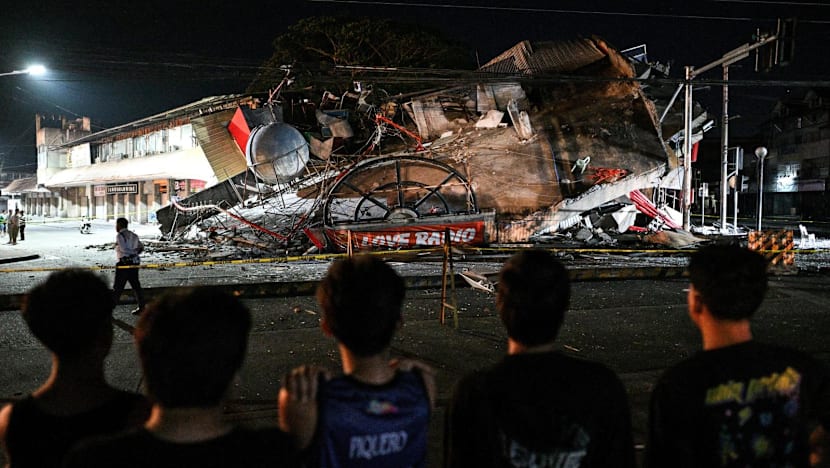
Search and rescue teams are pressing on in the southern Philippines to find dozens of people still missing days after a powerful 7.8 magnitude earthquake struck the Mindanao region. Operations are complicated by more than 2,000 aftershocks, some reaching 6.4 magnitude, and significant damage to critical infrastructure.
The earthquake, which hit off the coast of Mindanao on Monday, has claimed at least 47 lives and injured more than 480 others. Officials report that approximately 45,000 people have been displaced, and over 3,100 homes have been damaged. The ongoing seismic activity poses a significant risk to rescue workers.
"It's a really dangerous situation. There're a lot of challenges," said Drew Strobel, operations manager at the International Federation of Red Cross and Red Crescent Societies (IFRC). "(Rescuers) need to be careful as they go in to extricate people from buildings that have collapsed. The safety component is something that really concerns us."
It's a really dangerous situation. There're a lot of challenges. (Rescuers) need to be careful as they go in to extricate people from buildings that have collapsed. The safety component is something that really concerns us.
Aid agencies, including the IFRC and the Philippine Red Cross, are working to assess needs and provide emergency assistance. A major hurdle is reaching isolated communities, as damaged roads and collapsed bridges have rendered some areas inaccessible. Rescuers are racing against time, as the crucial 72-hour window for finding survivors trapped under rubble has passed.
"Right now, there's a lot of focus on urban areas, but there's still a lot of rural areas that have yet to be assessed, and those are blocked by broken roads and bridges," Strobel explained. "Getting access to some of those remote communities is really a challenge for us. We’re focusing on getting to those outlying areas to provide life-saving assistance. Until we get to them, our work will not be done."
Humanitarian organizations are prioritizing clean water, food, sanitation, and healthcare. The Philippine Red Cross has set up medical tents to replace damaged hospital facilities and is providing emergency medical care and ambulance services. They have also launched an emergency appeal to support relief distributions, safe water provision, shelter assistance, and psychosocial support for affected families.
Right now, there's a lot of focus on urban areas, but there's still a lot of rural areas that have yet to be assessed, and those are blocked by broken roads and bridges. Getting access to some of those remote communities is really a challenge for us. We’re focusing on getting to those outlying areas to provide life-saving assistance. Until we get to them, our work will not be done.
DistantNews Editorial
Originally published by CNA in English. Translated, summarized, and contextualized by our editorial team with added local perspective. Read our editorial standards.
More Stories


From Our Blog

What Gets Lost (and Found) When News Is Translated

The Critical Role of Diaspora Media in Global News

What Travellers Should Know About Countries with Restricted Press

A Digital Nomad's Guide to Following Local News

How the Same Story Looks Different in Different Countries
