


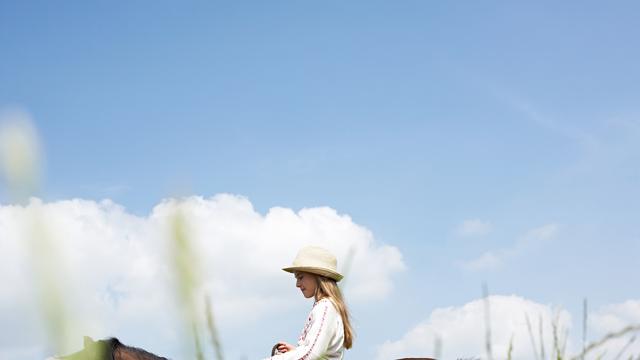
Picture books about horses: Pony child and horse girl
Translated from German, summarized and contextualized by DistantNews.
At a glance
In-depth
Sources not specified
Context piece
- Two new children's picture books explore the relationship between humans and horses.
- "Kiki und ich" by Leo Timmers tells the story of a girl and her horse growing up together.
- Both books, told from the animals' perspective, highlight the bond and fascination between children and horses.
Two recent picture books delve into the enduring fascination between children and horses, exploring themes of freedom, friendship, and care. These books offer a glimpse into the modern relationship between humans and these powerful animals, told from the perspective of the horses themselves.
"Kiki und ich" (Kiki and I), published by Aracari Verlag and written by Belgian author Leo Timmers, centers on the horse Polly and the girl Kiki. The narrative follows their journey as they grow up together, forming a deep friendship and exploring the world side-by-side. Timmers illustrates their bond with delicate and humorous black-and-white drawings, capturing moments like Kiki learning to ride, her thorough grooming efforts, and her confident guidance through puddles.
Polly, the horse, observes Kiki's well-intentioned care with large, round eyes, seemingly questioning the necessity of certain actions like braiding her mane. Timmers uses colorful tableaus to depict their adventures, from meadows to the seaside, through thunderstorms, and up mountains. He emphasizes the animal's strength and musculature, suggesting that horses can open up new worlds for humans through their power.
While horses once played a crucial role in conquering empires, plowing fields, and pulling transportation, they have largely disappeared from daily life for many. Yet, the fascination with these animals persists, particularly among young girls. These new books aim to capture the current state of the human-horse relationship, reminding readers of the unique connection that can form between children and these majestic creatures.
DistantNews Editorial
Originally published by Die Zeit in German. Translated, summarized, and contextualized by our editorial team with added local perspective. Read our editorial standards.
More Stories



From Our Blog

What Gets Lost (and Found) When News Is Translated

How the Same Story Looks Different in Different Countries

The Critical Role of Diaspora Media in Global News

What Travellers Should Know About Countries with Restricted Press

A Digital Nomad's Guide to Following Local News
