


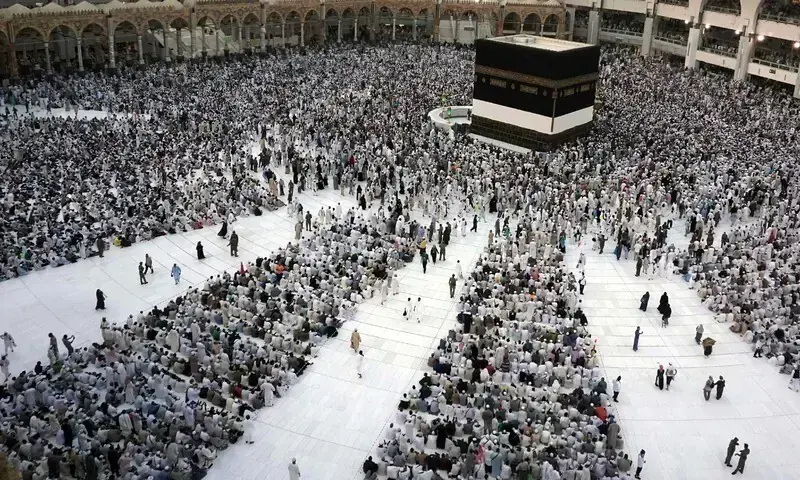
Pilgrims can choose their Haj year under new four-year policy
Summarized and contextualized by DistantNews.
At a glance
News
Official statement
New plan
- Pakistan has introduced a new four-year Haj Policy for 2027-2030, allowing pilgrims to choose their preferred year.
- A registration and waiting list system is in place, requiring a 10% deposit to reserve a slot.
- The policy aims for transparent, digital governance, cost reduction through long-term contracts, and increased private sector oversight.
Pakistan has launched its first four-year Haj Policy, set to run from 2027 to 2030, which introduces a significant change allowing pilgrims to select their desired year for the pilgrimage. Federal Minister for Religious Affairs Sardar Muhammad Yousuf announced the new policy, emphasizing it as a fundamental reform aimed at ensuring transparent and digital governance, accountability, and improved logistical facilities.
A key feature of the policy is the introduction of a registration and waiting list system. Pilgrims can now reserve their preferred Haj year by depositing approximately 10 percent of the total expected expenses. Selections will be made on a first-come, first-served basis through a transparent digital waiting list, streamlining the process for intending pilgrims.
This is not only a policy but the beginning of fundamental and lasting reforms in Haj arrangements.
To enhance efficiency and reduce costs, the government plans to enter into three- to four-year contracts for essential services such as accommodation, transportation, catering, air travel, and cargo. This move is expected to improve the quality of services and potentially lower expenses. The minister also highlighted that all stages of the Haj process, from registration to grievance redressal and post-Haj reviews, will be managed through a fully digital system.
The policy maintains the existing quota distribution, with 60 percent allocated to the government scheme and 40 percent to private schemes until 2030, subject to revision. The government aims to transition into a regulatory and monitoring role, increasing the involvement of the private sector in managing operations. Multiple Haj packages with varying durations will be offered under the Government Haj Scheme to cater to different budgets and needs. Procurement and contract awards will strictly adhere to government procurement rules, with any remaining funds to be refunded to pilgrims. An independent third party will review both public and private Haj arrangements to ensure quality and service compliance, with private companies facing tighter oversight through a digital portal.
The policy aims to ensure transparent and digital governance, accountability, merit and improved logistical facilities for pilgrims.
DistantNews Editorial
Originally published by Dawn. Summarized and contextualized by our editorial team with added local perspective. Read our editorial standards.
More Stories

From Our Blog

What Gets Lost (and Found) When News Is Translated

The Critical Role of Diaspora Media in Global News

What Travellers Should Know About Countries with Restricted Press

A Digital Nomad's Guide to Following Local News

How the Same Story Looks Different in Different Countries
