


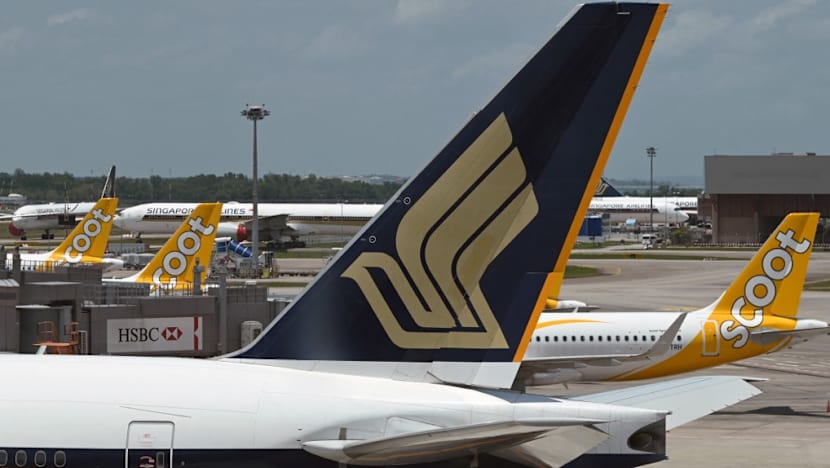
Pilots reminded to take more cautious approach near weather after turbulence injures crew on SIA, Scoot flights
Summarized and contextualized by DistantNews.
At a glance
News
Named sources
Outcome reported
- Singapore's transport safety investigators advised pilots to fly more cautiously near weather and secure cabins earlier following turbulence incidents on SIA and Scoot flights.
- The Transport Safety Investigation Bureau (TSIB) noted that the cases highlighted the need for flight crews to be vigilant near weather and act promptly to prevent turbulence-related injuries.
- Following an incident where six cabin crew members were injured, SIA revised its cabin securing procedures and incorporated unanticipated turbulence into crew training.
Pilots should adopt a more conservative approach when flying near adverse weather and take steps to secure the cabin earlier, according to Singapore's transport safety investigators. This recommendation follows separate turbulence incidents involving a Singapore Airlines (SIA) and a Scoot flight that resulted in cabin crew injuries.
The cases underscored the need for flight crews to be cautious when operating near weather and to take early action to reduce the risk of injuries from turbulence.
The Transport Safety Investigation Bureau (TSIB) released final reports about a year after the incidents, emphasizing the critical need for flight crews to exercise caution near weather systems. Prompt action to mitigate the risks associated with turbulence is essential to prevent injuries, the bureau stated. TSIB classified both occurrences as accidents, though it proposed no safety recommendations as operators had already implemented corrective actions.
In one incident on June 27, 2025, an SIA Airbus A350-900 encountered severe turbulence while descending towards Shanghai Pudong International Airport. Despite the fasten-seat-belt signs being on for passengers, cabin crew were still performing duties. The turbulence led to injuries for six cabin crew members, including one with a fractured ankle. TSIB noted that instructing the crew to be seated before navigating between weather cells could have reduced the risk of injury.
Instructing the crew to be seated before travelling between the weather cells could have reduced the risk of turbulence injury.
SIA has since revised its cabin securing procedures to encourage a more conservative approach to turbulence management. The airline has also integrated scenarios of unanticipated turbulence into its joint technical and cabin crew training. Additionally, a new tool to enhance turbulence monitoring and assessment has been introduced for flight crews.
The tool provides the pilots with information to enhance turbulence monitoring and make more accurate assessments for flig
DistantNews Editorial
Originally published by CNA. Summarized and contextualized by our editorial team with added local perspective. Read our editorial standards.
More Stories


From Our Blog

What Gets Lost (and Found) When News Is Translated

The Critical Role of Diaspora Media in Global News

What Travellers Should Know About Countries with Restricted Press

A Digital Nomad's Guide to Following Local News

How the Same Story Looks Different in Different Countries
