

Police evict informal constructions occupying avenue for over 40 years in Carabayllo
Translated from Spanish and summarized by DistantNews. Read the original for the full story.
At a glance
News
Sources not specified
Outcome reported
- Over 400 police officers and municipal personnel conducted an operation in Carabayllo, Peru, to reclaim over 14 blocks of Avenida Túpac Amaru.
- The operation removed informal constructions and bus stops that had occupied public space for more than 40 years, causing traffic congestion and security concerns.
- Some affected merchants protested the eviction, alleging they had paid the Carabayllo municipality for the use of these spaces.
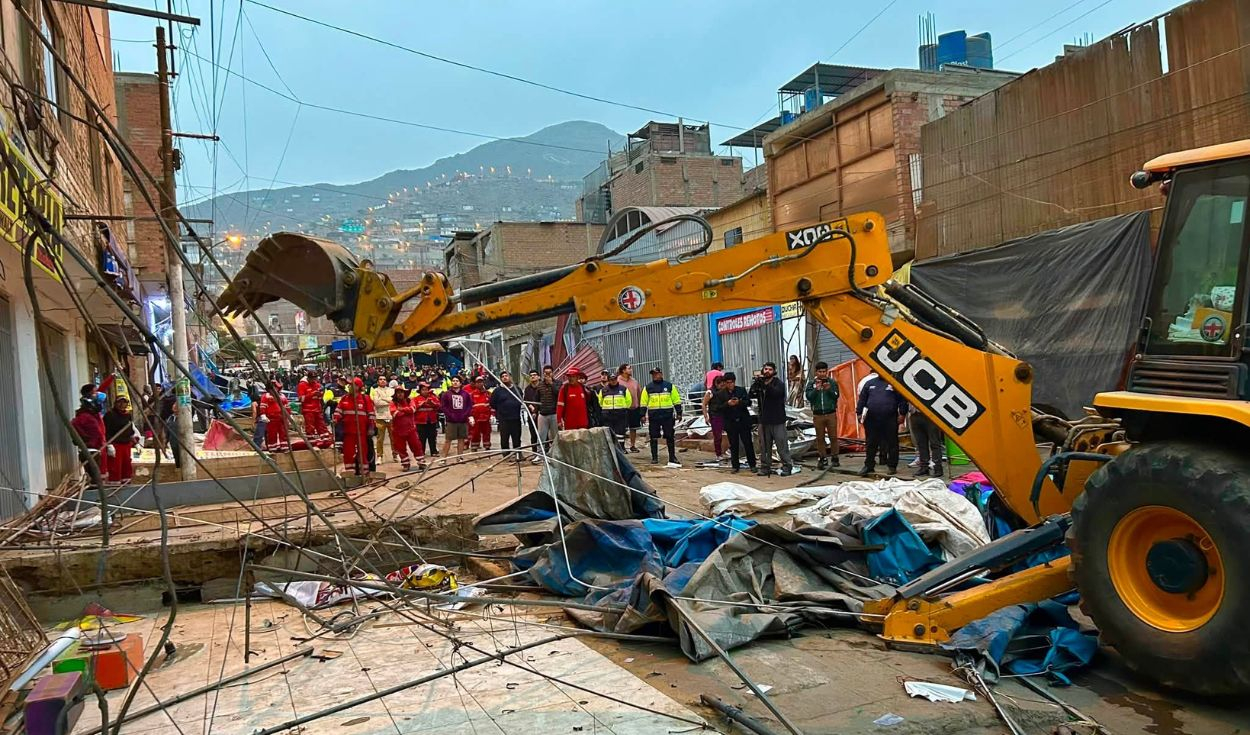
In a large-scale operation early Wednesday morning, Peruvian police and the Carabayllo municipality reclaimed over 14 blocks of Avenida Túpac Amaru in the El Progreso neighborhood. The operation, dubbed "Alameda El Progreso 2026," involved more than 400 police officers, specialized units, municipal staff, and heavy machinery to remove informal constructions and bus stops that had encroached upon public space for over four decades.
The intervention targeted an area between kilometers 19.5 and 20 of the avenue, along with adjacent streets. According to the head of the Lima Centro Police Region, General PNP Jorge Luis Castillo Vargas, the zone was occupied by informal commerce and bus stops, which led to significant traffic congestion and hindered free transit. General Castillo also noted that these areas were reportedly used by individuals linked to criminal activities.
The zone was occupied by informal commerce and bus stops, situation that generated traffic congestion and difficulties for free transit.
During the operation, heavy machinery dismantled metal structures, awnings, and cement floors. The eviction affected an estimated 1,000 stalls, according to reports. Some of the affected merchants voiced strong objections to the measure, claiming they had been paying the Carabayllo municipality for the right to use these public spaces.
I paid every three months for the floor and the roof of my stall.
One vendor stated she paid fees every three months for the use of her stall's floor and roof. Others claimed they had not received prior notification of the operation. Another merchant asserted that the municipality also collected payments for awnings and the use of public roads. These merchants indicated they would have removed their structures voluntarily if they had been given advance notice.
As of the operation's conclusion, the Carabayllo Municipality had not issued a public response to these accusations. The National Police of Peru stated that they would maintain a police presence in the recovered areas to prevent reoccupation.
If we had known in advance, we would have removed our structures.
About this summary
Originally published by La República in Spanish. Translated, summarized, and contextualized automatically by DistantNews, with a note on how the source frames the story. Not individually reviewed before publishing. How this works.
More Stories

From Our Blog

What Gets Lost (and Found) When News Is Translated

The Critical Role of Diaspora Media in Global News

What Travellers Should Know About Countries with Restricted Press

A Digital Nomad's Guide to Following Local News

How the Same Story Looks Different in Different Countries
