


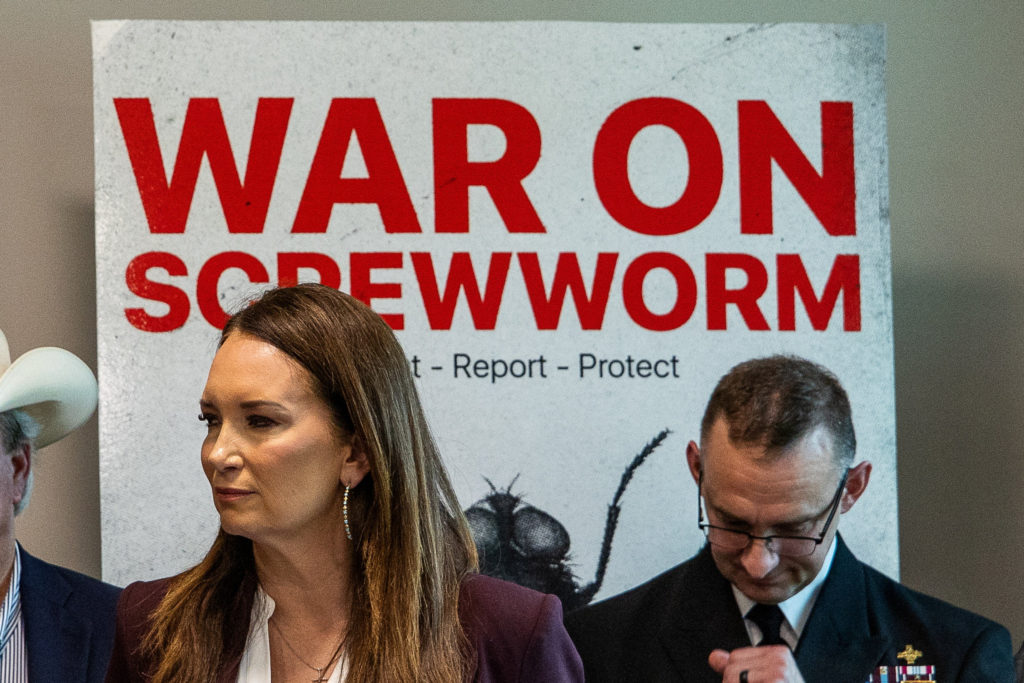
Political blame game erupts as screwworm parasite threatens Texas cattle
Translated from English, summarized and contextualized by DistantNews.
At a glance
News
Sources not specified
Context piece
- A parasitic fly, the New World screwworm, has reappeared in the U.S. after a 60-year absence, threatening the nation's cattle industry.
- U.S. Agriculture Secretary Brooke Rollins visited Texas to observe sterile fly releases and blamed the Biden administration for the parasite's return, while Democrats point to cuts under the Trump administration.
- The USDA plans a billion-dollar response, including a plant to produce 300 million sterile flies weekly, to combat the pest which has already impacted Mexico's beef industry.
The New World screwworm, a parasitic fly eradicated from the U.S. six decades ago, has returned and poses a significant threat to the nation's cattle industry. U.S. Agriculture Secretary Brooke Rollins visited a Texas ranch where the pest was detected, observing the release of sterile flies intended to control the population. Rollins asserted that the Biden administration is responsible for the parasite's resurgence, a claim countered by Democratic leaders who blame funding cuts during the Trump administration.
He couldn't be happier. He's bouncing around the pasture.
Scientists are uncertain how the screwworms re-emerged, but a warming planet may be contributing to their spread. The U.S. Department of Agriculture is preparing a substantial response, estimating over $1 billion for efforts to protect livestock. A significant portion of this budget, approximately $750 million, will fund a new plant designed to produce up to 300 million sterile flies per week. This method relies on sterile males mating with females, preventing viable eggs and thus reducing the population.
Screwworms are on their way to becoming a billion-dollar international problem, but can be contained if ranchers are vigilant, watch their herds and other wildlife, and quickly treat any infestations.
The screwworm parasite lays eggs in the wounds of warm-blooded animals, and the larvae feed on living flesh. While experts believe the parasite will not immediately impact near-record-high beef prices if contained, it has already disrupted Mexico's beef industry. The U.S. halted Mexican livestock imports last summer due to the parasite's presence. Mexico has recorded over 28,000 cases in the past two years, primarily in its southern states, and has consequently restricted imports of live animals from the U.S.
Protein is a big trend in food. We've seen a number of cycles through our time in manufacturing, and certainly protein is the one that's here and now. Every food manufacturer is trying to boost protein content in their products, and I don't think that trend is going to go away anytime soon.
DistantNews Editorial
Originally published by PBS NewsHour in English. Translated, summarized, and contextualized by our editorial team with added local perspective. Read our editorial standards.
More Stories


From Our Blog

How the Same Story Looks Different in Different Countries

What Gets Lost (and Found) When News Is Translated

The Critical Role of Diaspora Media in Global News

What Travellers Should Know About Countries with Restricted Press

A Digital Nomad's Guide to Following Local News
