

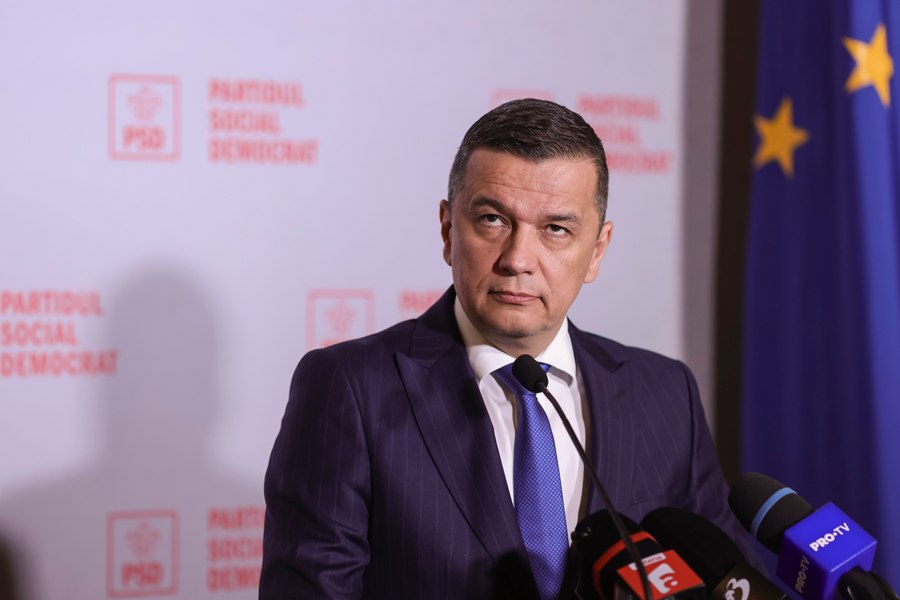

Poll: Nearly half of Romanians believe Nicușor Dan seeks to reduce political tensions
Translated from Romanian and summarized by DistantNews. Read the original for the full story.
At a glance
News
Named sources
Context piece
- A recent INSCOP poll indicates that nearly half of Romanians believe President Nicușor Dan is attempting to de-escalate political tensions.
- However, a significant portion (36.3%) believe he is exacerbating conflicts, while 14.6% are undecided.
- The poll also reveals widespread dissatisfaction with Dan's performance as president, with 70.5% expressing negative views, and a similar level of dissatisfaction reported for Prime Minister Ilie Bolojan.
A recent INSCOP survey reveals a divided public opinion regarding President Nicușor Dan's role in Romania's often fractious political landscape. Nearly half of those polled (49.2%) perceive Dan's recent public statements as an effort to reduce political tensions, suggesting a desire for stability among a segment of the population. This perspective is more prevalent among voters of the PSD, PNL, and USR parties, indicating a potential alignment with established political forces seeking a calmer discourse.
Conversely, a substantial minority (36.3%) view Dan's actions as contributing to the amplification of conflicts between political parties and leaders. This sentiment is particularly strong among AUR voters, who appear to be the most critical of the president's engagement. Such starkly opposing views highlight the deep polarization within Romanian society and how political affiliations heavily color the interpretation of public figures' actions.
Beyond his perceived role in political mediation, the survey also paints a picture of significant public dissatisfaction with Dan's overall performance as president. A considerable 70.5% of respondents expressed dissatisfaction, with over 42% being "very dissatisfied." This widespread discontent suggests that, regardless of his intentions in de-escalating tensions, his presidency is not resonating positively with a majority of Romanians. Similarly, Prime Minister Ilie Bolojan also faces considerable disapproval, with nearly 68% of respondents expressing dissatisfaction with his work, indicating broader concerns about the current government's effectiveness and public trust.
From a Romanian perspective, these poll results are significant because they reflect the ongoing struggle for political consensus and public trust in a post-communist democracy. While Western media might focus on the broader geopolitical implications or specific policy debates, here in Romania, the daily discourse is often dominated by these internal political dynamics and the public's perception of leadership. The deep divisions revealed by the INSCOP poll are not merely academic; they represent the lived experience of citizens navigating a complex and often contentious political environment. The fact that both the President and Prime Minister are viewed with such high levels of dissatisfaction suggests a public yearning for more effective and unifying leadership, a sentiment that resonates deeply within the national consciousness.
Half of Romanians believe that through the public positions expressed during this period, President Nicușor Dan acted to reduce misunderstandings between parties and political leaders, and a third believe the opposite, namely that he acted to amplify the misunderstandings between parties and political leaders.
About this summary
Originally published by Adevărul in Romanian. Translated, summarized, and contextualized automatically by DistantNews, with a note on how the source frames the story. Not individually reviewed before publishing. How this works.
More Stories

From Our Blog

News in Translation: What Gets Lost, and How We Keep the Framing

Diaspora Media: How Communities Abroad Follow Home

Traveling Where the Press Is Not Free: How to Read the News There

The Digital Nomad's Guide to Local News

The Same Story, Different Countries: How Coverage Changes at the Border
