

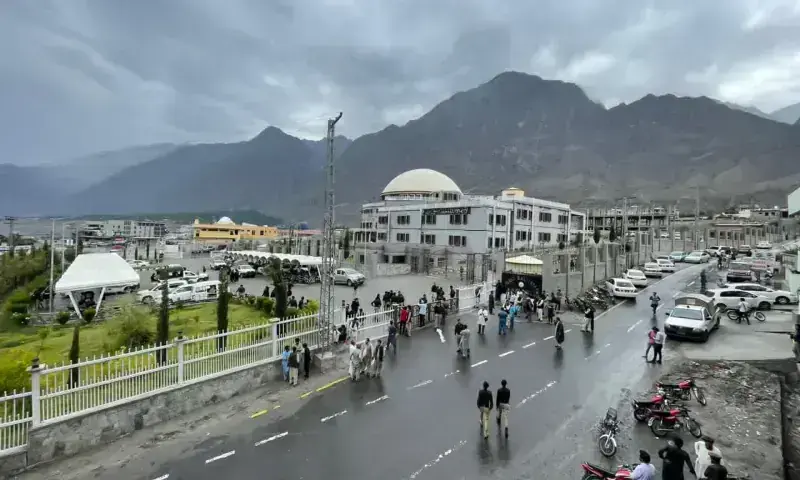
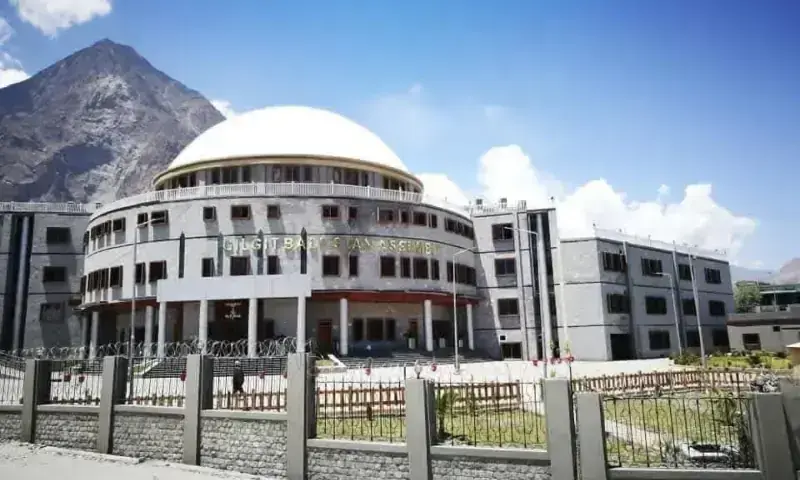
Polling begins in Gilgit-Baltistan general elections for 24 seats
Summarized and contextualized by DistantNews.
At a glance
News
Named sources
Ongoing story
- Voting has commenced for 24 seats in the Gilgit-Baltistan Legislative Assembly amid heightened security.
- The elections, delayed by four months due to winter weather, are crucial for the region's governance.
- A total of 396 candidates are competing, with a significant number running as independents.
Residents of Gilgit-Baltistan began casting their votes on Sunday morning for 24 seats in the region's Legislative Assembly. The election process is underway under strict security measures across the mountainous territory.
These general elections were postponed by four months, primarily due to the harsh winter conditions that typically make travel and campaigning difficult in the region. The Gilgit-Baltistan Assembly comprises 33 seats in total. While 24 are directly contested, six are reserved for women and three for technocrats and professionals, with political parties nominating candidates for these reserved seats through proportional representation.
A large field of 396 candidates is vying for positions, with 266 running as independents, highlighting a diverse political landscape. Notably, only eight women are participating in the direct elections, five of whom are running as independents. The total electorate numbers 963,034 registered voters, comprising 566,097 males and 396,937 females across the region's 10 districts.
Security has been a major focus, with 6,000 Punjab police personnel and 2,000 from Islamabad police deployed. Out of 1,391 polling stations, 349 are categorized as sensitive and 551 as highly sensitive, particularly in districts like Diamer. Election officials have urged voters to participate peacefully, with powers of a first-class magistrate delegated to returning officers to ensure a fair and transparent process.
All necessary arrangements have been put in place to ensure peaceful, free, fair and transparent elections across the region.
DistantNews Editorial
Originally published by Dawn. Summarized and contextualized by our editorial team with added local perspective. Read our editorial standards.
More Stories

From Our Blog

What Gets Lost (and Found) When News Is Translated

The Critical Role of Diaspora Media in Global News

What Travellers Should Know About Countries with Restricted Press

A Digital Nomad's Guide to Following Local News

How the Same Story Looks Different in Different Countries
