


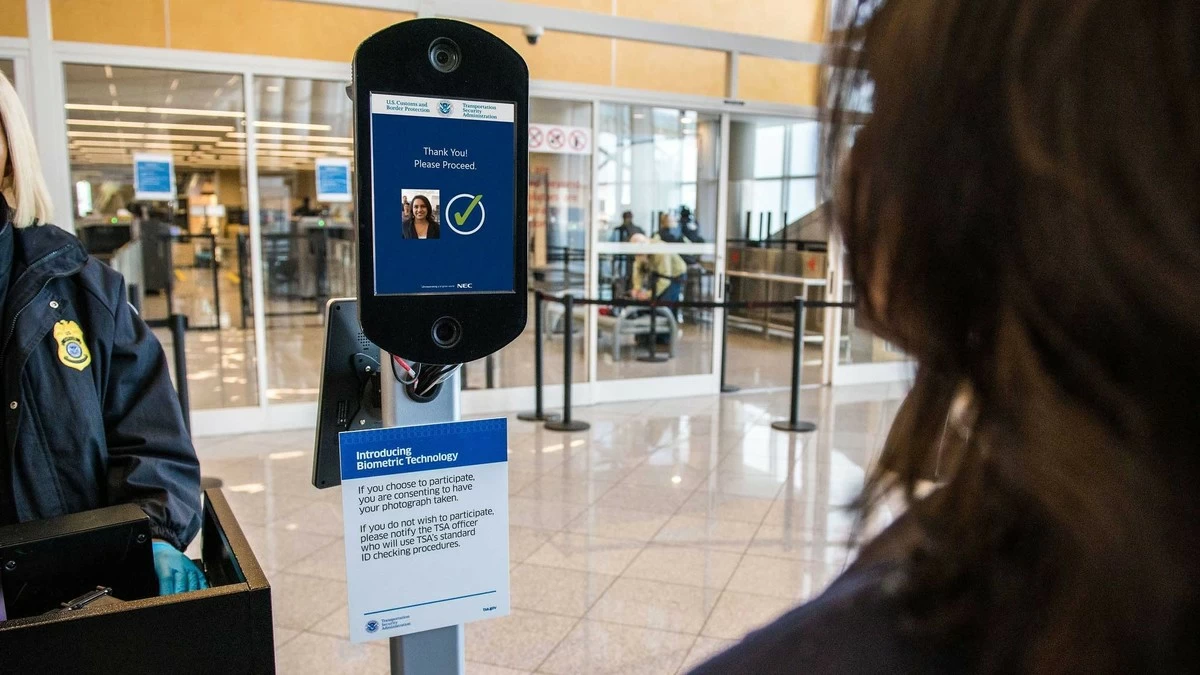
Powerful artificial intelligence making facial recognition better at identifying you
Summarized and contextualized by DistantNews.
At a glance
In-depth
Sources not specified
Context piece
- Facial recognition technology is increasingly used in venues like Madison Square Garden and airports for surveillance and access control.
- Advanced deep learning models have significantly improved accuracy, with AI systems now exceeding 99% accuracy in controlled environments.
- Despite improvements, real-world conditions like poor lighting and face masks can still hinder performance, leading to potential errors.
Facial recognition technology is becoming a common feature in daily life, from event venues like Madison Square Garden to airport security checkpoints. Major venues are adopting the technology for various purposes, including surveillance and offering optional ticketless entry. The Transportation Security Administration (TSA) has deployed advanced facial recognition systems at numerous airports, with plans to expand their use to cities hosting the 2026 World Cup.
Concerns regarding the accuracy and potential bias of facial recognition have grown alongside its adoption. However, research from the University of Dayton's Vision Lab indicates that sophisticated deep learning models have dramatically enhanced the reliability of these systems. AI models trained on vast datasets of face images now achieve over 99% accuracy in controlled settings such as smartphones, airports, and border crossings.
The facial recognition process involves identifying a face, creating a unique 'faceprint' by cataloging key features, and then comparing this print against a database to verify identity or grant access. This technology offers a faster and simpler alternative to traditional ID checks and passwords, while also significantly reducing the risk of forgery and fraud.
Innovations from tech giants like Google (FaceNet), Facebook AI Research (DeepFace), and NEC (NeoFace) have further improved recognition capabilities, even for partially obscured faces. Despite these advancements, challenges remain. Real-world conditions such as low lighting, difficult viewing angles, extreme facial expressions, or concealment by masks and sunglasses can still impede system performance, leading to potential errors like false positives (incorrectly matching a person) or false negatives (failing to match a person).
DistantNews Editorial
Originally published by Arab Times. Summarized and contextualized by our editorial team with added local perspective. Read our editorial standards.
More Stories


From Our Blog

What Gets Lost (and Found) When News Is Translated

The Critical Role of Diaspora Media in Global News

What Travellers Should Know About Countries with Restricted Press

A Digital Nomad's Guide to Following Local News

How the Same Story Looks Different in Different Countries
