


Praying mantis sightings sought in Mecklenburg-Vorpommern
Translated from German, summarized and contextualized by DistantNews.
At a glance
News
From a news agency
New plan
- Mecklenburg-Vorpommern is seeking public sightings of the European praying mantis (Mantis religiosa) to track its spread.
- The species, once confined to southern Germany, has expanded northward, likely due to climate change.
- A new online portal allows citizens to report sightings, helping researchers map the insect's current distribution.
Authorities in Mecklenburg-Vorpommern are calling on the public to report sightings of the European praying mantis (Mantis religiosa) to help track the insect's spread in the region. The University of Rostock noted that sightings have occurred in unusual locations, such as a regional train traveling between Greifswald and Stralsund, where the insects would typically not live.
The State Office for Environment, Nature Conservation, and Geology has launched an online portal for citizens to submit their observations. These reports are crucial for further research, enabling scientists to better understand the species' current distribution and identify potentially established local populations. The praying mantis is a specially protected species that historically inhabited only a few regions in southern Germany.
Since the mid-1990s, the praying mantis has likely spread northward, a phenomenon scientists attribute to climate change. The first sighting in Mecklenburg-Vorpommern was reported in Silz in 2011. While there were only two additional sightings in 2022, the number of reported instances has grown to over 50 in the past three years. However, most of these involve single insects found outside their typical habitats, such as on building walls, sidewalks, parking lots, or, as recently noted, on trains.
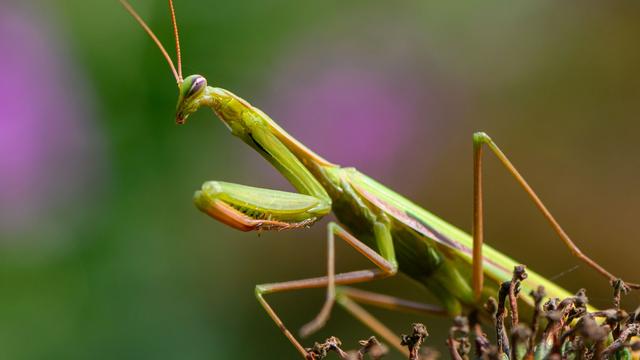
The exact pathways these insects take to reach these varied locations remain unknown. While adult praying mantises can fly, they typically cover only short distances. Gradual spread, possibly aided by strong winds or human transport, is considered a possibility. Their preferred habitat consists of sunny, warm, and dry grasslands with shrubs and perennials, though they are also found in gardens and fallow land within settlements. These ambush predators, which feed on other insects and spiders, are harmless to humans and can grow up to seven and a half centimeters long. Their distinctive triangular head, thorny raptorial legs held in a "praying" position, and green or brown camouflage make them easily blend into their surroundings.
These observations are important for further research to better classify the current distribution of the species and possibly to discover already established local populations.
DistantNews Editorial
Originally published by Die Zeit in German. Translated, summarized, and contextualized by our editorial team with added local perspective. Read our editorial standards.
More Stories



From Our Blog

What Gets Lost (and Found) When News Is Translated

How the Same Story Looks Different in Different Countries

The Critical Role of Diaspora Media in Global News

What Travellers Should Know About Countries with Restricted Press

A Digital Nomad's Guide to Following Local News
