


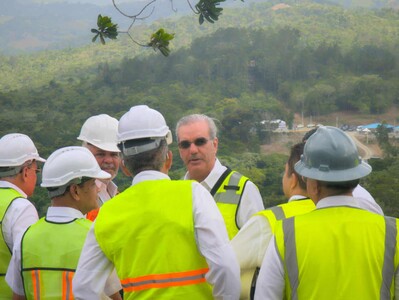
President Abinader inspects Guaigüí Dam progress, construction to begin after design review
Translated from Spanish, summarized and contextualized by DistantNews.
At a glance
News
Named sources
Ongoing story
- - Dominican President Luis Abinader inspected progress on the Guaigüí Dam project in La Vega province.
- The dam, which will ensure water supply, control floods, and provide energy, is set to begin its definitive construction phase after design and budget reviews.
- This major hydraulic work is expected to cost over $100 million and will store 70 million cubic meters of water, benefiting agriculture and flood control.
President Luis Abinader visited the Guaigüí Dam project in La Vega province on Saturday, announcing that the work will enter its definitive construction phase once the design and budget review is complete. This process will establish the final cost and allow for construction over an estimated 30 months.
Abinader stated the dam will have a "transcendental impact" on the region, guaranteeing water supply, controlling floods, and contributing energy to the national grid. "It will be of great impact for the people. Especially for the water of La Vega and other districts, to control floods not only in the municipality of La Vega but also in other communities, in addition to energy with the pumping system," he said.
The project, which has already seen about $75 million invested, will now exceed $100 million. This infrastructure will store 70 million cubic meters of water, regulate the Camú River, generate hydroelectric power, and feature a modern hydro-pumping system. The dam is positioned as one of the country's most significant hydraulic works.
Rafael Salazar, administrator of the Dominican Hydroelectric Generation Company (Egehid), reported that the first stage of the project is 82% complete and will finish in September with the review of the design, budget, and schedule. He noted that existing structures have been recovered, access roads rehabilitated, diversion tunnels cleared, and various studies completed. The second stage, beginning in September, will involve slope stabilization and the commencement of major construction work, intensifying between November and December.
Salazar highlighted the hydro-pumping system's capacity to produce 220 megawatts for five hours, while the combined hydro-electric and hydro-pumping generation will yield 596 gigawatt-hours annually, saving approximately 385,000 barrels of oil per year. The project will also ensure 1.2 cubic meters per second for the La Vega aqueduct, impact 77,000 agricultural tasks (12,700 for the first time under irrigation), and regulate 76.6 kilometers of watershed to reduce downstream flooding. The dam is also expected to boost job creation, fish farming, and ecotourism through a land-use plan.
DistantNews Editorial
Originally published by Diario Libre in Spanish. Translated, summarized, and contextualized by our editorial team with added local perspective. Read our editorial standards.
More Stories


From Our Blog

What Gets Lost (and Found) When News Is Translated

The Critical Role of Diaspora Media in Global News

What Travellers Should Know About Countries with Restricted Press

A Digital Nomad's Guide to Following Local News

How the Same Story Looks Different in Different Countries
