


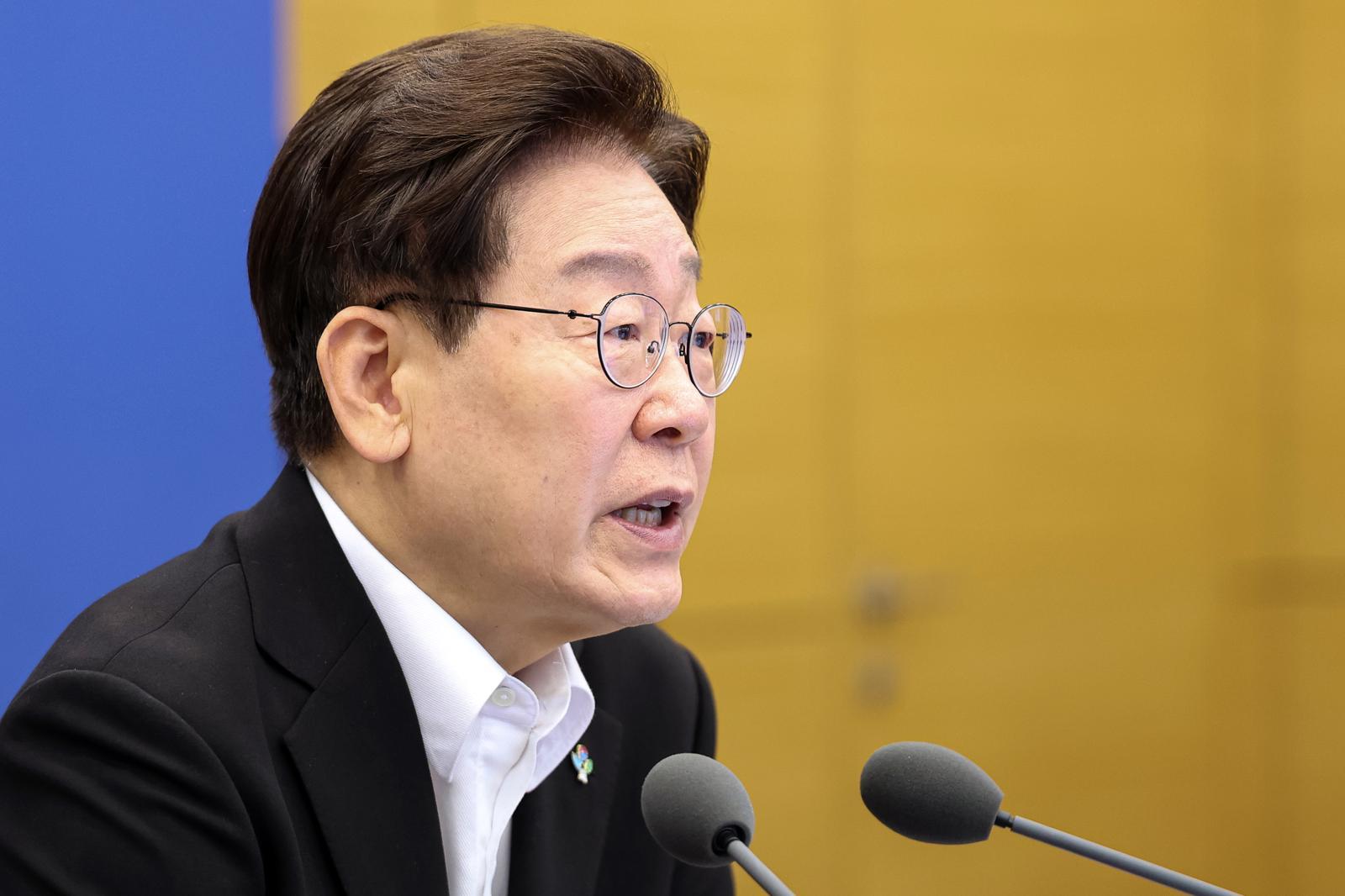
President Lee Jae-myung's Approval Rating Hits Record Low of 51%
Translated from Korean, summarized and contextualized by DistantNews.
At a glance
News
Sources not specified
Context piece
- South Korean President Lee Jae-myung's approval rating has fallen to a record low of 51% since taking office.
- Public disapproval rose to 41%, the first time it has surpassed 40%.
- Economic issues, including inflation and high exchange rates, were cited as the primary reasons for the negative sentiment.
South Korean President Lee Jae-myung's approval rating has dipped to 51%, its lowest point since he assumed office, according to a recent poll. Concurrently, disapproval ratings have climbed to 41%, marking the first time negative sentiment has breached the 40% threshold.
The survey, conducted by Korea Gallup from June 23-25 among 1,000 eligible voters nationwide, revealed a 6-percentage-point drop in approval from the previous two-week period. The increase in disapproval also stood at 6 percentage points.
When asked about the reasons for dissatisfaction with the president's performance, respondents most frequently cited "economy/livelihood/high exchange rate" (15%). "Real estate policy" (10%) and "election irregularities/National Election Commission issues" (10%) followed as significant concerns. Korea Gallup noted that economic and real estate issues have re-emerged as top concerns this week.
In terms of party support, the Democratic Party maintained 41%, while the People Power Party saw a 2-percentage-point decline to 27%. The Reform Party garnered 4%, and the Cho Kuk Innovation Party received 2%. The Democratic Party is preparing for its national convention on August 17, with Prime Minister Kim Min-seok leading preferred candidates for party leader at 26%, followed by former leader Chung Jin-sang at 19% and lawmaker Song Young-gil at 13%.
This week, economic and real estate issues have once again taken center stage.
DistantNews Editorial
Originally published by Dong-A Ilbo in Korean. Translated, summarized, and contextualized by our editorial team with added local perspective. Read our editorial standards.
More Stories

Kim Min-seok 45%, Chung Sye-kyun 24%, Song Young-gil 15%… Democratic Party Support for Leader [Gallu…

Government's Stance on Abolishing Supplementary Investigation Rights: Han Byung-do "Review of Crimin…

President Lee's Approval Rating Hits Record Low of 51%; Disapproval Surpasses 40% for First Time
From Our Blog

What Gets Lost (and Found) When News Is Translated

The Critical Role of Diaspora Media in Global News

What Travellers Should Know About Countries with Restricted Press

A Digital Nomad's Guide to Following Local News

How the Same Story Looks Different in Different Countries
