


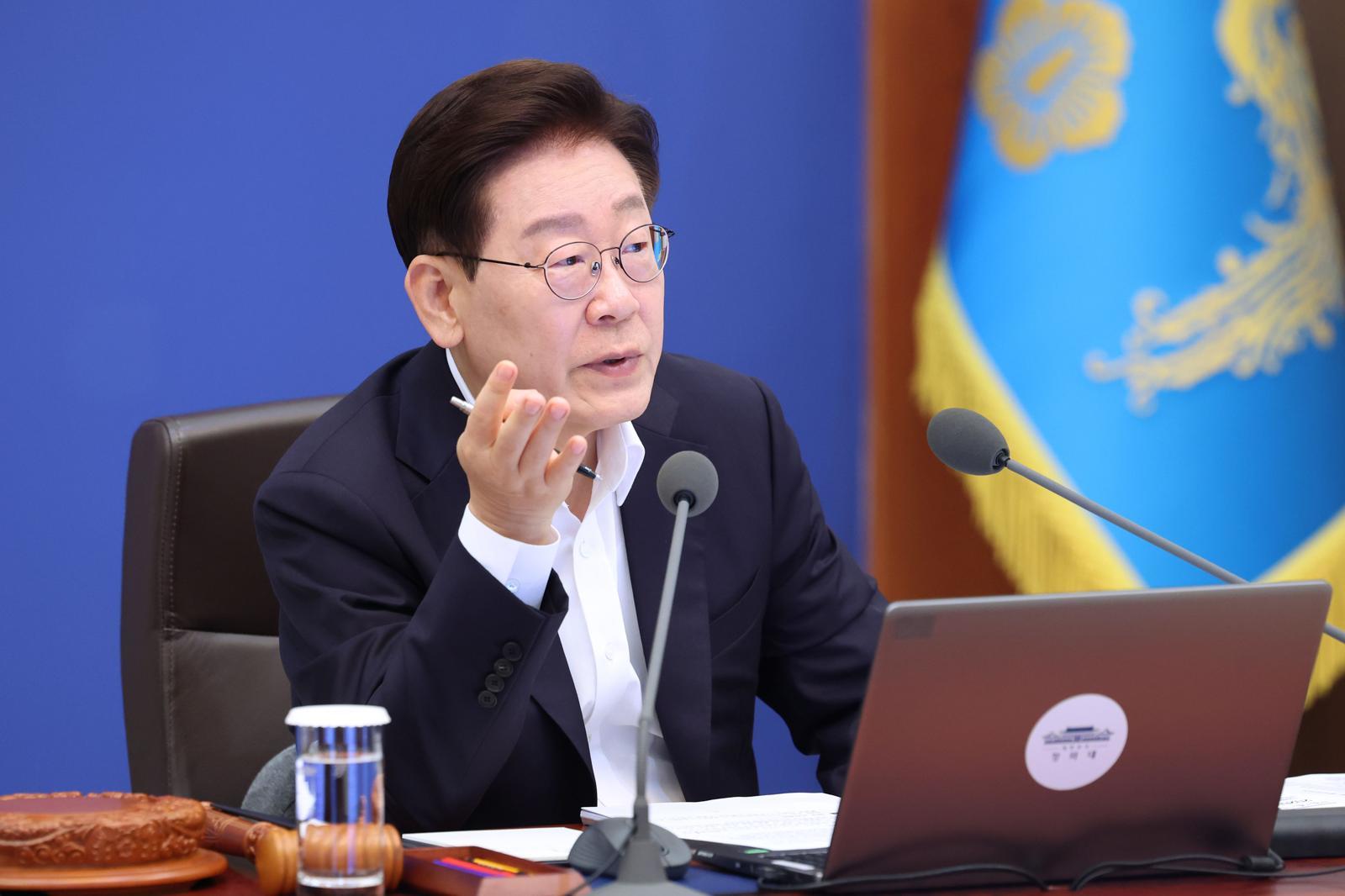
President Lee: Professional corruption reporting is beneficial
Translated from Korean, summarized and contextualized by DistantNews.
At a glance
News
Sources not specified
New plan
- South Korean President Lee Jae-myung stated that reporting corruption should be considered a legitimate profession.
- He suggested that individuals who professionally uncover and report corruption contribute significantly to the nation and community.
- Lee encouraged government agencies not to penalize individuals for being frequent whistleblowers, emphasizing the value of their contributions.
President Lee Jae-myung has voiced support for individuals who make a profession out of reporting corruption, suggesting that such activities are beneficial to the nation and society. During a State Council meeting, Lee stated that uncovering and reporting corrupt practices should be seen as a valuable contribution, rather than something to be discouraged.
"It is not bad to make a profession out of discovering and reporting corruption," Lee remarked, adding that "uncovering and eradicating corruption through reporting contributes much more to the nation and the community."
It is not bad to make a profession out of discovering and reporting corruption. Uncovering and eradicating corruption through reporting contributes much more to the nation and the community.
He further elaborated during a briefing with various government agencies, including the Ministry of Economy and Finance and the Financial Services Commission. Lee recalled past instances where rewards for reporting were denied due to the reporter's frequency, and he advocated for a policy change to prevent such occurrences. He believes that discouraging professional whistleblowers is counterproductive.
There is a perception in Korea, perhaps due to our Confucian background, that it is wrong to receive money for reporting on others' wrongdoings. However, I believe that eradicating corruption through reporting is a greater contribution to the nation or community.
"There is a perception in Korea, perhaps due to our Confucian background, that it is wrong to receive money for reporting on others' wrongdoings," Lee acknowledged. "However, I believe that eradicating corruption through reporting is a greater contribution to the nation or community."
Lee suggested that establishing companies dedicated to professional reporting and profiting from it should not be prohibited. He urged government bodies to avoid imposing disadvantages on individuals simply because they are frequent reporters, emphasizing that their actions serve the greater good.
We must also strengthen reporting. Whether it's a small company or a large company, sanctions must be significantly strengthened.
DistantNews Editorial
Originally published by Dong-A Ilbo in Korean. Translated, summarized, and contextualized by our editorial team with added local perspective. Read our editorial standards.
More Stories


From Our Blog

What Gets Lost (and Found) When News Is Translated

The Critical Role of Diaspora Media in Global News

What Travellers Should Know About Countries with Restricted Press

A Digital Nomad's Guide to Following Local News

How the Same Story Looks Different in Different Countries
