


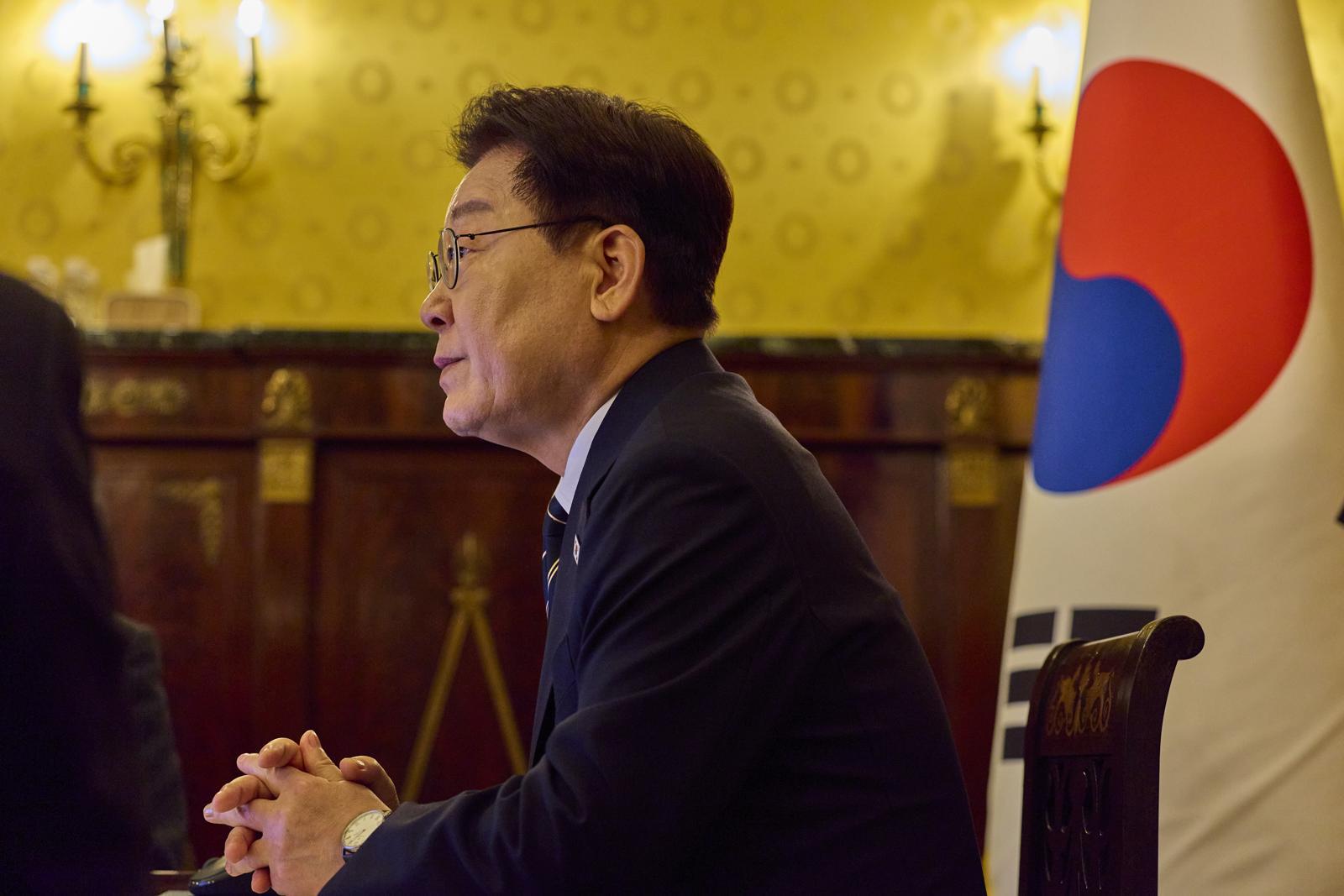
President Lee's approval rating dips for 4th week; ruling party overtakes opposition
Translated from Korean, summarized and contextualized by DistantNews.
At a glance
News
Documents & data
New plan
- President Lee's approval rating has dropped for four consecutive weeks to 51.5%, while the People Power Party's support rose to a record high of 44.3%.
- The Democratic Party's support fell to its lowest point under the current administration at 38%, with the People Power Party now leading by an 'out-of-error-range' margin.
- Analysts attribute the President's decline to issues surrounding local election ballot shortages and errors, coupled with economic burdens from high inflation and exchange rates.
President Lee's approval rating has fallen for the fourth consecutive week, now standing at 51.5%, according to a Realmeter poll released on June 15. This decline coincides with a significant drop in support for the Democratic Party, which has reached its lowest point under the current administration, falling to 38%. Conversely, the People Power Party has seen its support climb to a record high of 44.3% during this administration, establishing a lead of 6.3 percentage points over the Democratic Party, outside the margin of error.
The poll, conducted from June 8-12 among 2,515 voters nationwide, indicates a nationwide drop in approval for President Lee, with the largest decrease observed in the Gwangju-Jeolla region (down 8.1 percentage points). Support also declined in Daejeon-Chungcheong-Sejong, Gyeonggi-Incheon, and Busan-Ulsan-Gyeongnam. By age group, those in their 50s saw the steepest decline (down 5.9 percentage points), while the 18-29 age bracket also experienced a notable drop. Notably, students were the only demographic to show a significant increase in approval.
Realmeter attributed the President's declining approval to the fallout from the June 3 local elections, citing ballot shortages and counting errors that have fueled public criticism and calls for accountability from the National Election Commission. Persistent economic challenges, including high exchange rates and inflation, have further exacerbated public discontent. The analysis suggests that the People Power Party's strong stance on investigating the election irregularities has resonated with centrist and younger voters, contributing to their surge in popularity. Meanwhile, the Democratic Party faces internal strife, with leadership challenges and factional conflicts reportedly leading to voter attrition.
DistantNews Editorial
Originally published by Dong-A Ilbo in Korean. Translated, summarized, and contextualized by our editorial team with added local perspective. Read our editorial standards.
More Stories


From Our Blog

What Gets Lost (and Found) When News Is Translated

The Critical Role of Diaspora Media in Global News

What Travellers Should Know About Countries with Restricted Press

A Digital Nomad's Guide to Following Local News

How the Same Story Looks Different in Different Countries
