

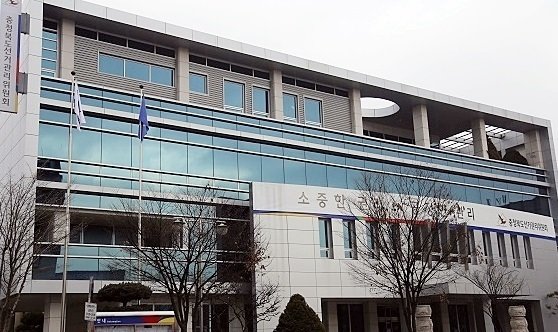

President Lee vows election commission reform after ballot shortage protests
Translated from Korean, summarized and contextualized by DistantNews.
At a glance
News
Sources not specified
Context piece
- President Lee Jae-myung expressed regret over the election ballot shortage, acknowledging it as a fundamental issue of public participation.
- He vowed to implement high-level reforms for the National Election Commission, admitting his administration's oversight was too lax.
- The president's response aims to appease young voters protesting the shortage, framing their concerns as distinct from election fraud claims.
President Lee Jae-myung has acknowledged and apologized for the recent shortage of election ballots, calling it a fundamental issue in a democratic republic. Speaking at his first-anniversary press conference, Lee expressed deep regret, stating, "It is a very serious problem in itself that the government, in a democratic republic of Korea, has hindered the exercise of sovereignty in such a careless manner."
It is a very serious problem in itself that the government, in a democratic republic of Korea, has hindered the exercise of sovereignty in such a careless manner.
Lee admitted that his administration's approach to the issue was too complacent. "We have become desensitized," he reflected, adding that he, too, had initially considered the impact on the election results minimal. He pledged to devise fundamental measures to prevent recurrence, signaling a strong push for reforms within the National Election Commission (NEC).
The president's remarks come amid ongoing protests by young voters, primarily in their 20s and 30s, who are demanding a rerun of the local elections due to the ballot shortage. Lee differentiated their concerns from claims of election fraud, emphasizing that their demand stems from a fundamental question about the right to vote.
We have become desensitized.
Lee also addressed the NEC's independent status, noting that it is not subject to audits by the Board of Audit and Inspection. He stated that the government's role is limited to budget and personnel support, and that a thorough investigation is necessary to uncover the truth behind the shortage, whether it was intentional or a systemic failure. He has already directed the prosecution and police to form a joint investigation team.
How can we not vote? In Korea?
This move is seen as an effort to placate young voters, whose sentiment was reflected in the local election results. Lee reiterated his gratitude to the young protesters, calling their actions "precious and respectable" and admitting that their actions prompted a necessary, fundamental re-evaluation of the electoral process.
Whether it was intentional, or if there is a fundamental and structural problem, we need to know.
DistantNews Editorial
Originally published by Hankyoreh in Korean. Translated, summarized, and contextualized by our editorial team with added local perspective. Read our editorial standards.
More Stories


From Our Blog

What Gets Lost (and Found) When News Is Translated

The Critical Role of Diaspora Media in Global News

What Travellers Should Know About Countries with Restricted Press

A Digital Nomad's Guide to Following Local News

How the Same Story Looks Different in Different Countries
