


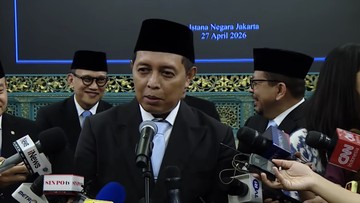
Presidential Advisor Details Alleged Decades-Long Fraud in Indonesia's Palm Oil and Coal Sectors
Translated from Indonesian, summarized and contextualized by DistantNews.
At a glance
News
Sources not specified
Context piece
- Special Advisor to the President Hasan Nasbi revealed alleged fraudulent practices in the palm oil and coal sectors that have cost Indonesia an estimated 2,600 trillion rupiah annually over 40 years.
- Nasbi claims these corrupt practices involve illegal activities and tax evasion, significantly impacting the national economy.
- He urged for stricter oversight and law enforcement to combat these ongoing issues and protect national assets.
Special Advisor to the President Hasan Nasbi has publicly detailed alleged decades-long fraudulent practices within Indonesia's palm oil and coal sectors. He claims these illicit activities have cost the nation approximately 2,600 trillion rupiah (around $160 billion USD) annually over the past 40 years.
Nasbi, speaking to CNN Indonesia, described a system rife with illegal activities and tax evasion. He asserted that these corrupt schemes have deprived the state of substantial revenue, hindering national economic development. The advisor's statements highlight a deep-seated problem that has persisted for decades, impacting key commodity sectors.
These corrupt practices involve illegal activities and tax evasion, significantly impacting the national economy.
He called for immediate and decisive action, including enhanced oversight and robust law enforcement, to dismantle these fraudulent networks. Nasbi emphasized the urgency of addressing these issues to safeguard Indonesia's natural resources and economic integrity. The revelations point to a significant challenge in regulating powerful commodity industries and ensuring fair trade practices.
We need stricter oversight and law enforcement to combat these ongoing issues and protect national assets.
DistantNews Editorial
Originally published by CNN Indonesia in Indonesian. Translated, summarized, and contextualized by our editorial team with added local perspective. Read our editorial standards.
More Stories


From Our Blog

What Gets Lost (and Found) When News Is Translated

The Critical Role of Diaspora Media in Global News

What Travellers Should Know About Countries with Restricted Press

A Digital Nomad's Guide to Following Local News

How the Same Story Looks Different in Different Countries
