

Presidential Aide Responds to Criticism Over Prabowo's Foreign Trips
Translated from Indonesian, summarized and contextualized by DistantNews.
At a glance
News
Named sources
Context piece
- A presidential aide rebutted criticism regarding President Prabowo Subianto's foreign trips, addressing concerns about costs and delegation size.
- The aide stated that any excess costs for foreign travel are personally covered by President Prabowo, and delegation sizes have been significantly reduced compared to previous administrations.
- He also highlighted the dynamic global landscape and the necessity of international relations, citing achievements like Indonesia's BRICS membership and a 0% EU tariff as benefits of Prabowo's foreign engagements.
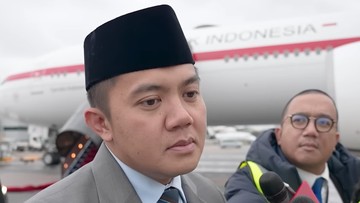
Presidential aide Teddy Indra Wijaya has strongly refuted criticisms leveled by Dino Patti Djalal, founder of the Foreign Policy Community of Indonesia, concerning President Prabowo Subianto's overseas visits. Wijaya addressed concerns about the financial burden of these trips, asserting that President Prabowo personally covers any expenses exceeding the state budget.
So the first issue, the cost of going abroad. This has been explained several times, so any excess costs that have been budgeted by the state are fully borne by President Prabowo personally.
Wijaya also emphasized a significant reduction in the size of presidential delegations during Prabowo's tenure. He stated that while previous administrations might have sent over 120 people, Prabowo's delegations typically range from 50 to 60 individuals. This, he argued, demonstrates a more cost-efficient approach to international diplomacy.
So if in the past, going abroad could involve more than 120 people, like in Mr. Dino's time. Well, in President Prabowo's time, the number is between 50-60 people maximum.
Furthermore, Wijaya defended the frequency and necessity of these foreign trips in the current volatile global climate. He pointed to ongoing international crises, such as the conflicts in Ukraine and the Middle East, as reasons why maintaining strong relationships with world leaders is crucial. He argued that such engagement cannot be postponed until a crisis arises.
Therefore, Teddy said, every leader must build close relationships between world leaders; we cannot just rely on asking for help when a crisis occurs.
Beyond addressing cost and delegation concerns, Wijaya highlighted tangible achievements resulting from Prabowo's foreign policy initiatives. These include Indonesia's permanent membership in BRICS, which he linked to ensuring national food and fuel security amidst global instability. He also cited the successful negotiation of a 0% tariff agreement with 25 EU countries, a deal that had been pending for years. Additionally, Wijaya mentioned the inflow of approximately Rp2.430 trillion in investment over the past 1.5 years and the strengthening of Indonesia's defense capabilities through acquisitions from various international partners. He also underscored Prabowo's active role in the Palestinian issue, evidenced by successful aerial logistics drops and the deployment of a hospital ship.
Then the second, 0 percent tariff in the European Union, there are 25 countries in it. And this is an agreement that has been worked on for more than a dozen years, but when was it achieved? Yes, during President Prabowo's time, specifically in 2025.
DistantNews Editorial
Originally published by CNN Indonesia in Indonesian. Translated, summarized, and contextualized by our editorial team with added local perspective. Read our editorial standards.
More Stories


From Our Blog

What Gets Lost (and Found) When News Is Translated

The Critical Role of Diaspora Media in Global News

What Travellers Should Know About Countries with Restricted Press

A Digital Nomad's Guide to Following Local News

How the Same Story Looks Different in Different Countries
