


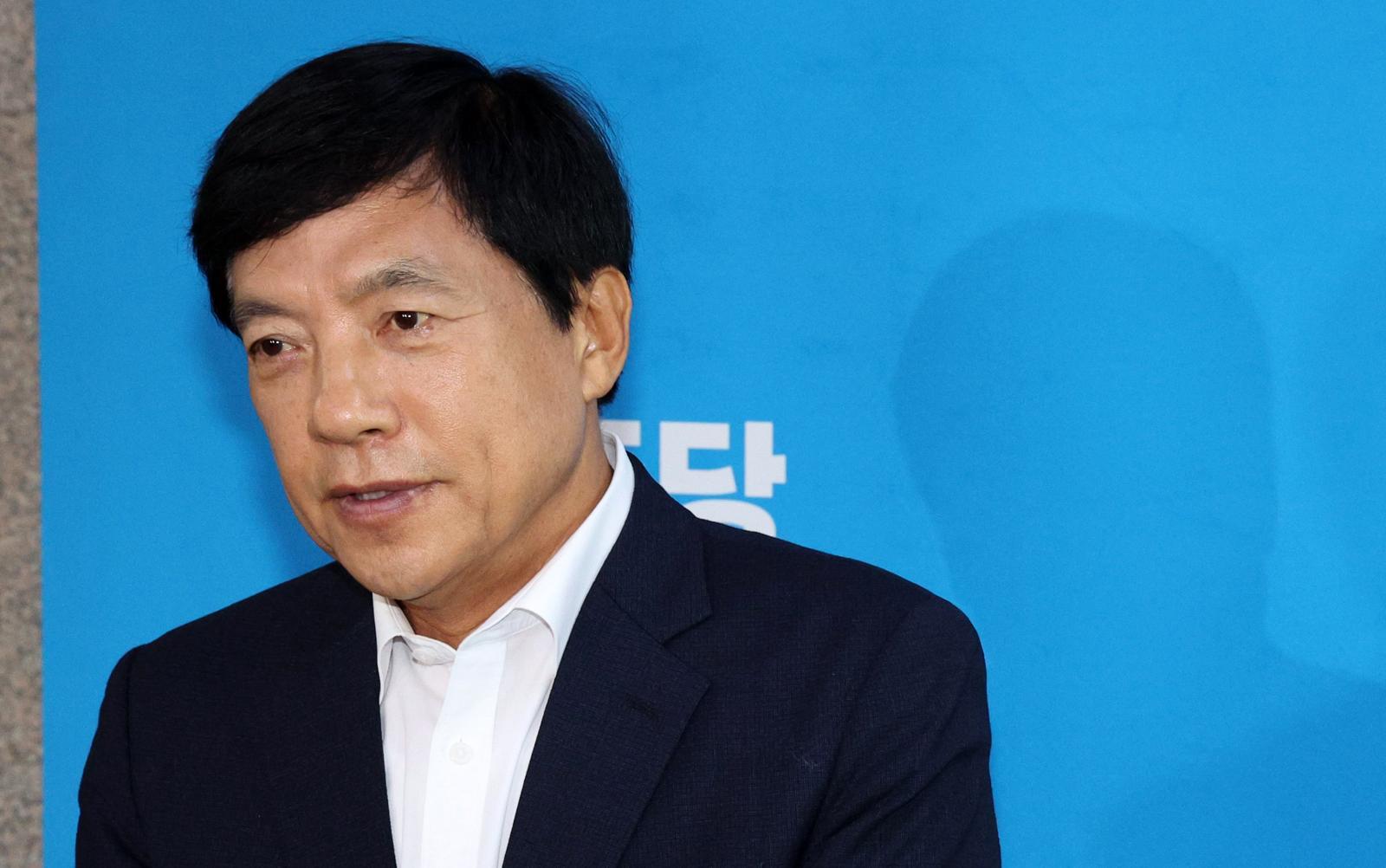
Pro-Lee, Pro-Chung factions vie for Democratic Party's Supreme Council seats
Translated from Korean, summarized and contextualized by DistantNews.
At a glance
News
Named sources
Ongoing story
- Fourteen candidates, including 10 from the pro-Lee Jae-myung faction and three from the pro-Chung faction, registered for the Democratic Party's Supreme Council election.
- The election is heating up with factional competition, as only five members will be selected from the initial pool of 14.
- Tensions are high, with candidates trading sharp criticisms, particularly regarding prosecutorial reform and election rule-setting.
The race for the Democratic Party's Supreme Council is intensifying, with 14 candidates registering on the final day, July 17. The contenders are largely divided between the pro-Lee Jae-myung (pro-Lee) faction, boasting 10 candidates, and the pro-Chung faction, with three.
Among the notable candidates is Lee Sung-yoon, a former Supreme Council member from the pro-Chung faction. He declared his candidacy, citing concerns over the potential misuse of prosecutorial investigation powers. Lee emphasized the complete abolition of prosecutors' supplementary investigation rights, a stance aimed at appealing to the party's hardline base.
Prosecutors should never be left with even a shred of investigative power that can be politically abused.
His declaration immediately drew sharp criticism from Lee Kun-tae, a pro-Lee candidate for the Supreme Council. Lee Kun-tae questioned the fairness of Lee Sung-yoon's candidacy, pointing out that he held his Supreme Council position until just two days before registration and was involved in deciding the election rules under which he is now competing. Lee Sung-yoon had previously resigned his position in protest against the introduction of a preferential voting system.
The Democratic Party is set to hold preliminary elections starting July 21, which will narrow the field from 14 to eight candidates for the main convention. Securing a majority on the nine-member Supreme Council, which includes the party leader and two appointed members, requires winning at least two of the elected seats. The fierce competition underscores the strategic importance of these positions for each faction within the party.
A player competing in a game while also setting the rules – is that truly fair?
DistantNews Editorial
Originally published by Dong-A Ilbo in Korean. Translated, summarized, and contextualized by our editorial team with added local perspective. Read our editorial standards.
More Stories


From Our Blog

What Gets Lost (and Found) When News Is Translated

The Critical Role of Diaspora Media in Global News

What Travellers Should Know About Countries with Restricted Press

A Digital Nomad's Guide to Following Local News

How the Same Story Looks Different in Different Countries
