


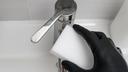
Professional cleaners' method: How to remove limescale from faucets without scrubbing?
Translated from Croatian, summarized and contextualized by DistantNews.
At a glance
In-depth
Sources not specified
Context piece
- Professional cleaners recommend a simple method using citric acid to remove limescale from faucets without harsh scrubbing.
- A solution of three tablespoons of citric acid in half a liter of warm water is applied to the faucet using paper towels, left to soak, and then gently scrubbed.
- Citric acid is effective for various household cleaning tasks but should not be used on aluminum, natural stone, or waxed wood surfaces, and caution is advised with dark fabrics.
Professional cleaners have revealed a simple yet effective method for removing stubborn limescale from faucets, eliminating the need for aggressive scrubbing. The technique relies on a common household ingredient: citric acid.
According to experts from the Australian cleaning service Maid2Match, limescale buildup on faucets is caused by water minerals. Their recommended solution involves dissolving three tablespoons of citric acid in half a liter of warm water. This solution is then used to soak paper towels, which are wrapped around the faucet. If necessary, a rubber band can secure the towels in place.
After the solution has had time to soften the limescale, a toothbrush can be used to clean the nozzles. Running hot water afterward helps rinse away any remaining scale and impurities. This method is presented as an alternative to harsh cleaning agents and abrasive scouring pads.
Citric acid's versatility extends to cleaning kettles, refreshing dishwashers, cleaning shower cabins and bathtubs, and maintaining air humidifiers and dehumidifiers. It can also be added to laundry for washing light-colored items, helping to remove detergent residue and restore freshness. However, users are cautioned that citric acid is not suitable for sensitive materials like aluminum, natural stone (marble, granite), or waxed wood. It may also have a slight lightening effect on dark fabrics, and it should not be mixed with baking soda, as their actions neutralize each other.
DistantNews Editorial
Originally published by Večernji List in Croatian. Translated, summarized, and contextualized by our editorial team with added local perspective. Read our editorial standards.
More Stories



From Our Blog

What Gets Lost (and Found) When News Is Translated

The Critical Role of Diaspora Media in Global News

What Travellers Should Know About Countries with Restricted Press

A Digital Nomad's Guide to Following Local News

How the Same Story Looks Different in Different Countries
