


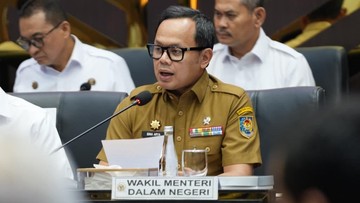

Professional Lawyers Warn Asset-Confiscation Bill Must Not Become a Tool of Pressure
Translated from Indonesian and summarized by DistantNews. Read the original for the full story.
At a glance
News
Named sources
Ongoing story
- Peradi Profesional urged Indonesia's parliament to ensure that the asset-confiscation bill does not allow the seizure of lawfully acquired property.
- Its chairman, Harris Arthur Hedar, called for clear limits, initial evidence and strong judicial oversight, especially for confiscation not based on a criminal conviction.
- The bill's supporters in parliament promised it would not become an instrument of political power, although concerns remain over possible abuse.
Indonesia's proposed asset-confiscation law should target the proceeds of crime, not become a threat to people who acquired their property legally, the professional lawyers' organization Peradi Profesional warned.
Speaking at a follow-up hearing on the bill before Commission III of the House of Representatives, chairman Harris Arthur Hedar said the state must be strong in confronting criminals while also protecting the public. “The state must be strong in confronting criminals, but the state must also be strong in protecting its people,” he said. He warned that efforts to seize criminal assets must not create room for confiscating lawfully acquired wealth.
The state must be strong in confronting criminals, but the state must also be strong in protecting its people. The drive to seize the proceeds of crime must not create room for confiscating property acquired lawfully.
Harris said mechanisms that do not depend on a criminal conviction require clear limits and firm judicial supervision. A person, he argued, should not automatically be treated as guilty simply because they cannot explain the origin of their wealth. Authorities must still have a basis, initial evidence and an accountable connection to the alleged conduct.
The state must not first seize and only later prove its case.
Peradi Profesional urged lawmakers to strengthen checks and balances, standards of proof and judicial oversight. Harris also said officials should be held responsible if they abuse their authority. “The state must not first seize and only later prove its case,” he said, warning that such an approach could weaken fundamental principles of the rule of law.
Habiburokhman, chairman of Commission III, promised that the bill would not become a tool of power after approval. He said lawmakers had heard current suspicions about the proposal and acknowledged that an earlier draft had appeared more extreme and could have been used against political opponents. “We must think about this so that, when it is used, it does not become a tool for an abuse of power,” he said.
We must think about this so that, when it is used, it does not become a tool for an abuse of power.
About this summary
Originally published by CNN Indonesia in Indonesian. Translated, summarized, and contextualized automatically by DistantNews, with a note on how the source frames the story. Not individually reviewed before publishing. How this works.
More Stories


From Our Blog

News in Translation: What Gets Lost, and How We Keep the Framing

Diaspora Media: How Communities Follow News From Home

Traveling Where the Press Is Not Free: How to Read the News There

The Digital Nomad's Guide to Local News

The Same Story, Different Countries: How Coverage Changes at the Border
