


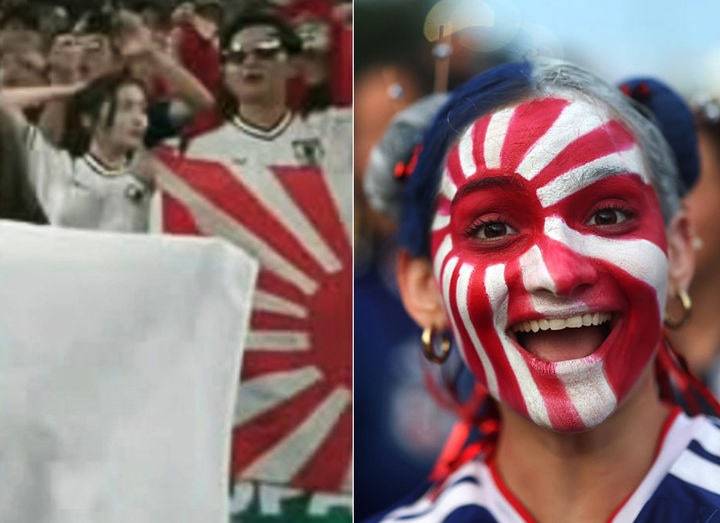
Professor protests Rising Sun flag use at World Cup to FIFA
Translated from Korean, summarized and contextualized by DistantNews.
At a glance
News
Named sources
Context piece
- Professor Seo Kyoung-duk has formally protested to FIFA regarding the use of the Rising Sun flag by Japanese fans at the 2026 World Cup.
- Seo argued the flag symbolizes Japanese militarism and imperialism, citing its use during past invasions.
- He urged FIFA to prevent the flag's entry and take swift action to avoid recurrence, referencing a similar incident at the 2022 World Cup.
Professor Seo Kyoung-duk has lodged a formal complaint with the International Federation of Association Football (FIFA) over the display of the Rising Sun flag by Japanese supporters during the 2026 FIFA World Cup matches. The controversy arose after Japanese fans were seen using the flag during a group stage match between Japan and Tunisia on June 21.
In his official protest, sent via email to FIFA, Seo explained that the Rising Sun flag is a symbol of Japanese militarism and imperialism. He pointed out its prominent use by Japan during its invasions of various Asian countries, including its role in the Pacific War. Seo expressed disappointment that FIFA did not immediately intervene as it did during the 2022 Qatar World Cup, when Japanese fans were also seen using the flag.
Seo emphasized that the presence of the Rising Sun flag at the World Cup, an event meant to unite people globally regardless of nationality or race, is unacceptable. He stated that for Asian football fans, the flag serves as a painful reminder of the scars of war. He urged FIFA to take prompt action to prevent the entry of the Rising Sun flag by Japanese supporters in future matches and to ensure such incidents do not happen again.
Professor Seo views this incident as an opportunity to educate global football fans, many of whom may be unaware of the flag's historical context and problematic symbolism. He called for collective efforts through ongoing international discourse to eradicate the use of the Rising Sun flag, stressing the need for continued public discussion to achieve this goal.
DistantNews Editorial
Originally published by Dong-A Ilbo in Korean. Translated, summarized, and contextualized by our editorial team with added local perspective. Read our editorial standards.
More Stories



From Our Blog

What Gets Lost (and Found) When News Is Translated

The Critical Role of Diaspora Media in Global News

What Travellers Should Know About Countries with Restricted Press

A Digital Nomad's Guide to Following Local News

How the Same Story Looks Different in Different Countries
