


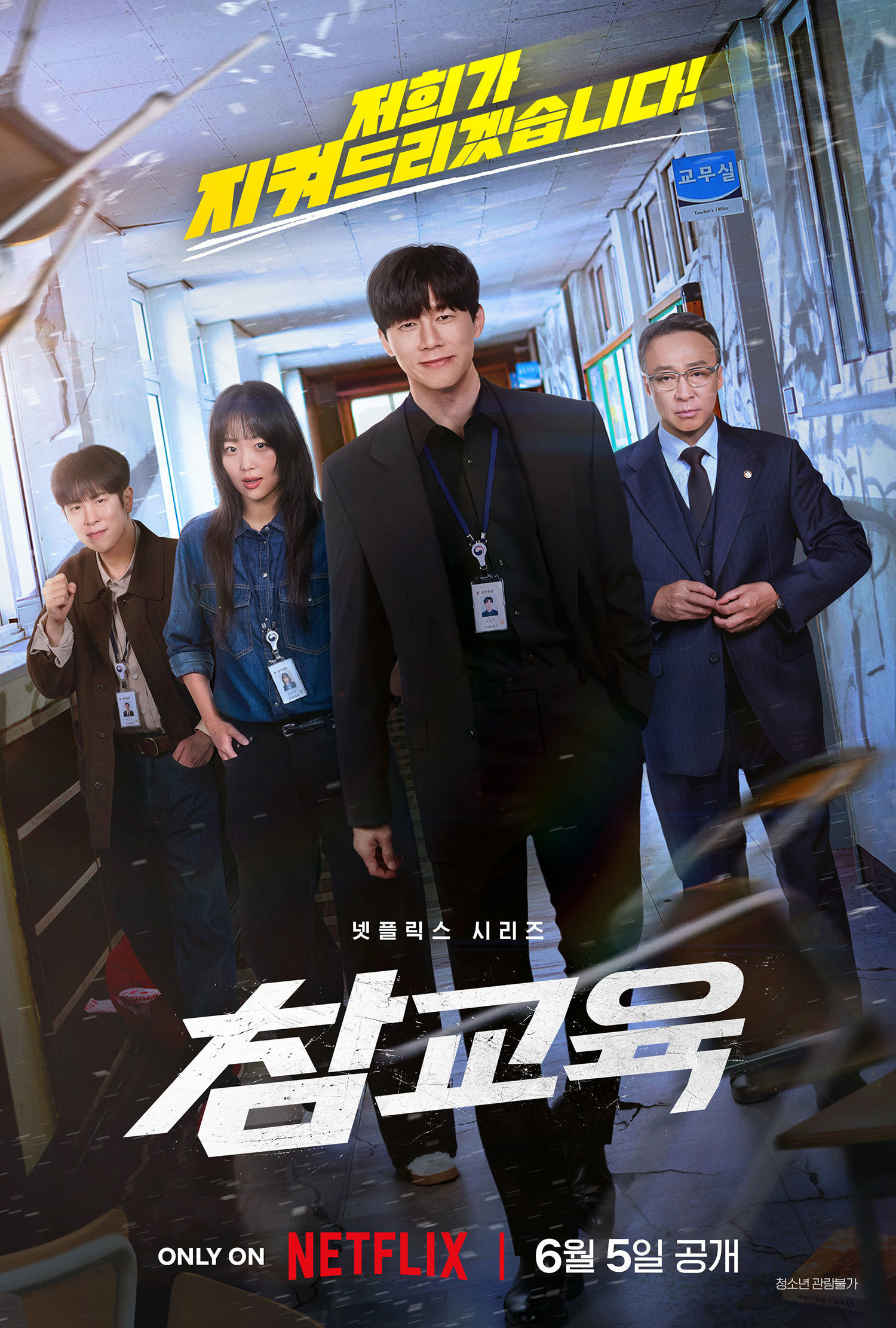
Proposal to establish 'Education Activity Protection Ministry' inspired by drama
Translated from Korean, summarized and contextualized by DistantNews.
At a glance
News
Named sources
New plan
- A proposal has been made to establish a 'Ministry of Education Activity Protection' in South Korea, inspired by the Netflix drama 'Remarriage & Resentment'.
- The proposal aims to create a state-responsibility system to protect teachers from severe educational activity violations and excessive complaints.
- The Democratic Party's think tank, the Institute for Democratic Policy Studies, published a policy briefing on the establishment of this new ministry.
A proposal to establish a 'Ministry of Education Activity Protection' has emerged in South Korea, drawing inspiration from the Netflix drama 'Remarriage & Resentment' (참교육). The initiative, put forth by the Democratic Party's think tank, the Institute for Democratic Policy Studies, aims to create a national system that shields teachers from severe violations of educational activities and repetitive, burdensome complaints.
The core idea is to shift the institutional responsibility from individual teachers and schools to the state and education offices. This would prevent educators from having to bear the brunt of serious issues like school violence, drug distribution, and infringement of teaching rights alone. The Democratic Party's think tank released a policy briefing on the proposed establishment of this 'Ministry of Education Activity Protection' on June 12th.
The Netflix series 'Remarriage & Resentment,' which premiered on June 5th, has garnered significant attention, quickly rising to the number one spot on the domestic series chart. The drama features a fictional special agency under the Ministry of Education called the 'Education Rights Protection Bureau,' tasked with intervening directly in school settings to restore educational order. This fictional bureau handles issues such as school violence, drug distribution, and violations of teaching rights.
The Institute for Democratic Policy Studies highlighted that the fictional setting of the drama reflects real-world problems accumulating in schools. These include a rise in violations of teaching rights, malicious complaints, legal anxieties surrounding legitimate student guidance, and a lack of institutional capacity within schools to effectively manage these challenges. The institute emphasized that the proposed agency would not be an 'enforcement-type special unit' but rather a system focused on protection and procedural support.
The fictional setting reflects the reality of accumulated problems in actual school 현장에서: infringement of teaching rights, malicious complaints, legal anxieties over legitimate student guidance, and lack of school response capabilities.
DistantNews Editorial
Originally published by Dong-A Ilbo in Korean. Translated, summarized, and contextualized by our editorial team with added local perspective. Read our editorial standards.
More Stories



From Our Blog

What Gets Lost (and Found) When News Is Translated

The Critical Role of Diaspora Media in Global News

What Travellers Should Know About Countries with Restricted Press

A Digital Nomad's Guide to Following Local News

How the Same Story Looks Different in Different Countries
